



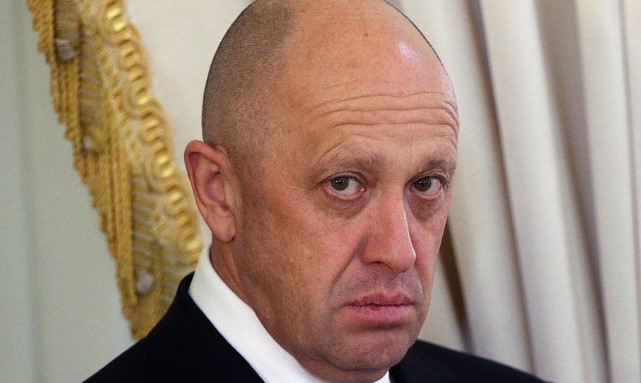
There are not many times in history when the monarch and centre of power of Russia was challenged let alone defeated by an internal rival. The last time the Russian Presidency was challenged was in 1993 by a group of deputies in the Supreme Soviet and the Congress of Deputies who challenged Yeltsin’s unconstitutional dissolution of the said entities. Yeltsin responded to the deputies by sending troops and tanks that fired at the Supreme Soviet building.
In December 1993 Yeltin’s constitutional proposals were approved by referendum and the Russian Presidency was given extended power unmatched by a presidency in a rule of law. Under Yeltin’s constitution, the Russian president could not be impeached, could veto any bill in parliament, choose all the military commanders single-handedly, and rule by decree: a kind of elected dictator. The previous challenge to the center of power was in August 1991 when a group of hardline communist generals attempted a coup d’etat against Gorbachev. The coup failed, the plotters were arrested and Boris Yeltsin shot to fame for defending the democratic process.
Before that, there was the curious case of the internal ousting of Nikita Khrushchev from power by Leonid Brezhnev in 1964, yet Khrushchev was the exception. Indeed, Khrushchev’s reforms were his own undoing. Having removed Stalin’s repression and bringing the first wave of economic and political liberalisation to the Soviet Union Khrushchev made it possible for his own colleagues to act more democratically and freely. Khrushchev released thousands of prisoners from jails, allowed a greater degree of artistic and personal freedom, and opened up the Soviet Union to trade with the West. Khruschev even increased investment in the Soviet Republics, eased state control in agriculture, and gave back Crimea to Ukraine. For his reforms, Khrushchev was an easy target by the hardliners and they brought many excuses for his removal.
The only other case when the centre of power in Russia was challenged in the 20th century was the Bolshevik Revolution that began in February 1917 and there are stark similarities to the historical conditions of Prigozhin’s attempted coup. The revolution found its critical mass with demoralised troops coming home from a war they lost. Mutiny and rebellion within the army and the navy was widespread and so was rebellion in the major cities. A civil war followed the Revolution and the Bolsheviks could only retain their power over what previously was the Russian empire through violent suppression. The security services and state entities replaced the previous authority structures of society both on a state and civil level. The role and authority in society and the economy of priests, landowners, and capitalists were replaced by the state. The Bolsheviks brought even more centralisation and authority to Moscow’s centre of power despite changing the economic and social model of society. Then Stalin turned his seat of power into the most violent and brutal seat of power known in history. Mao was still hidden in the mountains back then.
In post-Soviet Russia, the seat of power in Moscow remained unchallenged after Yeltsin consolidated his power in the 1993 constitutional crisis. And throughout his years in power, Vladimir Putin never had a significant challenger to his authority, and even main opposition figures like Boris Nemtsov (killed by Putin) and Alexie Navalny could not muster enough resources and political power to single-handedly challenge Putin’s authority. By hook or by crook, Putin’s power remained undisputed, until Prigozhin gathered his band of criminals-turned-soldiers from Ukraine, took over Rostov, and drove to Moscow, only to back off at the most crucial moment.
So, this is why Prigozhin’s actions follow the Russian logic of a coup attempt and not of a rebellion. To rebel against the seat of power in Russia is to declare war against the monarch, and this, historically, has been punishable by death. So why would anyone muster a military rebellion in the first place if not to take power? And if Boris Nemstov could be murdered because Putin feared a challenge in elections that he could rig and turn in any way he wanted, then how much more does Putin fear Prigozhin who can literally aim a gun at Moscow and demand the resignation of the Minister for Defense? Clearly, and surely, there was no one in Russian history who could do such a thing and get away with it. Why would Prigozhin take this risk instead of seeing through the coup attempt to the very end?
Prigozhin has made statements that challenge the rasion d’etre of Russia’s invasion of Ukraine, and this is where Prigozhin’s treason was explicit. His position and thoughts on the War on Ukraine are very clear now, and these are not claims that can be taken back. I am still surprised at how some self-declared “geo-strategic experts” are claiming that Prigozhin’s attempted coup was staged when he, as a warlord, committed the unthinkable of denouncing the very reason why his commander-in-chief, single-handedly decided to plunge his nation into war.
Surely, Putin will conduct his own purge of those who were disloyal to him during this event, but Putin is incredibly weaker now and his power will never be the same again. Despite Prigozhin being humiliated by his own supporters for failing to go ahead with the coup, Prigozhin opened up a broad window of opportunity for dissent to ordinary Russians that was previously locked by a tight security regime in accordance with wartime expectations. The support Prigohzin received from soldiers joining him and residents of Rostov opened up a view of Russia that was previously suppressed by the Putin regime. No wonder Prigozhin’s supporters are angry with him for quickly shutting down this window of dissent.
None of what happened was an act. Prigozhin failed in his coup attempt because he may very well have had the jitters, realising at the last moment that great acts of history come with massive mental strain, or maybe that Putin simply kidnapped his relatives in Saint Petersburg. We don’t know why he stopped halfway. Yet, even though Prigozhin failed, the end result is that a crack has opened in Russian society that will not be fixed by excessive repression. Even beatings and military repression can not make Russians forget the events that directly challenged Putin’s rule.
And it makes sense. Russia, as a vast landmass of different nations, can only be held together via violent repression and the world witnessed this system by the Russian empire when Putin brought Chechnya under his control by bombing it and massacring tens of thousands of civilians. Today, the ruler of Chechnya, Ramzon Kadyrov is a Putinist first and a Chechen second. So, practically, it is rather difficult and nearly impossible to challenge the central authoritarian figure of Russia by peaceful and democratic means. Prigozhin could only successfully challenge Putin because he had an armed force.
The thing is probably Wagnerites may feel disappointed by Prigozhin not only for failing but for assuming they will never have this chance again – that empowering and rare feeling of challenging the Tsar. They had their chance and they botched it. However, I don’t think so. I think this is just the beginning of Russia’s very extended political crisis. Russia is already going into an advanced stage of the Venezualisation of its economy. The next stage of the dissolution process is political crisis and this is only the beginning.

Website Editor
Historian and Publisher
Leave a Reply