
Advertisement

In order to have a mature society, we first need a mature President

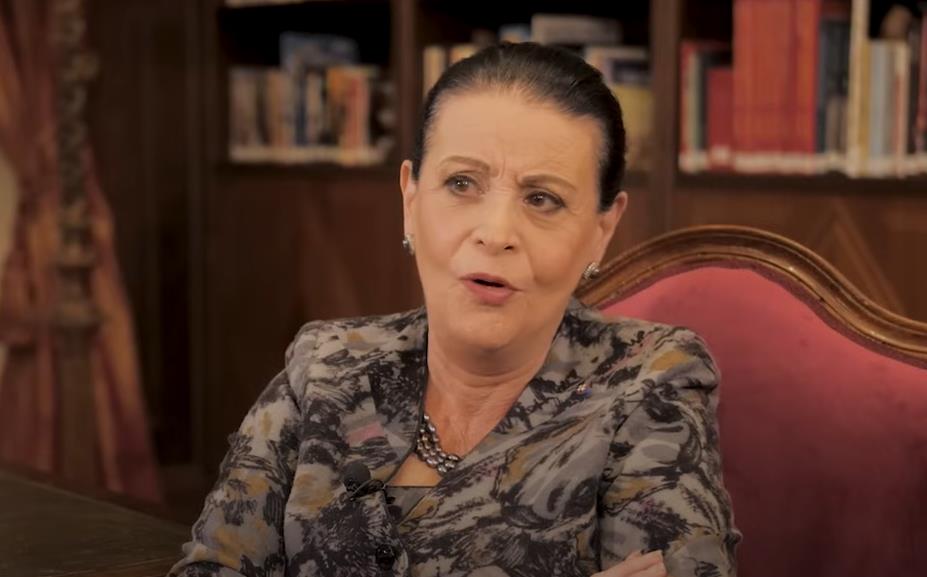
As she usually does in her statements, the President of Malta said absolutely nothing of substance in her latest speech. So far, the only thing I recall her saying that has any substance is that the government needs to implement the proposals from the public inquiry into the murder of Daphne Caruana Galizia. However, even on this matter, she hasn’t kept pushing or shown any concern.

For example, she could have issued statements in solidarity with journalists while the Prime Minister attacked them, mentioned them by name to support their work, and foster greater acceptance of their contributions. However, she is not going to do that because the President is a close ally of the Abela dynasty, and she won’t do anything that could harm or appear to contradict the government’s position.

The best she can do is posture and virtue-signal without saying anything concrete.

If she is speaking out against immaturity, she should explicitly state what she is referring to. If she had any sense of maturity at all she wouldn’t be throwing these vague statements at us that mean absolutely nothing.


Comments

  1. Is the President actually “a close ally of the Abela dynasty”? What would be the consequences for her if she appears “to contradict the government’s position”?

    Is Mark presuming that she a 100% free agent to speak he mind? Do we know whether or not she can? Do we know whether we can have a president who can be a 100% free agent?

    1. The president can only be removed if two-thirds of the House of Representatives (both government and opposition) vote to dismiss her, so Myriam Spiteri Debono can speak her mind about any subject without fearing that the endless concerts and foreign trips will be imperilled.

      1. That may be so but it’s not unlikely that her advisors and her trained personnel ensure that certain restraints are in place.
        And who’s to say that some PN MPs are not as shady and unscrupulous as most PL MPs? The existence of a relatively corrupt PLPN cohort at the core (the hidden establishment) means 2/3rd majority means nothing – or almost nothing.

    2. ALBERT MAMO avatar
      ALBERT MAMO

      WHEN GEORGE ABELA WAS PRESIDENT. HE DID AN EXCELLENT JOB AND NEVER TOOK SIDES AND WAS COMPLETELY HONEST. I REALLY ADMIRED HIM!!!????????????????

  2. Chris, the president’s only constraints are constitutional (what the constitution allows her to do) and personal (how she thinks the role should be handled). Let’s tackle them one by one.

    There is nothing in the constitution that stops the president from speaking about important matters. It is ridiculous to think that two-thirds of the House of Representatives will vote to remove the president on a whim just because she spoke out about something.

    If the government proposed removal, the opposition would grab the opportunity to denounce the government as being anti-democratic and anti-free speech. If the opposition were to propose removal, it would suffer the same fate. A two-thirds majority in the House is an extremely high bar to reach and, on something that would be endlessly discussed in the media, it cannot be quietly agreed and voted on when nobody is looking.

    Rest assured that removal of the president by two-thirds vote in the House is a near mathematical impossibility and won’t happen unless the president does something which is blatantly egregious or treasonous.

    On the second point, to understand personal constraints, one must go back in history, because each president feels constrained by how previous presidents have acted in the role, and new presidents feel they cannot go beyond that. So let’s go back to the very beginning.

    The presidency was created as a substitute to the monarchy (Malta’s head of state from Independence Day in 1964 to Republic Day 10 years later was the Queen of the United Kingdom and other Commonwealth realms, aka The Queen of Malta). Since the United Kingdom became a constitutional monarchy, kings’ and queens’ role has been to sign laws, appoint and dissolve governments, and represent the state in a dignified manner.

    It has generally been understood that the monarchy should rise above partisan politics and stay away from expressing itself in any way which may be construed as supporting one political party’s views over another’s. Queen Elizabeth II was (almost) universally loved precisely because she managed to keep all personal thoughts to herself for a full 70 years. There were some murmurs that she was against Brexit but the closest she ever got to a statement was appearing in parliament wearing a dress which some commentators described as having the colours of the European Union flag.

    Blandness is also a means of survival for the British monarchy as an institution. As a style of government which is not favoured nowadays because it is unfairly hereditary and captured by a single family, it is quite fragile. It is therefore important that it keeps all major political parties on its side by not antagonising them, lest they start calling for the nation to become a republic or adopt some other style of government.

    Practically all of this (the role and the blandness) were transposed when Malta switched from having a queen to having a president. The personnel and the way they were chosen changed, but not really the position itself. This has worked well for Malta’s presidents. Despite controversies on who should be picked for the role, presidents have generally enjoyed high approval ratings because they are seen as representing the state in a dignified manner and because they never say anything which may shock the supporters of one of the major political parties.

    Although that may sound very cheery and a perfect excuse to keep the situation as it is, for commentators like Mark, it rightly leaves a sour taste in the mouth.

    First of all, when things like widespread corruption and the murder of a journalist rock the nation, it feels undignified not to speak loudly and clearly, even if the supporters of one political party would prefer it if the president stays mum. At that point, the blandness handed to us by the queen feels more like an excuse to not interfere with banquets, balls and nice cars than a position of principle.

    Secondly, the presidents of Malta seem to underestimate the strength of their position to speak. Unlike the United Kingdom’s monarchy, Malta’s presidency is not fragile. If a president is removed for making an opinion known, another president will be chosen. Presidents are only elected for single five-year terms and there is no family firm to shore up for one’s grandchildren.

    The presidents of Malta are vague and obtuse in their statements because they want to be, not because they have to be.

  3. Thanks for explaining the historical placement of our president. My deep concern is that we have entered a different era where old rules and customs which established our democracy are being dismissed at best and reversed at worst. This is the new reality. When you write that the president will only be removed if she “does something which is blatantly egregious or treasonous”, please be reminded that where she to point out and speak against the sheer evil at the core of government, their perverse and distorted mindset will actually see it at “treasonous”. We’re no longer dealing with normal human beings, we’re dealing with monsters. And sure their days are numbered … we don’t know how long it’s going to take.
    At best, President Myriam Spiteri Debono is a prisoner of the current regime at worst, she’s simply one of them.
    I know which one I think she is.

  4. […] wasn’t going to write this, but the President shouldn’t be preaching about maturity if she can’t even call out the ridiculous and most irresponsible things that are said by the […]

Leave a Reply

Your email address will not be published. Required fields are marked *