



In the final quarter of 2024, the Eurozone economy recorded a slight increase in Gross Domestic Product (GDP) increasing by 0.1%, which overturned the initial estimate of no growth, according to Eurostat’s latest statistics. The small rise brings the annual growth rate to 0.9%, consistent with the previous quarter.
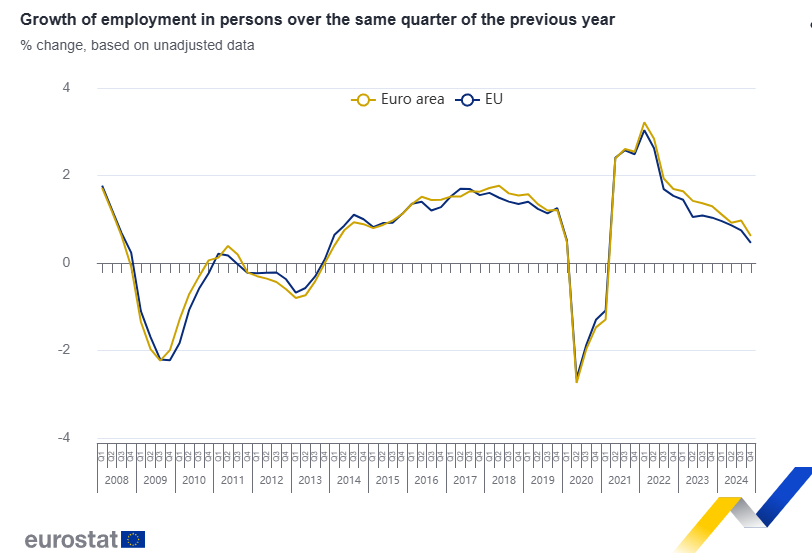
Even with this better adaptation, the economic landscape overall is still challenging. Employment growth was minimal, with only a 0.1% increase for the same quarter, sustaining a decline observed since as early as early 2022.
Going forward, prospects show that growth in the economy can possibly barely surpass 1% by the year 2025. This is, however, under threat from some factors including:
•Consumer Spending. Stagnation in consumer spending indicates that households are being careful, possibly due to economic instability or inflation pressures.
•Laboir Market. Decline in the labor market, as indicated by weak employment growth, could suppress wage growth and reduce consumer purchasing power.
•Industrial Sector. Recession in the industrial sector is an indicator of challenges such as loss of competitiveness and energy prices, which are still discouraging manufacturing output.
• Trade Policies. The potential imposition of tariffs by America introduces uncertainty, potentially affecting the eurozone’s exports and firms’ investment decisions.
• Energy Prices. Sudden spikes in energy prices, primarily natural gas prices, might increase firms’ production costs as well as the cost of living for consumers and thereby cool the economy.

Newsroom


Leave a Reply