



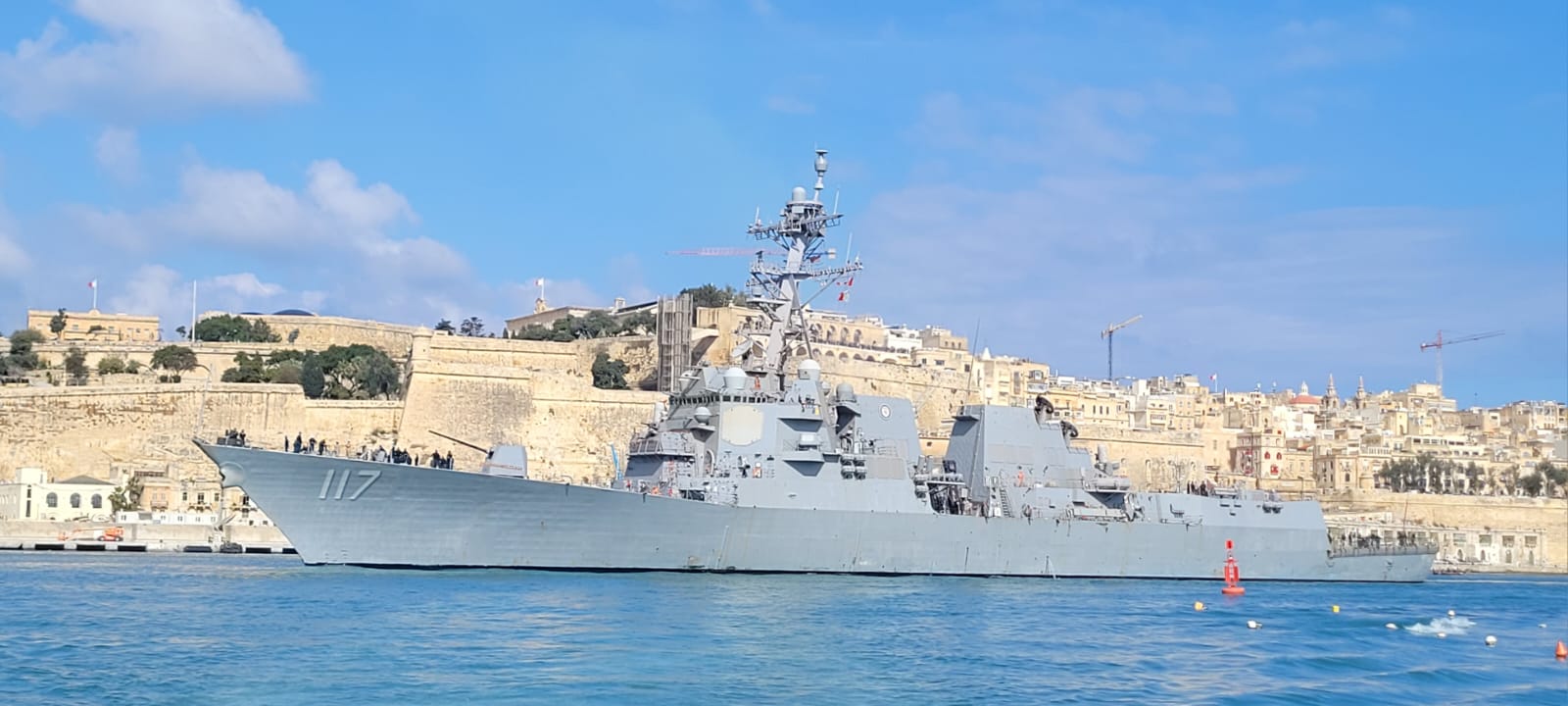
If you stretch the Labour government’s arguments on neutrality too far, you may even come to the conclusion that Malta’s membership with the European Union breaks Malta’s constitutional neutrality. In fact, I remember very well how Dom Mintoff and the Labour Party also made these arguments during their opposition campaign to Malta’s membership with the European Union.
Article 42 of the Treaty of the European Union, which Malta also signed. says:
7. If a Member State is the victim of armed aggression on its territory, the other Member States
shall have towards it an obligation of aid and assistance by all the means in their power, in
accordance with Article 51 of the United Nations Charter. This shall not prejudice the specific
character of the security and defence policy of certain Member States.
The article however also says that:
The policy of the Union in accordance with this Section shall not prejudice the specific character of
the security and defence policy of certain Member States and shall respect the obligations of certain
Member States, which see their common defence realised in the North Atlantic Treaty Organisation
(NATO), under the North Atlantic Treaty and be compatible with the common security and defence
policy established within that framework.
There can be various legal interpretations of Malta’s neutrality and its relationship to this treaty. However, what remains consistent in Malta’s debates on neutrality is that it is always legally challenging to apply in practice, with numerous differing interpretations on how it should be applied in various contexts. Neutrality has become an ambiguous concept adhered by Labour dogmatically, and now the Labour government is even using it as an excuse to go against the concept of security and defence.
One of the most practical legal references one can use to understand Malta’s neutrality may be the Constitutional Court itself which has ruled various times on this matter. Throughout the years, there have been various attempts in the Constitutional Court to stop the entry of foreign warships in Malta’s harbours. All of these attempts have been consistently rejected by the Constitutional Court. I could find this case online which seems to be one of the earliest cases on the matter, when HMS Ark Royal entered Malta in 1988 and the Labour Party held widescale protests against its entrance. The courts appear to have rejected the case on technical grounds, but the ruling also states that the plaintiff was never a direct party or victim in the matter. There were other cases and none of them were successful and I’m hoping to find them soon.

Website Editor
Historian and Publisher
Leave a Reply