



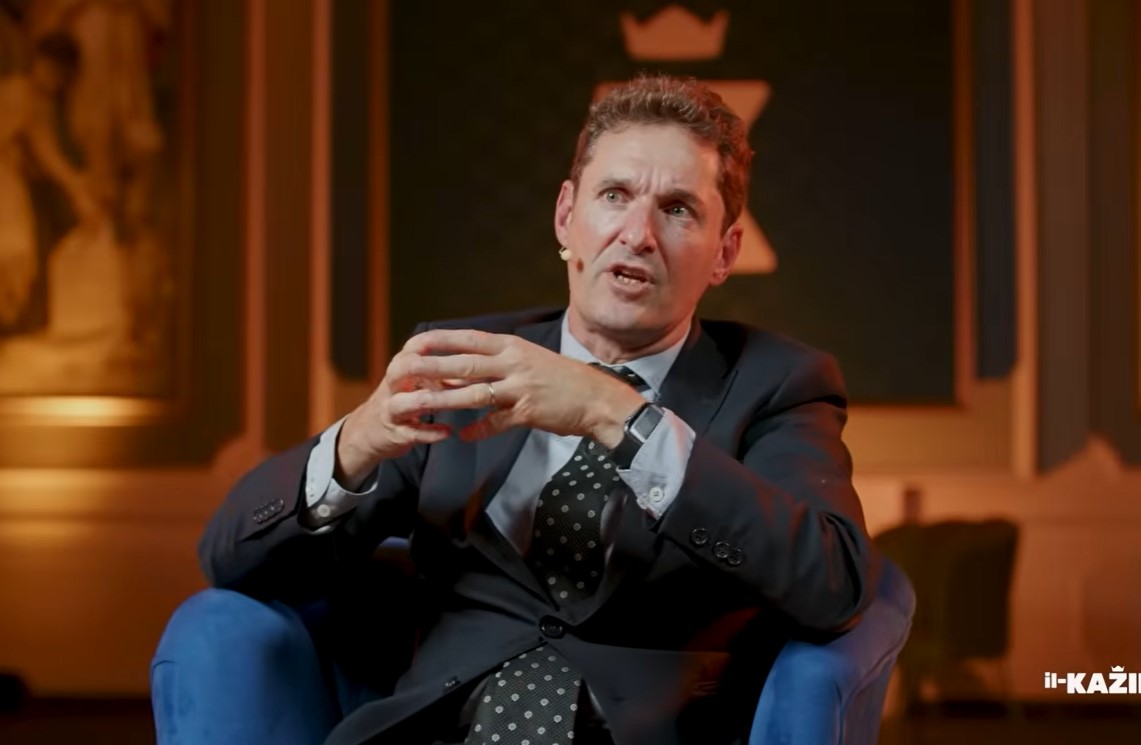
Jeremy Cassar Torregiani is on a mission to revise history in his battle for compensation over the 1972-73 government’s takeover of the National Bank of Malta. You can read my article about the historical background, here. He portrays the National shareholders the National Bank of Malta as capitalists and investors who contributed to Malta’s economy, but my historical work argues that they were ultimately parasitic, feudal-like and a major drag to Malta’s development.
In reality, the foreign occupiers of the Islands consecutively contributed significantly much more to Malta’s economic development than Malta’s land-owning elite ever did (this is a very obvious mathematical fact). In the midst of this debate, it is good to make this reminder. The Cassar Torregianis and all the other land-owning families, major monopolists and shareholders of the National Bank of Malta left the Maltese Islands, with no scientific and cultural legacy in its history. There is no major architectonic landmark in their name, no opera house, no theatre, no hospital, no school, and there is absolutely nothing today that celebrates their legacy.
The only exception was the Marquis John Scicluna, who contributed to the arts, but not significantly to leave a very lasting and powerful legacy that matched his wealth.
All the major architectonic landmarks that the public enjoys today, all the theatres, all the museums, and all the beautiful historical buildings enjoyed by the public today were built by foreigners. Then there was the Church which extracted from everyone in an equal and aggressive manner to fund its properties and constructions.
At best, the old elite were art collectors, but there is no book published, no major work of art, author, musician, scientist, sportsman or athlete that owes their success or funding to the old Maltese feudal elite: with the exception of the Marquis John Scicluna who did fund some Maltese artists.
Only Malta among European countries lacks a historical legacy of local artistic patrimony. Malta’s biggest patrons of the arts were the Knights of Saint John and they were followed by the British and the Italians. Anotonio Sciortino forged his success abroad and in Malta, his biggest backer was Lord Strickland. Lord Strickland even founded a local press which today is succeeded by The Times of Malta and is the major and most popular newspaper in Malta.
Undoubtedly, Lord Strickland’s legacy in publishing is the reason why many people today know who he was. Nobody knows who the shareholders of the National Bank were (other than the Marquis Scicluna) because they contributed absolutely nothing and left no legacy behind them.

Website Editor
Historian and Publisher



Leave a Reply