



The US Supreme Court has ruled that the government exceeded its authority when it imposed broad global tariffs using the International Emergency Economic Powers Act (IEEPA), declaring that statute does not give the president the power to levy tariffs without explicit approval from Congress. The decision, issued yesterday, on 20 February 2026 in Learning Resources, Inc. v. Trump and related consolidated litigation, held that IEEPA does not authorise the President to impose tariffs because only Congress has the constitutional power to “lay and collect taxes, duties, imposts and excises.”
In response, the US government announced that many of the tariffs enacted under IEEPA have been suspended while it transitions to alternative legal bases for import duties. Rather than immediately reinstating the old structure, the administration has enacted a temporary 10 % tariff on most imports under Section 122 of the Trade Act of 1974. This temporary global tariff — set to last for 150 days — is intended to maintain revenue levels and avoid a sudden drop in tariff income while the White House pursues new statutory authorities for longer-term tariff policy.
In short:
- IEEPA-based tariffs are no longer in force: The Supreme Court’s ruling invalidates the broad set of import duties previously imposed under the emergency powers law.
- Temporary 10 % tariff in place: The administration says this tariff will help cushion revenue loss while alternative legal routes, such as Section 301 (unfair trade practices) and Section 232 (national security), are pursued.
- Old tariff rates will return in new form: The White House has stated its intention to re-establish the same duties using legal authorities that explicitly permit tariff imposition.
Democrats are urging the government to reimburse US citizens and companeis who paid for the tariffs. The US Treasury Secretary Scott Bessent has denied that the government will be issuing refunds.
For a short period, the shift from the invalidated IEEPA tariffs to the flat 10 % global surcharge could mean lower costs for imported goods that were previously subject to higher levies under the broader tariff regime. However, as the administration works to reintroduce tariffs under different statutory authorities, this window of relatively lower duties is expected to be short-lived
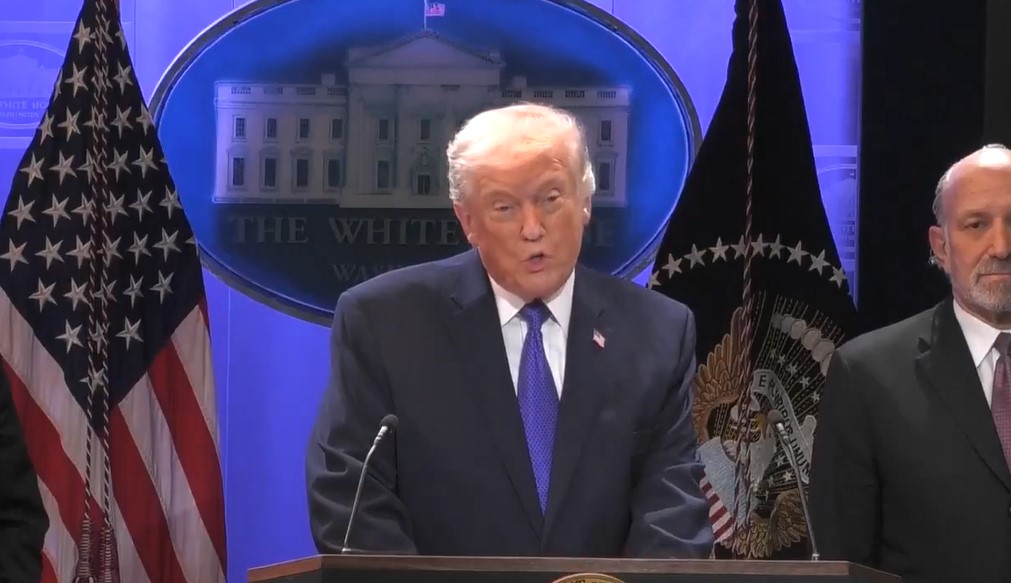
You can listen to the full press conference by President Trump here.

Newsroom


Leave a Reply