




According to the latest Eurostat statistics, Malta has the third-lowest median age in the European Union, at 40 years. This is significantly lower than the EU average of 44.9 years and places Malta behind only Ireland, which has the lowest median age at 39.6 years, and Luxembourg, with a median age of 39.8 years.
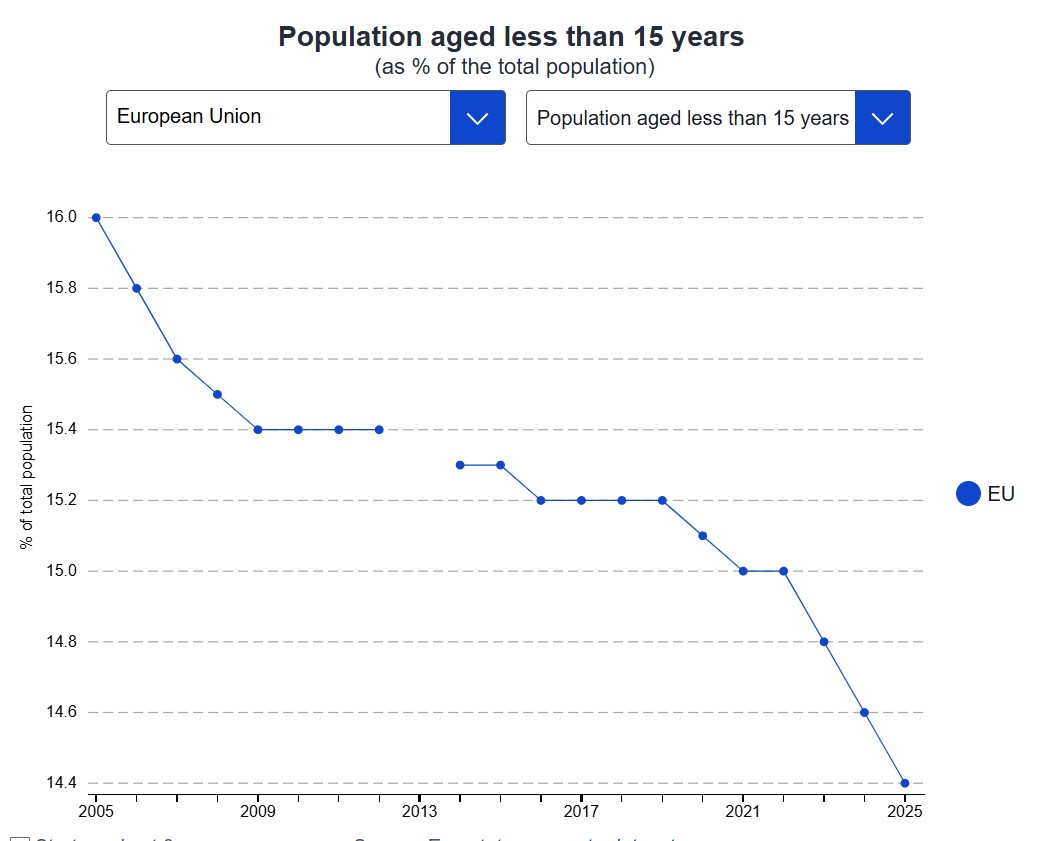
Despite having one of the youngest median ages in the EU, Malta also had the lowest share of young people under the age of 19, at 16%. This indicates Malta’s reducing birth-rates with the native demographic profile shifting more towards older people, while the median age is kept lower by the immigrant labour-force.
Malta’s relatively low median age also reflects that population growth is being sustained by immigration. Eurostat also shows that Malta registered one of the largest population increases in the EU between 2005 and 2025, rising by 43%, second only to Luxembourg’s 48%. Malta also had one of the highest shares of non-national immigrants in 2024, with 93% of immigrants being non-nationals, the same level recorded in Luxembourg.
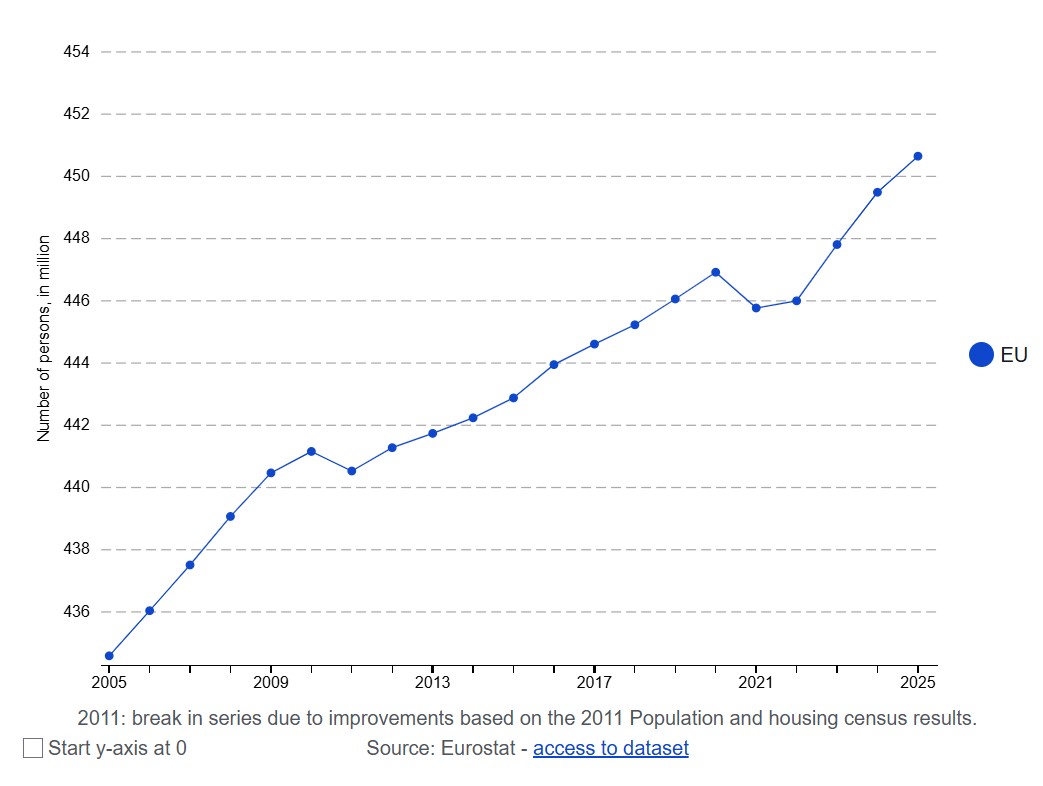
The population of the European Union stood at 451 million people on 1 January 2025, around one million more than the previous year. Malta remained the least populous EU member state, with 574,000 people, equivalent to around 0.1% of the EU’s total population.
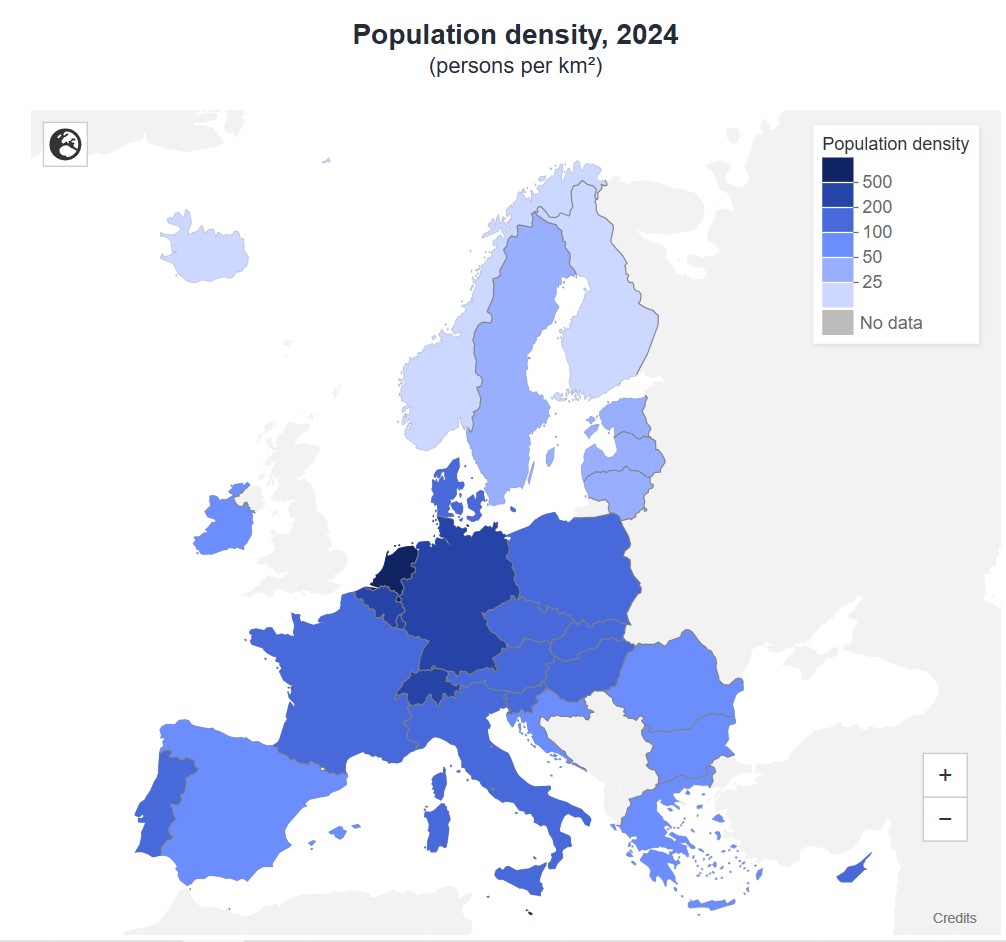
Malta also remains by far the most densely populated country in the European Union. Eurostat recorded Malta’s population density at 1,817 persons per square kilometre in 2024, far ahead of the Netherlands at 530 and Belgium at 389. Malta’s population density increased sharply from 1,272 persons per square kilometre in 2004 to 1,817 in 2024, reflecting the scale of demographic pressure placed on the country’s infrastructure, housing market and public services.
Feature image of Malta Youth Philharmonic Orchestra.


Newsroom


Leave a Reply