



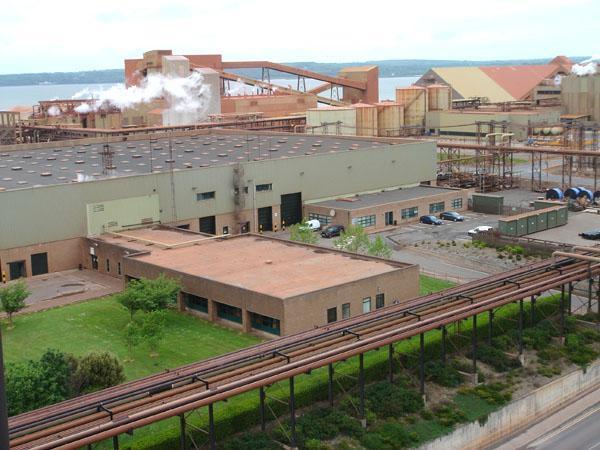
According to Euronews, EU High Representative Kaja Kallas is set to raise the issue of the Irish Aughinish Alumina plant in County Limerick with Irish Prime Minister Micheál Martin during a meeting in Dublin tomorrow.
Aughinish Alumina is Europe’s largest alumina refinery and has recently become the subject of an extensive investigation into its exports to Russia. The plant produces alumina, the white powder used to manufacture aluminium, a metal that is also used in weapons, drones, aircraft, ammunition and other military equipment.
The refinery is owned by Rusal, the Russian aluminium giant founded by sanctioned oligarch Oleg Deripaska, who is also close to Vladimir Putin. Deripaska himself is under EU, UK and US sanctions, although Rusal has avoided being sanctioned by the European Union.
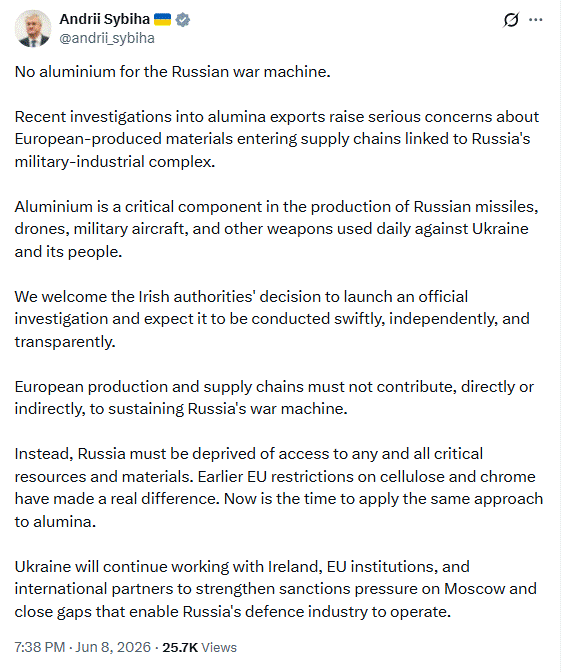
The controversy follows an investigation by OCCRP, The Irish Times and other media partners, which found that alumina produced in Ireland has been shipped to Russian smelters owned by Rusal. Once in Russia, the alumina is processed into aluminium and then sold through a trading company called Aluminium Sales Company, or ASK, which has supplied aluminium to sanctioned Russian arms manufacturers.
The investigation exposed a supply chain in which an Irish-based refinery is feeding Russian smelters that sit inside Moscow’s military-industrial ecosystem.
The Irish government is now under pressure because Ireland is due to take over the rotating presidency of the Council of the European Union in July, while at the same time defending a Russian-owned refinery whose exports to Russia have increased since the invasion of Ukraine.
Irish independent journalist and investigator Caolan Robertson, who lives in Kyiv and has been covering Russia’s war against Ukraine, has also confronted Irish politicians over the issue. Several politicians have avoided answering questions about Aughinish, while Prime Minister Micheál Martin has publicly argued that sanctions against the refinery would be “self-defeating” because the plant is part of a wider European supply chain. He added that Aughinish supplies critical raw material to European smelters, including in France and Sweden, and warned that sanctioning the plant could harm Europe more than Russia. This argument is now being challenged by MEPs, Ukrainian officials and sanctions experts.
The issue has also been made worse by conflicting export figures. Irish official data showed that more than 80% of Irish-made alumina was exported to Russia in the first quarter of 2026. Aughinish later said this figure was the result of a clerical error and claimed that around 45% of its exports went to Russia in 2025, while the remaining share went to Europe and other markets. However, Central Statistics Office data cited in Irish reporting indicated that 66.8% of Ireland’s alumina exports went to Russia in 2025, significantly higher than the company’s own figure. The Irish government has now launched an investigation into the matter.
Aughinish Alumina is not currently covered by EU sanctions, but pressure is increasing to sanction the activity if it persists. Europe banned imports of Russian aluminium in 2025, but it still allows the export of alumina to Russia. This means that Europe is restricting one part of the Russian aluminium economy while simultaneously allowing another part of the same supply chain to remain open.
EU High Representative Kaja Kallas has now indicated that the issue will be raised directly with the Irish government. Her intervention comes as 39 MEPs from 12 countries have called for an end to alumina exports to Russia.
Feature video below by Caolan Roberts interviewing Local Councilor Jerome Scanlan.

Newsroom

Leave a Reply