



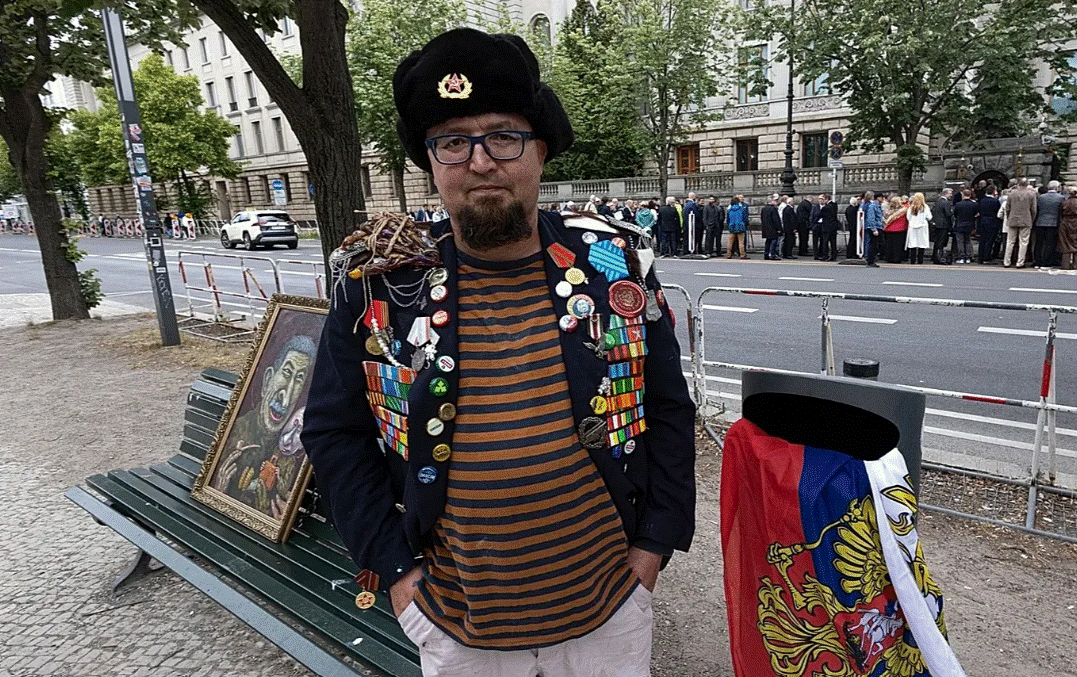
A 44-year old Russian artist, was shot dead in Poland on Monday morning. Semyon Skrepetsky (real name: Robert Kuzovkov) was shot dead ultiple-ties with a handgun on onday orning near his home in Biala Podlaska, close to the Belarussian border. Polish authorities confirmed the incident on Tuesday.
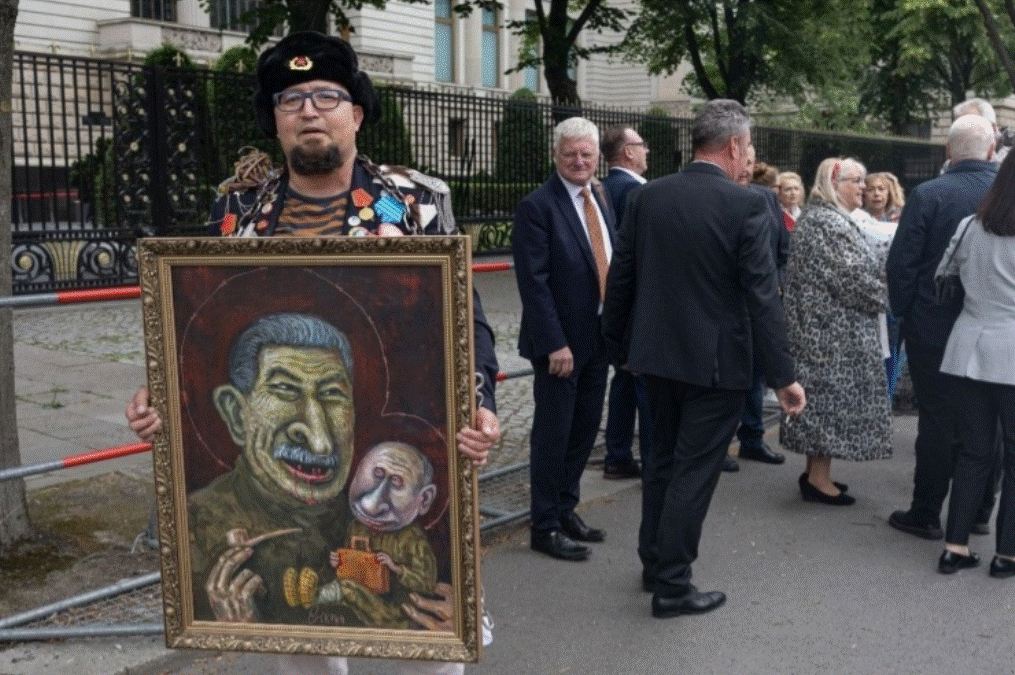
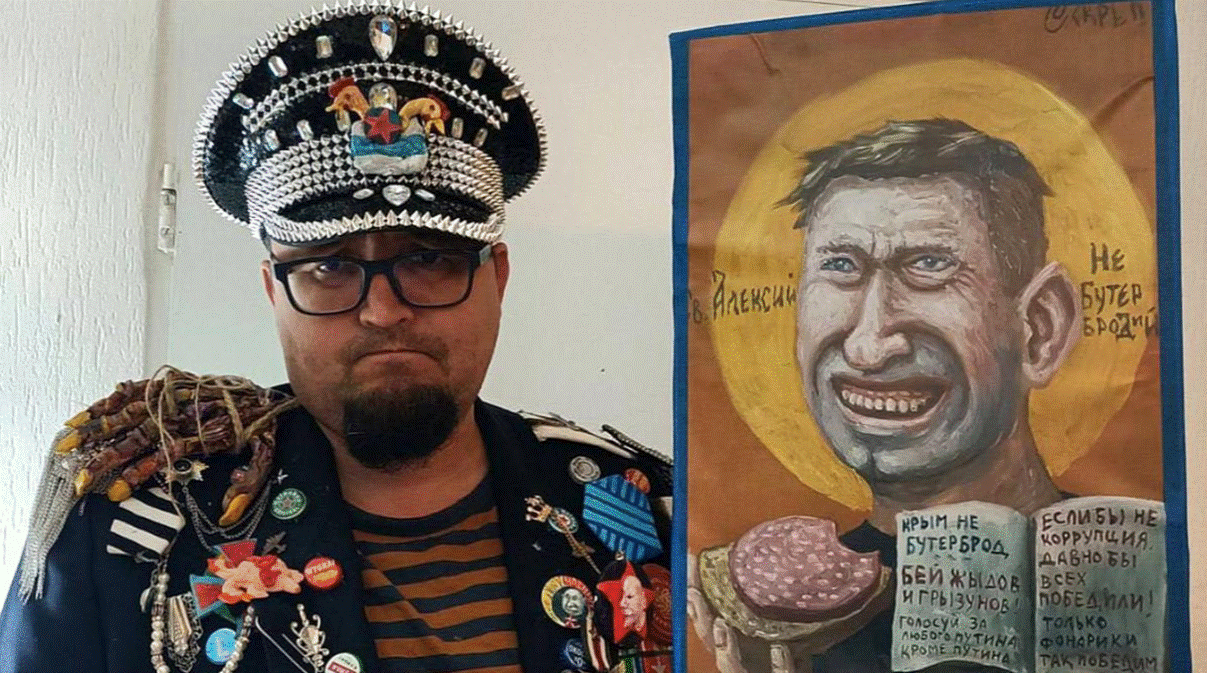
Skrepetsky was known for satirical artworks, caricatures, and performances mocking Vladimir Putin, Ramzan Kadyrov, Alexander Lukashenko, and other authoritarian figures. He had lived in exile in Poland, received threats, and participated in protests (including one outside the Russian embassy in Berlin just days before his death). He fled Russia to Europe in 2021. Two Belarusian men were detained shortly after the shooting, but no charges have been filed yet.
The assassination comes as the European Parliament has approved new measures to protect foreign dissidents in Europe from their regimes. Foreign dissidents in Europe are often hunted by authoritarian regimes, notably Iran, Russia and China, while Russian critics and defectors have repeatedly been targeted on European soil.
The new measures approved by the European Parliament would push the EU and its member states to adopt a zero-tolerance approach to transnational repression. They call for a common EU definition of the practice, safer and more reliable data collection, specialised training for police and security services, and better coordination between member states.
The European Parliament also called for the appointment of an EU coordinator for countering transnational repression. This official would help coordinate Europe’s response to threats against dissidents, including digital surveillance, abusive Interpol red notices, pressure from embassies and consulates, and intimidation of relatives left behind in the country of origin.
The text approved by Parliament is not yet a binding law. It is an own-initiative report and political resolution calling on the European Commission, the Council and member states to act. However, it marks an important step because it recognises that authoritarian repression inside Europe is not limited to assassinations. It also includes surveillance, threats, harassment, coercion of relatives, abuse of asylum procedures, cyber-attacks, spyware and the use of proxies or criminal networks to reach dissidents abroad.

Newsroom
Leave a Reply