



Research and development expenditure increased in Malta in 2024 compared with the previous year, according to the NSO, but the country still ranked second from the bottom among EU member states for investment in research and development as a share of its economy. Eurostat.
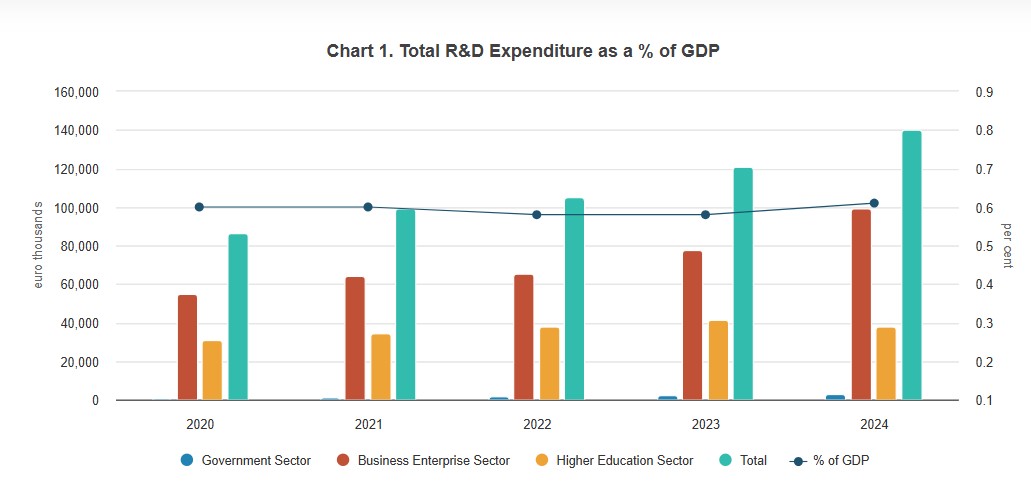
The NSO reported that total expenditure on research and development reached €140.2 million in 2024, an increase of €19.2 million, or 15.8%, over 2023. The expenditure was equivalent to around 0.6% of Malta’s gross domestic product.
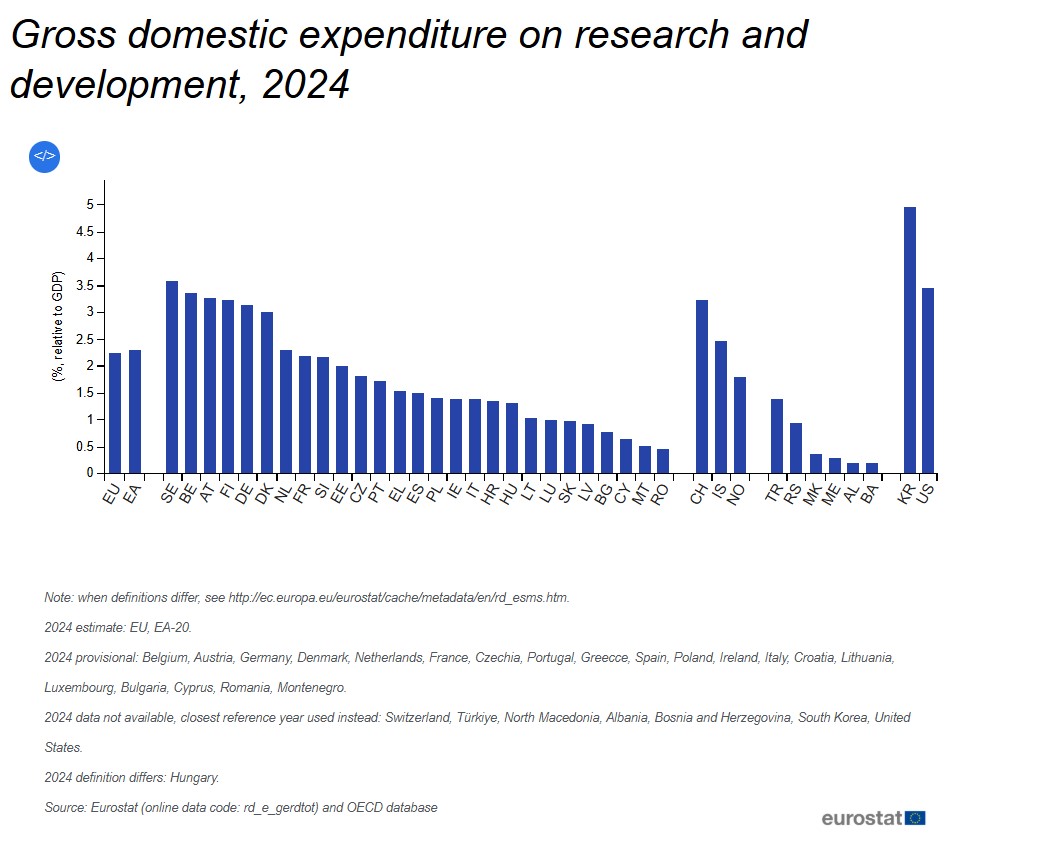
Eurostat’s harmonised figures placed Malta’s research and development expenditure at 0.51% of GDP. Romania was the only EU member state to register a lower rate, at 0.46%. Cyprus followed Malta at 0.65%, while Bulgaria recorded 0.77%.
The EU average stood at 2.24% of GDP—far above Malta’s level—while Sweden led the bloc with expenditure equivalent to 3.57% of GDP. Belgium registered 3.36%, Austria 3.26%, Finland 3.22% and Germany 3.13%.
Malta was one of only seven EU member states where research and development expenditure remained below 1% of GDP. Malta’s research intensity had fallen by 0.17 percentage points between 2014 and 2024, one of the largest decreases registered across in the EU during that period.
The increase in Maltese expenditure during 2024 was driven overwhelmingly by private businesses. The business-enterprise sector accounted for 70.8% of total research and development expenditure, while higher education accounted for 27.2% and the government sector for just 2%.
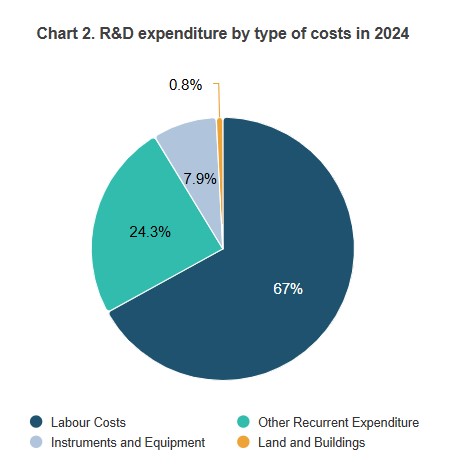
Business expenditure increased by €21.5 million and government-sector expenditure rose by €800,000. However, expenditure by the higher-education sector fell by €3.2 million compared with 2023. Labour costs represented 67% of all research and development expenditure.
Engineering and technology attracted the largest share of spending, accounting for 56.1% of the total. Medical sciences received 15.8%, while natural sciences accounted for 11.1%. Spending on engineering and technology increased by €16.7 million, while expenditure on medical sciences rose by €9.7 million. This was partly offset by an €11.4 million decline in spending on natural sciences.
Basic research accounted for 42.3% of total expenditure, followed by applied research at 30.7% and experimental development at 27%.
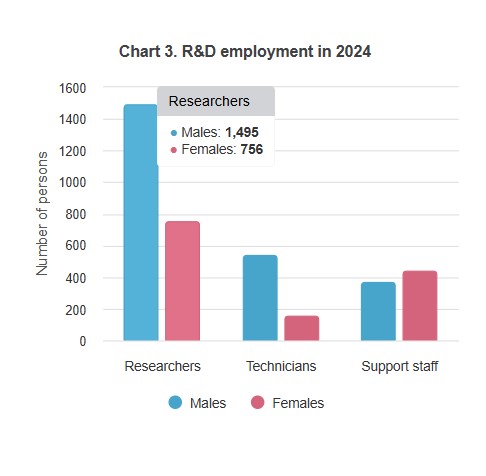
A total of 3,760 employees were involved in research and development work during 2024, up from 3,460 in 2023. Of the 2024 total, 1,612 worked exclusively on research and development projects, while 2,148 dedicated only part of their working time to such activity. Women accounted for just 36% of total research and development employment.
Foreign funding amounted to €10.2 million, equivalent to 7.3% of total research and development funds. Government budget allocations for research and development stood at €42.3 million for 2025, a decrease of €300,000 from the previous year.


Newsroom
Leave a Reply