



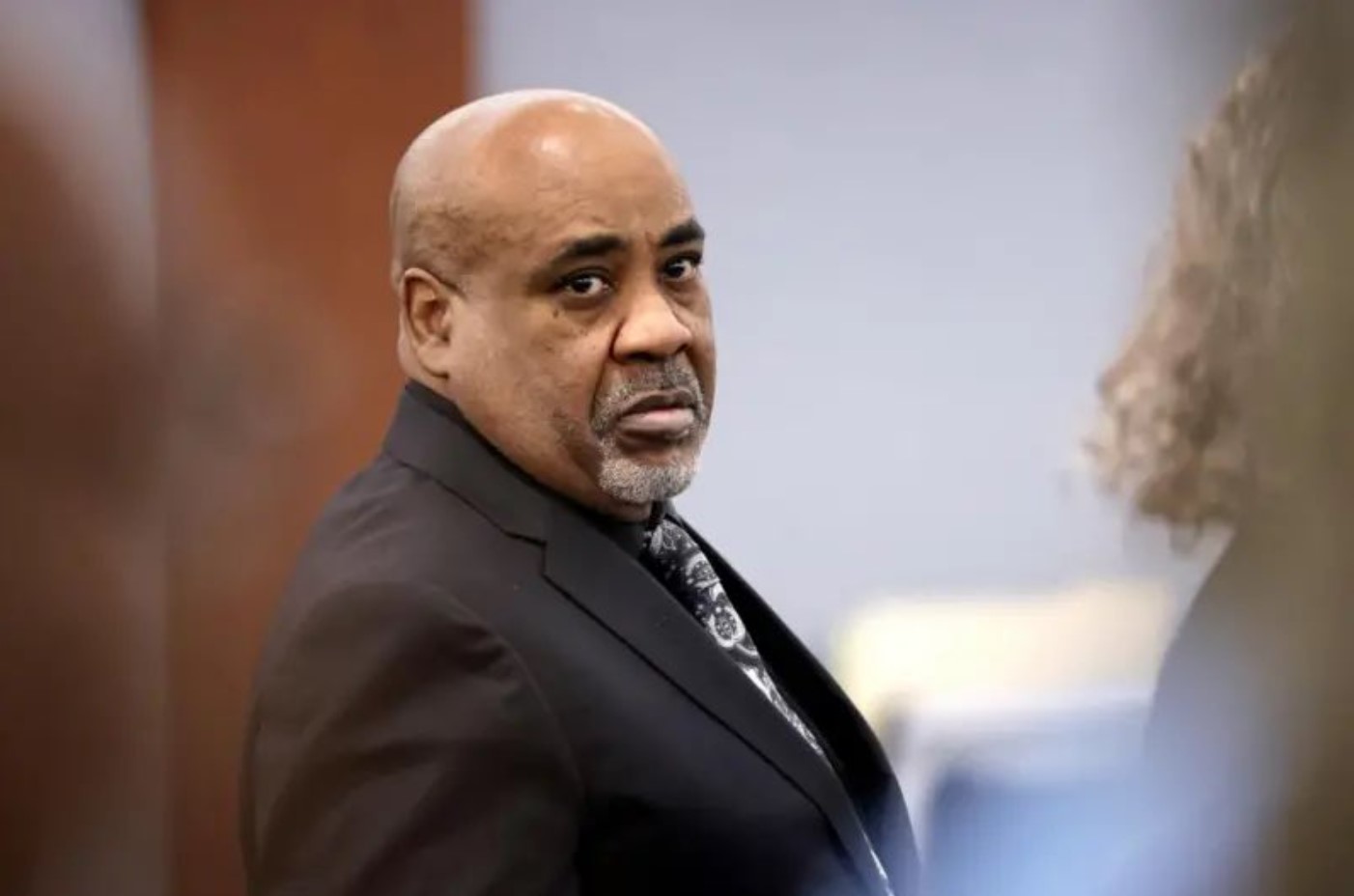
Duane “Keffe D” Davis, the 63-year-old former gang leader charged with orchestrating the murder of Tupac Shakur near the Las Vegas Strip on 7 September 1996, has been found guilty by a jury in the US state of Nevada.
A 12-member jury in Clark County found Davis guilty of first-degree murder with the use of a deadly weapon after deliberating for less than three hours.
Davis had originally been charged with murder with the use of a deadly weapon with the intent to promote, further or assist a criminal gang. Following the verdict, prosecutors said they would dismiss the gang-enhancement element of the charge because of witness logistics.
He now faces a maximum sentence of life imprisonment without the possibility of parole, with sentencing scheduled for 13 October.
Tupac Amaru Shakur, who was born Lesane Parish Crooks, was shot in a drive-by shooting in Las Vegas on 7 September 1996. He was sitting in the passenger seat of a black BMW driven by Death Row Records co-founder Marion “Suge” Knight when a white Cadillac pulled alongside them at a red light and gunfire erupted.
Tupac Shakur was shot multiple times and died from his injuries six days later, on 13 September, at the age of 25. Knight was also wounded but survived.
Davis was inside the white Cadillac from which the shots were fired. Prosecutors argued that he orchestrated the attack, supplied the firearm and led the group that went looking for Shakur and Knight following an altercation earlier that evening.
Hours before the shooting, Shakur and members of his entourage had assaulted Davis’ nephew, Orlando “Baby Lane” Anderson, at the MGM Grand following a Mike Tyson boxing match.
Prosecutors argued that the shooting was an act of retaliation.
During his closing argument, Chief Deputy District Attorney Binu Palal told jurors that Davis acquired a firearm, assembled his group and “went hunting” for Shakur.
Under Nevada law, a person involved in planning, facilitating or directing a murder can be convicted even if they did not personally fire the weapon.
Much of the evidence against Davis came from his own statements over the years.
Davis repeatedly discussed the killing in interviews with investigators, documentaries and public appearances. He also described his involvement in his 2019 memoir, Compton Street Legend, in which he placed himself inside the Cadillac and described passing a gun to the men sitting in the back seat.
Those public statements played a major role in reviving the investigation. Las Vegas police said when Davis was arrested in 2023 that his decision to speak publicly about the killing had provided investigators with admissible evidence that had not previously been available.
The prosecution presented recordings in which Davis described going out with three other men in the Cadillac after his nephew was beaten and handing a gun to the back seat shortly before the shooting.
All three of the other men alleged to have been inside the Cadillac have since died.
Davis defended himself by arguing that his previous accounts were exaggerations and fabrications made for money and notoriety.
His defence lawyer, Michael Sanft, told jurors that the prosecution had failed to produce independent physical evidence placing Davis in Las Vegas or inside the Cadillac on the night of the murder.
Sanft described Davis’ memoir as “fiction and not fact” and argued that there were no phone records, surveillance footage or other physical evidence corroborating his client’s public claims.
The jury ultimately rejected the defence’s arguments and accepted the prosecution’s case that Davis’ repeated admissions demonstrated his involvement in organising the killing.
Davis has said he intends to appeal the conviction.
The verdict marks the first conviction in a murder case that gripped the music industry and popular culture for nearly three decades.
Tupac Shakur remains celebrated as one of the most influential and iconic hip-hop artists in history. His murder at the age of 25 became one of the defining events of 1990s hip-hop and generated decades of speculation, conspiracy theories and unanswered questions over who was responsible for his killing.
Nearly 30 years after the shooting, Davis has become the first person to be convicted over Shakur’s murder.

Newsroom


Leave a Reply