



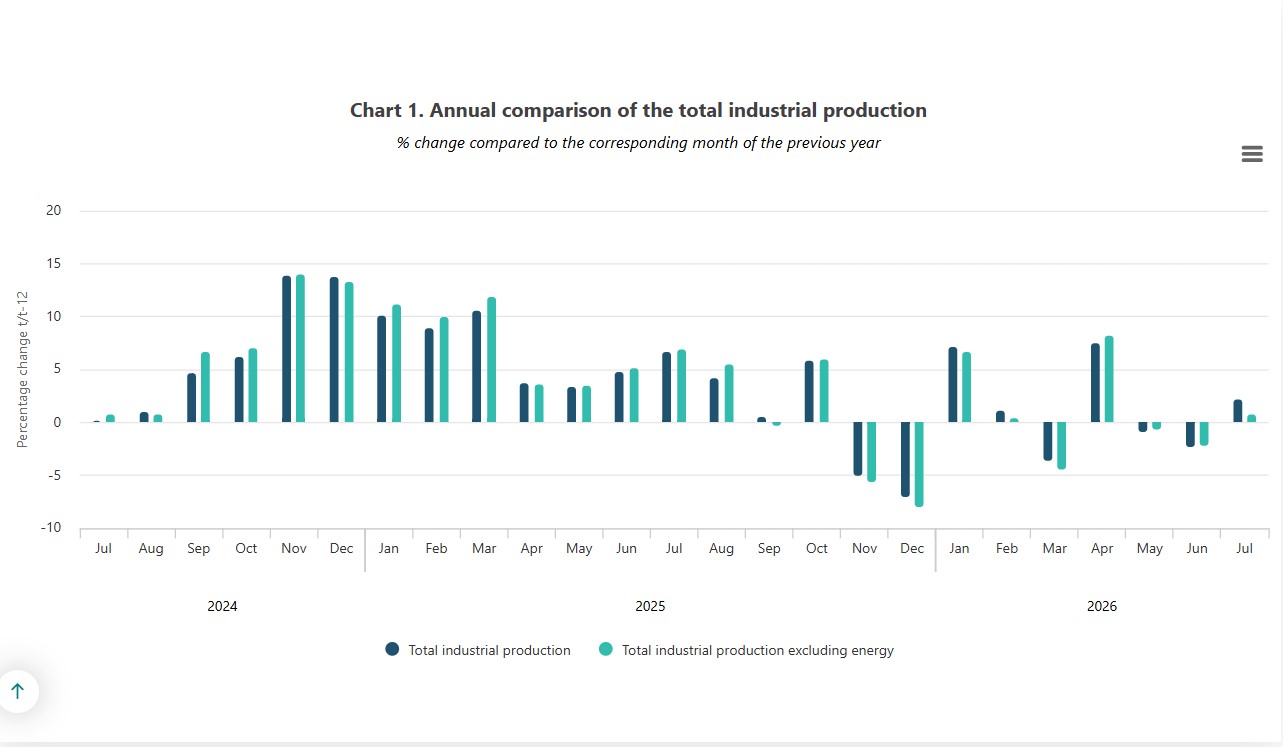
Malta’s industrial production increased by 2.2% in July compared with the same month last year, although the headline increase was heavily supported by energy production while manufacturing remained subdued.
Excluding energy, industrial output increased by just 0.8%, while manufacturing itself grew by only 0.7%, according to the latest NSO figures. NSO: Index of Industrial Production – July 2026
Energy production increased by 22.8% year-on-year, coinciding with the peak Summer period, while consumer goods increased by 8.9%.
Other important industrial categories remained in decline. Capital-goods production fell by 9% and intermediate goods by 3.2%.
Within manufacturing, wood, paper products and printing increased by 29.5%, but rubber, plastics and non-metallic minerals declined by 7%, computer, electronic and optical products and motor vehicles by 5.1%, and chemicals and pharmaceuticals by 3.2%.
Seasonally adjusted industrial production increased by 1.9% compared with June, providing some relief after industrial production fell by 1.5% year-on-year in June and by 0.6% from May. Production had already fallen by 5% month-on-month in May.
The improvement has yet to reverse the wider subdued trend. Industrial production fell sharply towards the end of 2025, declining by 8.2% year-on-year in November and 6% in December.
Pressure is also visible elsewhere in the industrial sector. During the second quarter, industrial turnover increased by 3.2% while gross wages and salaries rose by 6.7%.
July therefore marks an improvement from June, but with most of the headline annual increase coming from energy and several important manufacturing categories still contracting, Malta’s industrial production remains subdued.


Newsroom


Leave a Reply