




The Syrian port of Baniyas is rapidly emerging as a major oil transshipment and export hub in the Mediterranean as Iraq seeks alternative routes for its oil exports following war and disruption in the Strait of Hormuz.
Iraqi oil products that would traditionally have been exported through the Gulf are increasingly being transported overland by tanker trucks to Baniyas, where they can either be loaded onto ships for export or processed at Syria’s largest oil refinery.
The volume has increased dramatically. Syria has transported around 2.1 million tonnes of Iraqi fuel oil by road since April, with the number of tanker trucks involved reportedly increasing from just ten per day to as many as 1,000 daily. Iraq is also preparing to expand crude and naphtha exports through the same route.
The significant oil-flow has revived plans to reconstruct the Kirkuk-Baniyas oil pipeline, which would allow Iraq to export crude directly to the Mediterranean while bypassing the Strait of Hormuz.
The project is being studied with the involvement of major oil companies including Chevron, TotalEnergies, along with TI Capital and Qatar’s UCC Holding. The proposed new pipeline could eventually carry around two million barrels per day, although its construction is expected to cost at least $15 billion and take several years.
The Baniyas refinery itself is also undergoing a major overhaul. The Syrian Petroleum Company intends to increase its processing capacity from around 80,000 barrels per day to 130,000 barrels per day.
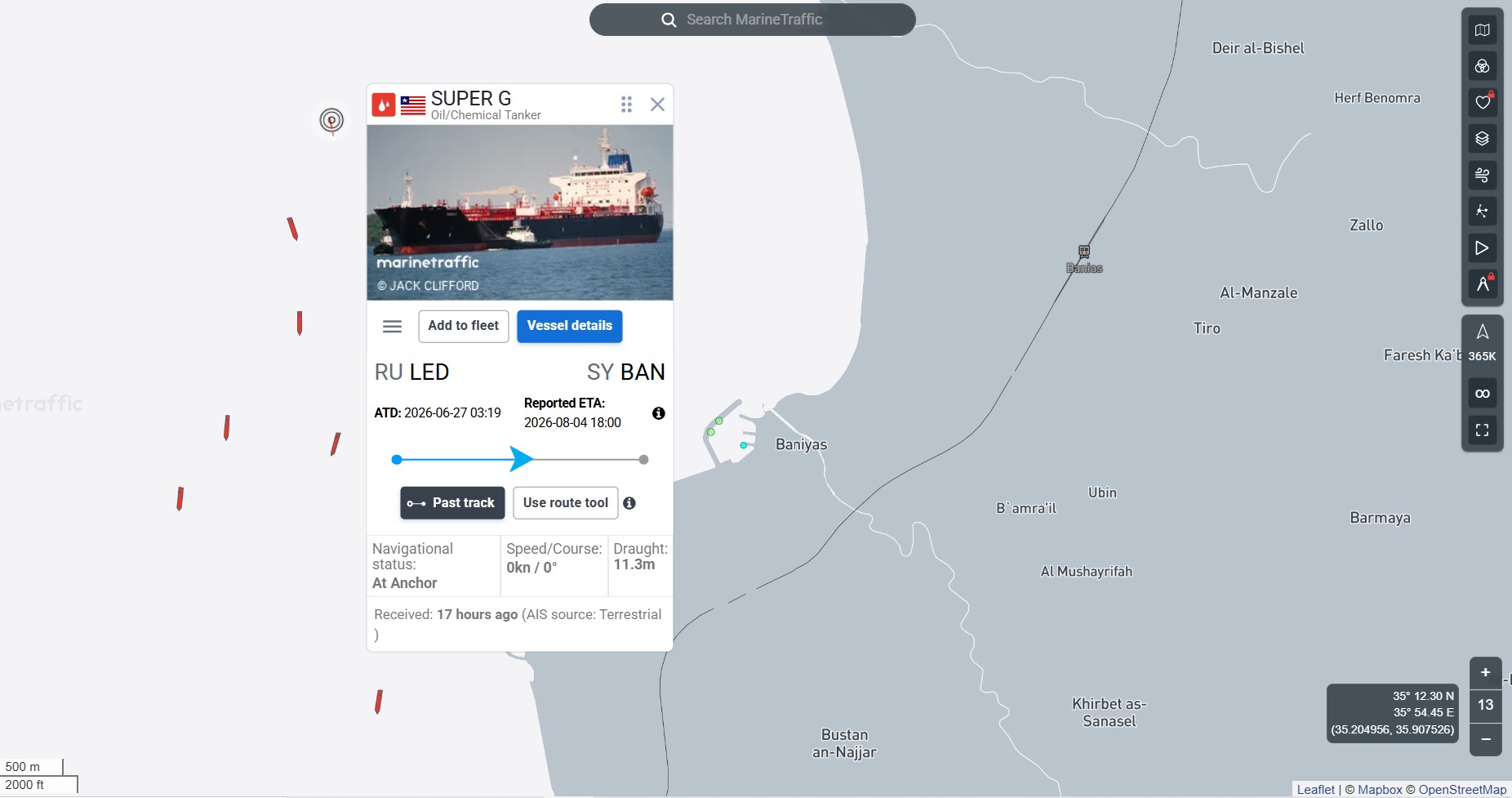
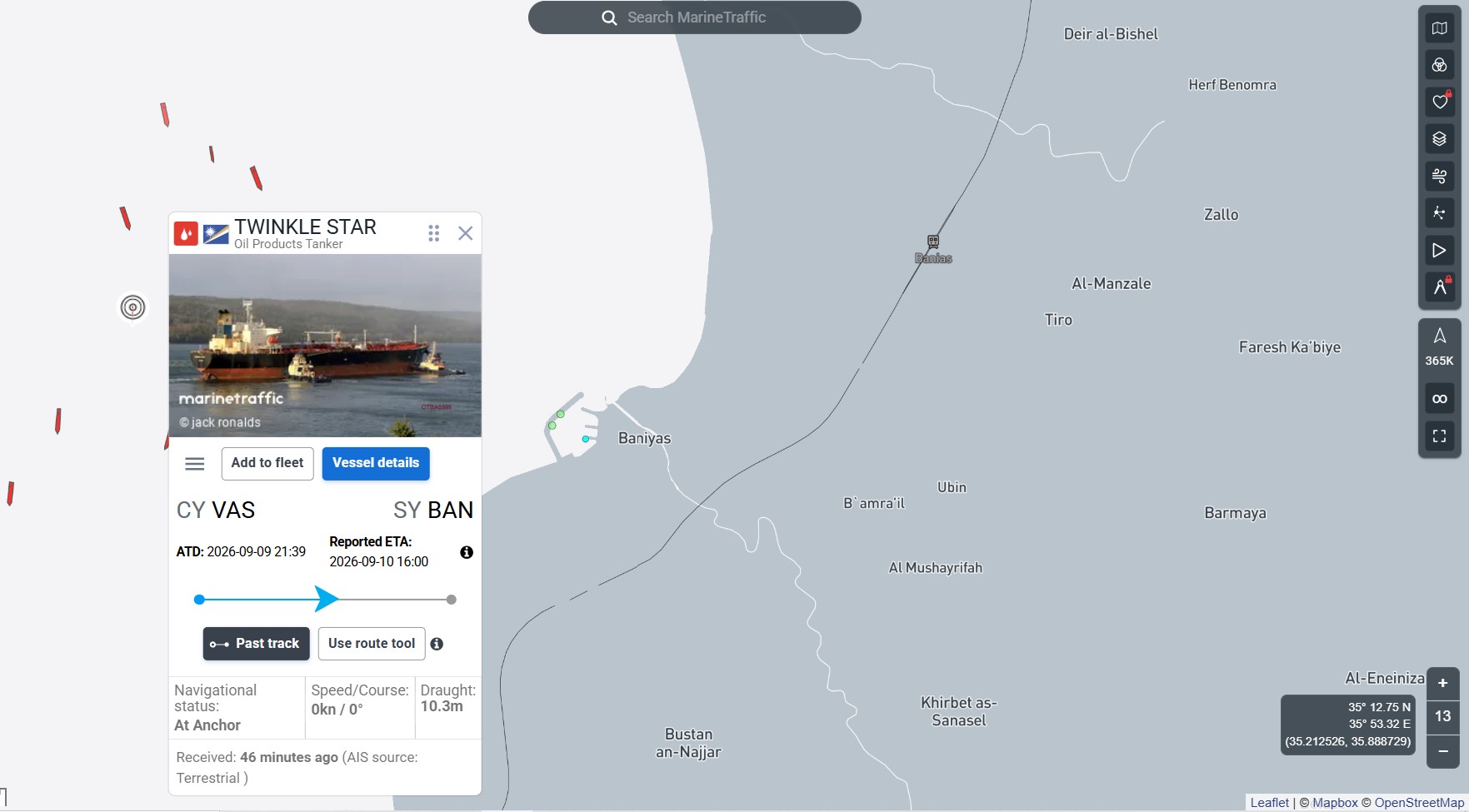
Meanwhile, Syria has pledged to stop importing Russian oil, but Russian-linked oil vessels are still hovering around Baniyas. There is a risk that the current Baniyas oil trans-shipment line could be used or abused by Russia and its shadow fleet.
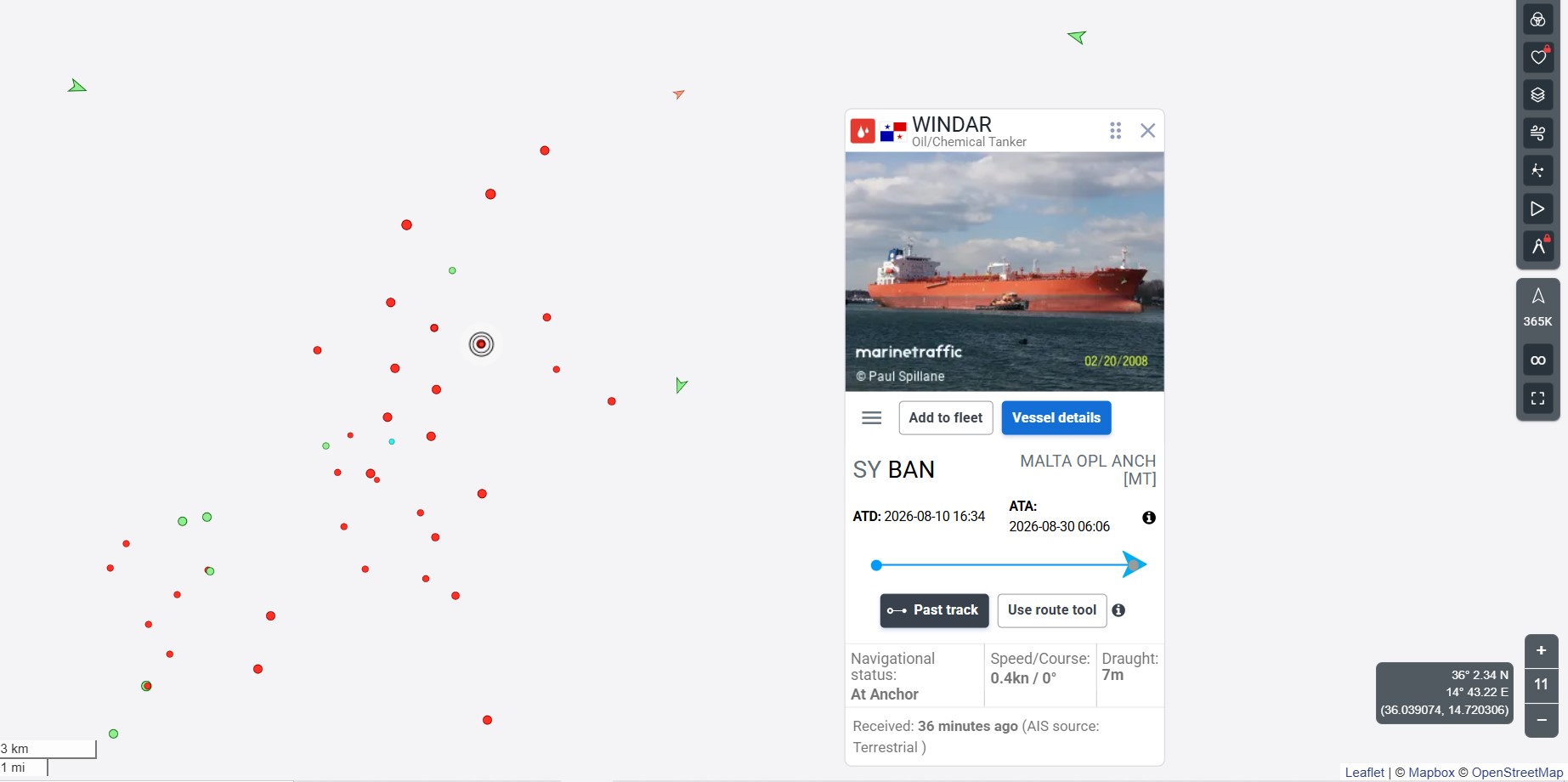
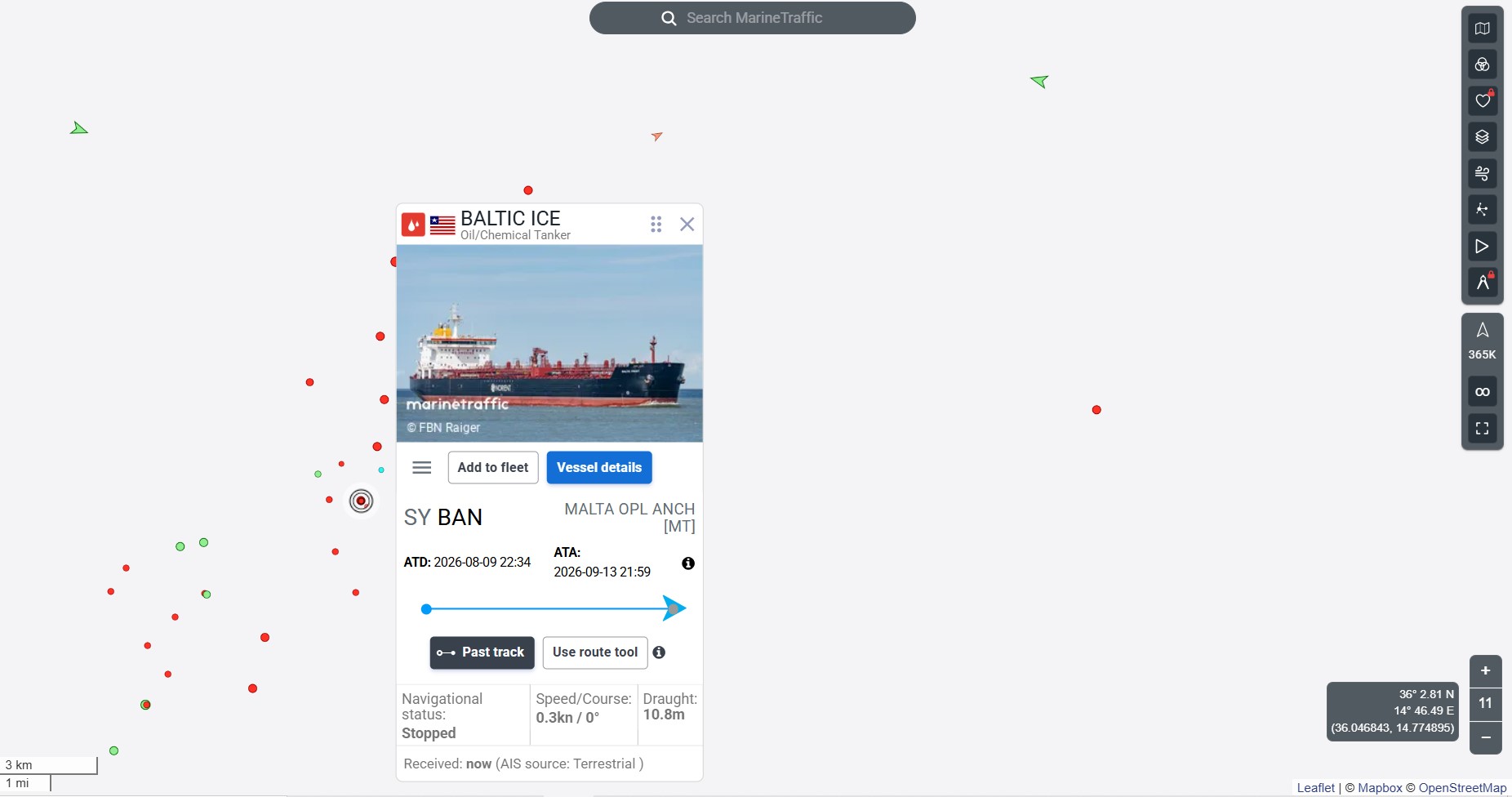
Malta has also become part of the Baniyas oil transshipment-route with oil tankers departing Baniyas, increasingly being observed visiting Hurd’s Bank, with some apparently conducting oil-trading or transfer operations while others stop in the area before continuing towards other Mediterranean or even Atlantic destinations.
The Baniyas transshipment route serve as a great alternative to Russian oil imports, but it can also serve as a lucrative opportunity for Moscow to add to its oil revenues if Syria does not enforce regulations and international laws in its harbour and outlying areas.
Feature photo from Wikipedia.
Images below from Marine Traffic.


Website Editor
Historian and Publisher


Leave a Reply