



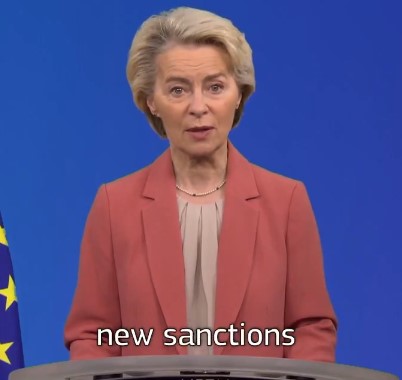
The European Commission has proposed its 22nd package of sanctions against Russia, introducing a series of new restrictions targeting Moscow’s financial system, energy industry, international sporting participation and ability to circumvent existing sanctions.
The proposal, unveiled by European Commission President Ursula von der Leyen on Monday, includes a ban on Russian teams and athletes competing under the Russian flag in sporting events held within the European Union.
The Commission is also proposing to prohibit the display of official Russian symbols at sporting events, restrict financial contributions from Russian sponsors to European sports and cultural associations, and prevent Russian nationals from occupying positions in the governing bodies of European-based sports federations.
President Von der Leyen said sporting events should not become platforms for political propaganda, arguing that Russia should not be allowed to use international competitions to promote its national symbols while continuing its invasion of Ukraine.
The proposal follows growing concern within European institutions over the gradual return of Russian athletes to international competitions, following decisions by several international sporting organisations to ease restrictions imposed after Russia’s full-scale invasion of Ukraine in 2022.
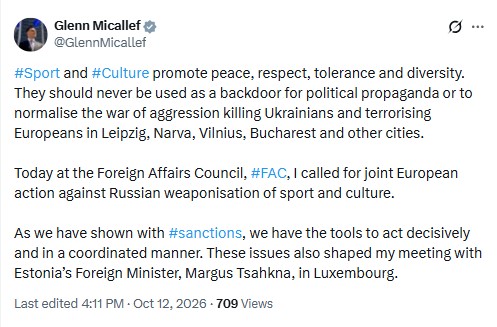
Maltese European Commissioner for Intergenerational Fairness, Youth, Culture and Sport Glenn Micallef has been advocating stronger action to prevent European sports funding from benefiting organisations that allow sporting events to be used for Russian propaganda.
Commissioner Micallef has argued that EU funding, including through the Erasmus+ programme, should be conditional on sports organisations upholding European values and preventing sporting competitions from becoming vehicles for political propaganda.
His efforts form part of a wider European debate over Russia’s participation in international sport and the responsibilities of sporting federations receiving European funding.
The latest proposal goes further by seeking to restrict Russian participation under the national flag at sporting events throughout the EU.
60 Russian banks targeted as EU tightens financial restrictions
The new package also targets Russia’s financial system, with the European Commission proposing to extend transaction restrictions to approximately 60 additional Russian banks.
These institutions would be disconnected from the SWIFT international financial messaging system, further restricting their ability to conduct international transactions.
Brussels is also targeting cryptocurrency platforms and payment networks used by Russia to circumvent existing sanctions and finance its war effort.
The proposed restrictions would extend beyond Russian entities to companies and financial institutions in third countries that help Moscow bypass European sanctions.
A dedicated Crypto Sanctions Task Force has also been established to coordinate enforcement and strengthen cooperation with international partners.
More than 70 Russian shadow fleet vessels targeted
The European Commission is also proposing to list more than 70 additional vessels belonging to Russia’s so-called shadow fleet.
These vessels are used by Moscow to transport oil and other commodities while attempting to circumvent international restrictions and the oil price cap.
The Commission is proposing a further restriction on tanker vessels insured in Russia, while expanding the existing ban on European companies providing services to Russia’s energy infrastructure.
For the first time, the proposed restrictions would also cover electricity-related services, preventing European companies from helping Russia build, operate or repair energy infrastructure, particularly oil refineries.
Russian former combatants could be barred from entering EU
Another significant element of the package is a proposed visa ban targeting Russian nationals who have fought in the war against Ukraine.
President Von der Leyen said the measure was prompted by growing security concerns over Russian operatives and the escalation of unconventional activities across Europe.
“Russian ex-combatants pose a security risk to Europe. They cannot be allowed to wander freely across our countries. Therefore, entry into the European Union will be off limits,” she said.
The Commission is also proposing to prevent European citizens from continuing to occupy positions on the governing boards of companies operating in Russia.

Newsroom
Leave a Reply