



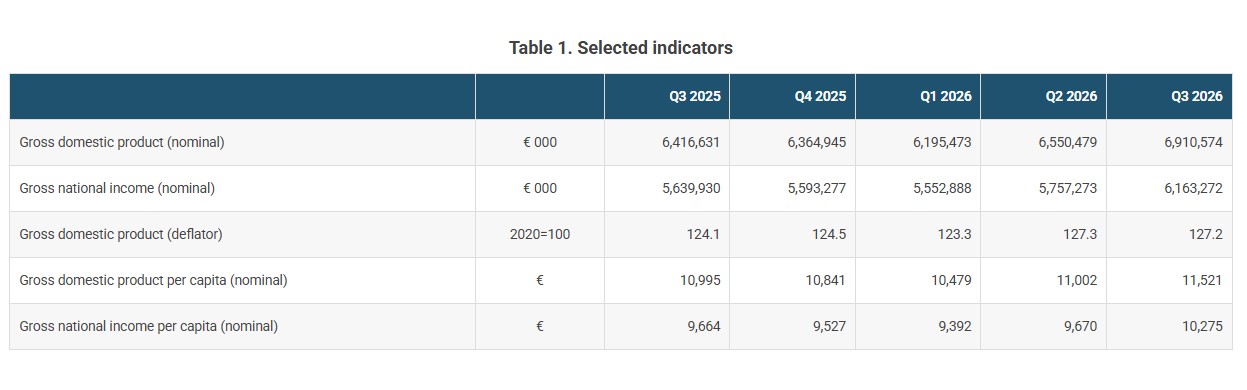
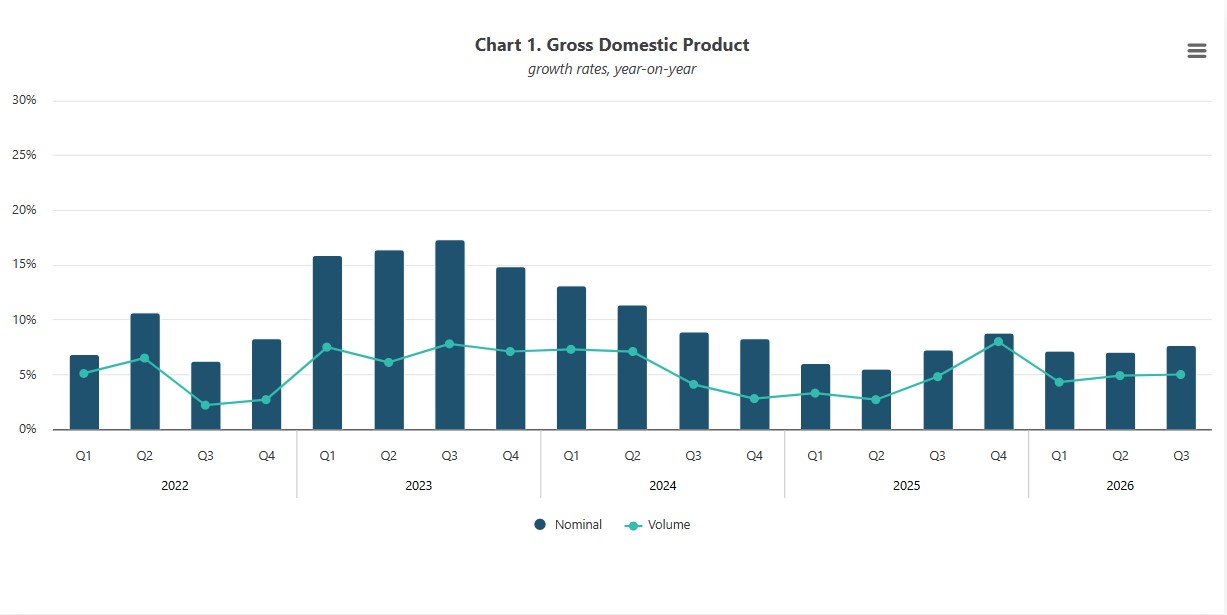
Malta’s economy expanded by 5% in real terms during the third quarter of 2026, while its nominal Gross Domestic Product (GDP) increased by 7.7%, reaching almost €6.91 billion, according to the latest figures published by the National Statistics Office (NSO).
The provisional figures show that nominal GDP increased by €493.9 million compared with the corresponding quarter last year, when it stood at approximately €6.42 billion.
The 5% increase in real GDP takes into account the effects of inflation, while the 7.7% nominal increase measures the growth in the monetary value of economic output at current prices.
The NSO reported that the GDP deflator, which measures changes in the prices of goods and services produced domestically, increased by 2.5% compared with the third quarter of 2025.
Services drive economic growth
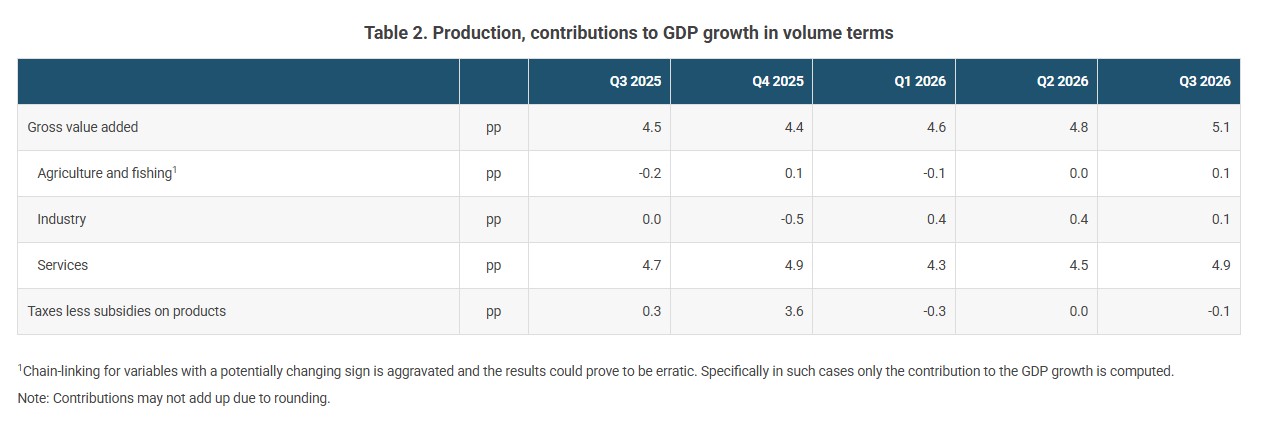
The services sector remained the principal contributor to economic growth, contributing 5.3 percentage points to the overall GDP growth rate.
Information and communication activities increased by 10.1%, transportation and storage grew by 13.4%, while accommodation and food services expanded by 9.9%.
Gross Value Added (GVA), which measures the value generated by the various sectors of the economy, increased by 5.6% in real terms.
Industry contributed just 0.1 percentage points to GDP growth, while agriculture and fishing contributed a further 0.2 percentage points.
Domestic demand drives growth
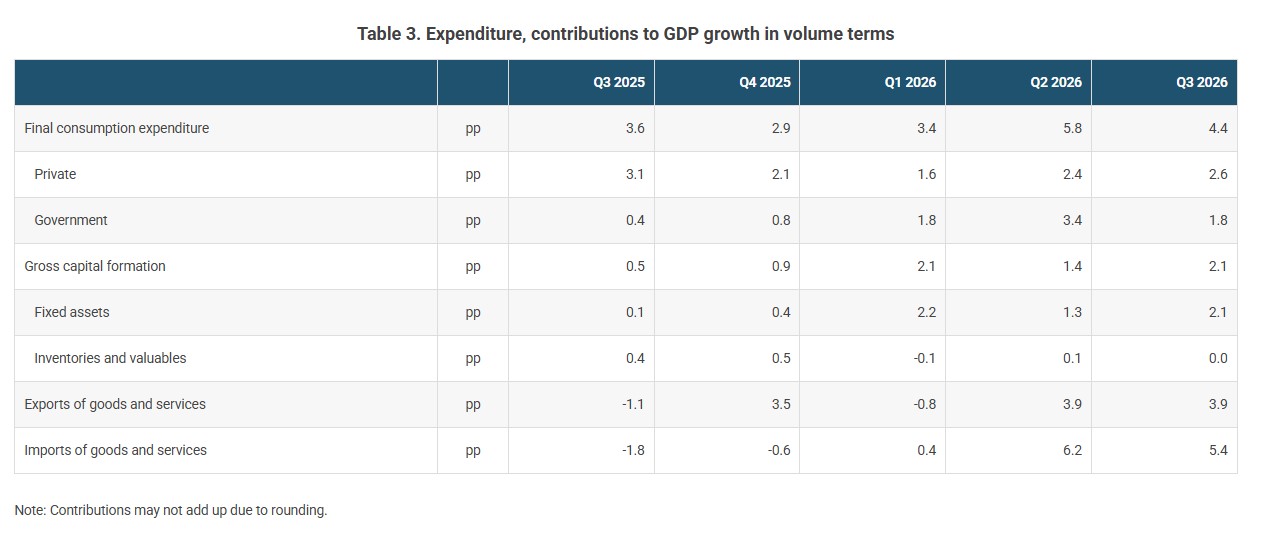
The NSO’s expenditure analysis shows that domestic demand contributed positively by 6.5 percentage points to GDP growth. However, foreign trade had a negative contribution of 1.5 percentage points.
Final consumption expenditure increased by 7.1% in volume terms. Household consumption rose by 5.9%, while government consumption increased by 11.6%.
Investment also registered strong growth, with gross fixed capital formation increasing by 11.7% compared with the same quarter last year.
Meanwhile, exports of goods and services increased by 3% in volume terms, while imports rose by 4.9%.
The figures indicate that domestic consumption and investment were the main drivers of economic expansion, while the difference between export and import growth weighed on the overall result.
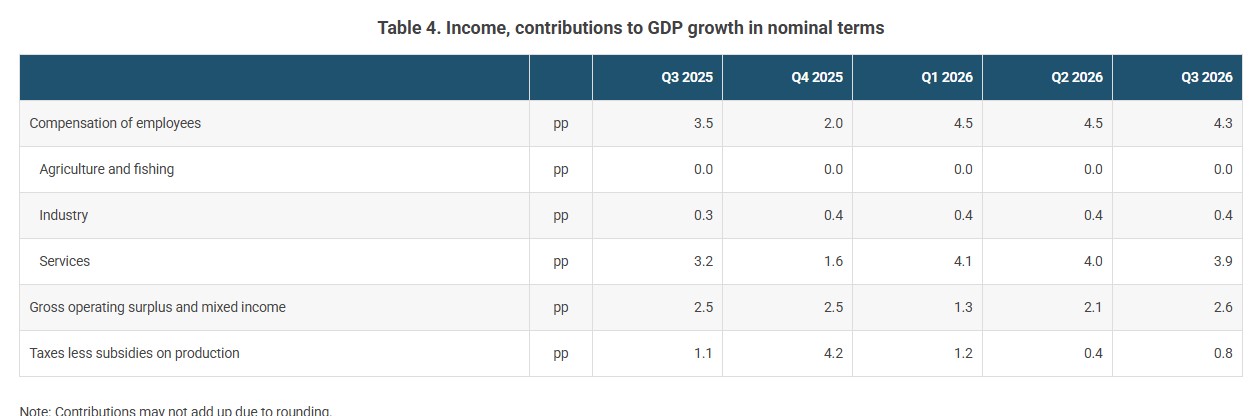
Higher employee compensation and business profits
The NSO’s income approach shows that the €493.9 million increase in nominal GDP was distributed across higher employee compensation, business operating surpluses and taxes.
Compensation of employees increased by €278.5 million compared with the third quarter of 2025.
Gross operating surplus and mixed income, which include the operating returns generated by businesses and self-employed activity, increased by €165.3 million.
Taxes on production and imports, after accounting for subsidies, contributed a further €50.1 million.
Meanwhile, Gross National Income (GNI), which adjusts GDP for certain income flows between Malta and the rest of the world, was estimated at €6.2 billion.

Newsroom
Leave a Reply