



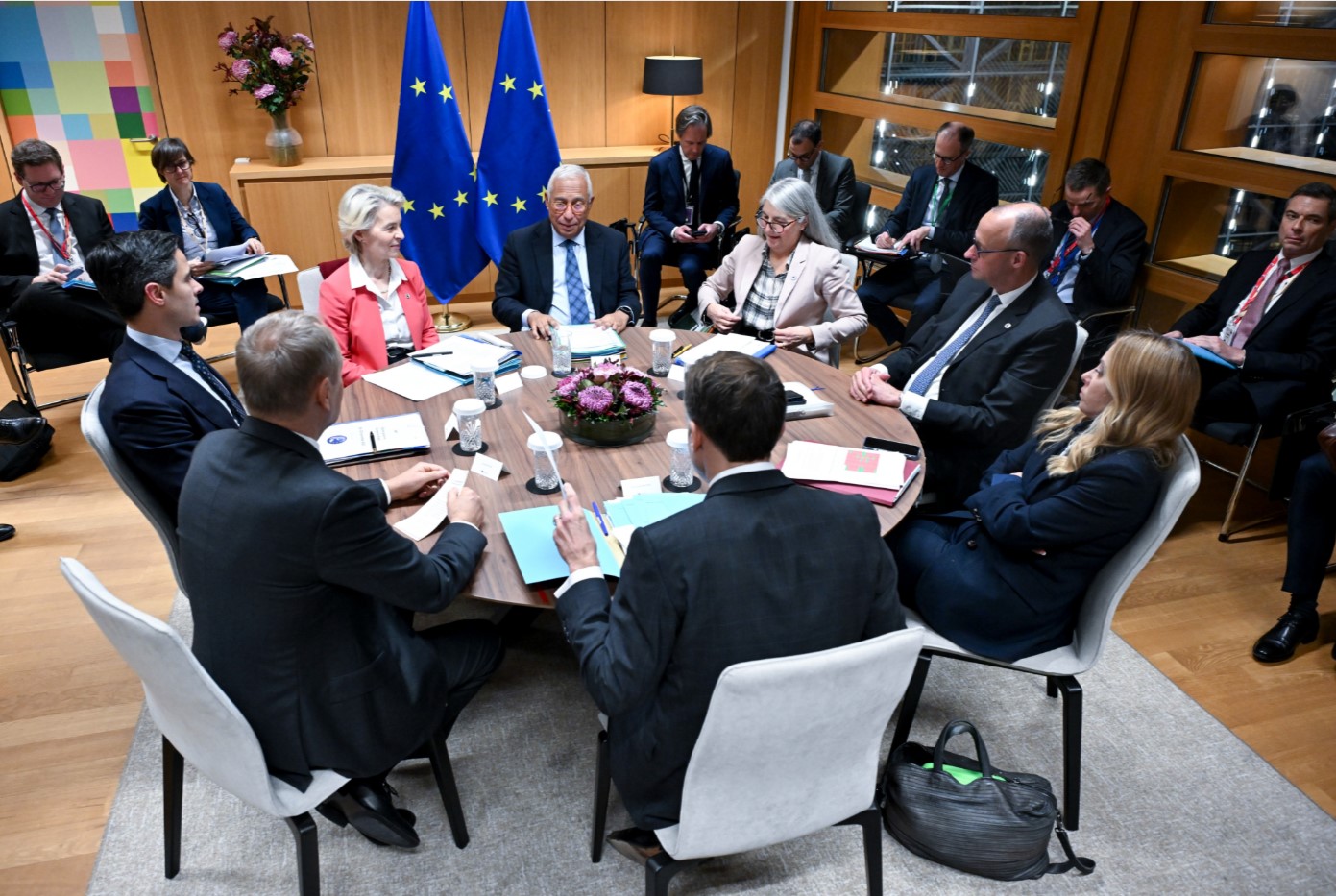
The European Council has failed to reach an agreement on the European Union’s next long-term budget, covering the period 2028–2034, after a special summit in Brussels ended without a breakthrough.
The proposed Multiannual Financial Framework (MFF) by the EU Commission is worth approximately €1.78 trillion. European Council President António Costa had already reduced the European Commission’s original proposal by approximately €204 billion in an attempt to secure the support of countries demanding a smaller budget.
Even this revised proposal has failed to satisfy the more fiscally conservative member states.
French President Emmanuel Macron has has brought domestic political excuses for opposing the budget. At the same time, he also said that a deal should be cut before a potential Marine Le Pen victory in the upcoming French presidential elections.
It is being reported by Euronews that President Macron is also against excessive cuts to strategic European spending.
The Netherlands has meanwhile continued to push back against the proposed budget. Dutch Prime Minister Rob Jetten has argued that the EU must modernise its spending priorities and reduce the overall financial burden on national governments.
Germany has also demanded further reductions. Chancellor Friedrich Merz said that the cuts proposed by Costa would not be sufficient and that the budget would have to become smaller still.
On the other side of the negotiations are the 17 member states forming the Friends of Cohesion group, which includes Malta. These countries are pushing for a sufficiently ambitious European budget and are seeking to protect funding for regional development, agriculture and cohesion programmes. However, these countries are also reluctant to add to their own bill.
Germany, Sweden, the Netherlands, Denmark, Finland, Austria and Belgium have formed a group together demanding further reductions to the budget. These countries are opposing the Friends of the Cohesion Group.
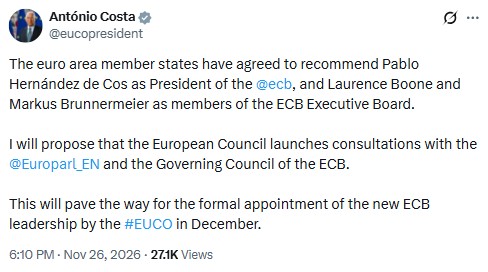
While the budget negotiations ended without an agreement, European leaders did reach a decision on the succession of European Central Bank President Christine Lagarde.
The European Council put forward Spanish candidate Pablo Hernández de Cos as the next President of the ECB. He is expected to replace Lagarde when she leaves office on 7 February 2027, subject to the remaining consultation and appointment procedures.
Hernández de Cos previously served as Governor of the Bank of Spain between 2018 and 2024.
The negotiations on the EU budget will continue in December, with the possibility of another extraordinary summit being considered.

Newsroom
Leave a Reply