



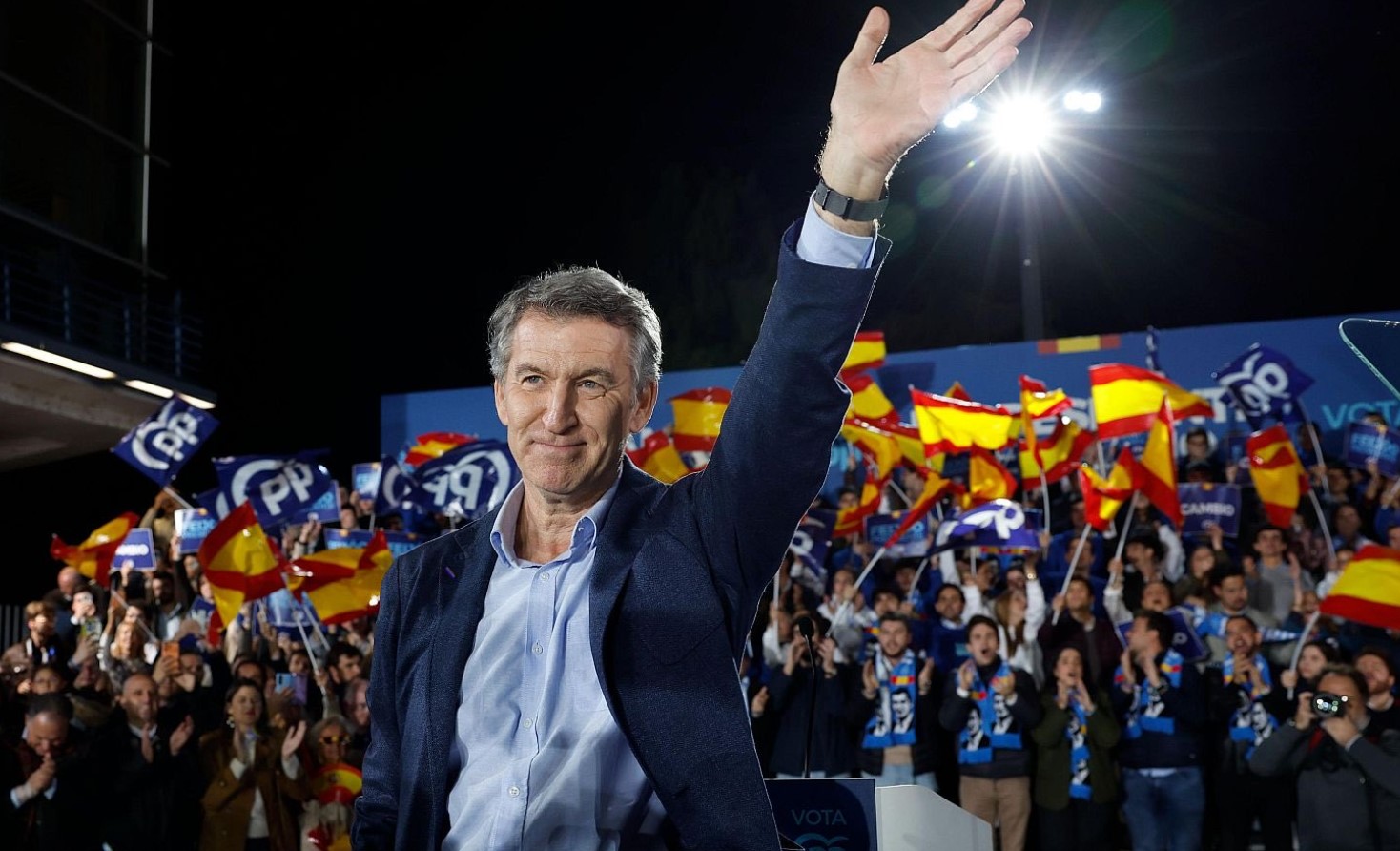
Early exit polls indicate that Spain’s conservative Partido Popular (PP), led by Alberto Núñez Feijóo, has won the largest share of the vote, overtaking the incumbent Spanish Socialist Workers’ Party (PSOE). The PP is projected to secure between 129 and 134 seats, with approximately 32.2% of the vote, while the PSOE is expected to trail with between 119 and 124 seats and 28.8%. The far-right Vox party is projected to win between 44 and 48 seats, with 16.2% of the vote, potentially giving the two right-wing parties a parliamentary majority in the 350-seat Congress. An absolute majority requires 176 seats, and the addition of the two seats projected for the regionalist UPN could make a PP-led government possible.
The election has been marked by record voter turnout, with 68.1% of eligible voters casting their ballots by 6pm. This was approximately 15 percentage points higher than turnout at the same stage of the 2023 general election and exceeded the previous record for that time of day, set in 1996, by more than four percentage points. Near-final turnout reached approximately 79.5–79.6%, one of the highest since the return of democracy (very close to the 1982 record of 80%). The result is marks a historic political shift, with voters deciding to end Pedro Sánchez’s premiership after eight years in office.
Sánchez’s final years in government have been overshadowed by a series of corruption investigations involving people close to his political circle and his family, along with deadly railway disasters. The housing crisis also became a central issue during the election campaign. The snap election was called after Sánchez dissolved Parliament following the defeat of his government’s proposed emergency housing reforms.
Pedro Sánchez has been one of the most prominent leaders of the European centre-left and a leading figure within the Socialists and Democrats (S&D) political family. His departure from government leaves Malta’s Robert Abela (and Denmark’s Mette Frederiksen) as the remaining S&D heads of government at the European Council. The EPP now has an even bigger bloc at the Council, probably a record at 13.
Vox appears likely to provide the parliamentary support needed for a PP-led government. Spain already has experience of regional governments in which the PP and Vox have shared power. The arrangement could also invite comparisons with Italy, where Giorgia Meloni leads a right-wing coalition government.
The little known Fiejo , who doesn’t speak English, and served a career in politics and the public service, will be seen as a newcomer in the international stage, compared to the outgoing Pedro SDanchez who had acquired a high international profile.
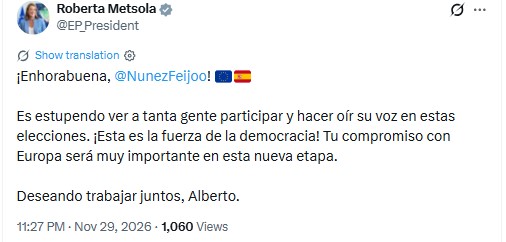
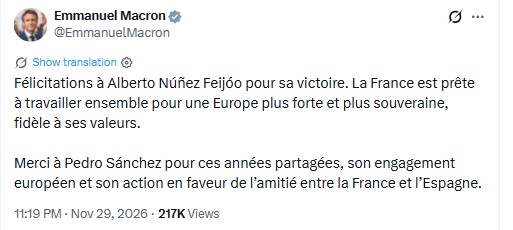
Feijóo, who has led the PP since 2022 and previously served as President of the Xunta de Galicia, would nevertheless be entering the international stage as Spain’s new prime minister if the projections are confirmed. Unlike Sánchez, who has spent eight years building relationships with European and international leaders, Feijóo would have to establish his own profile among them. His ability to negotiate with Vox while presenting Spain as a reliable partner within the European Union will be among the first challenges facing a potential new government.

Newsroom
Leave a Reply