



Due to the war in Gaza there is currently a lot of misinformation on the Near East – yes, it is the Near East for us who actually studied the region and not the Middle East. I studied Near Studies for three years as a subsidiary subject at university but it was as hard and intense as a main subject having had to learn several classical languages such as Hebrew and Phoenician (I forgot most of the language, but remember most of the history). I know some things which I can share with my readers with some authority.
The Israeli and Palestinian conflict is a very complex and multifaceted issue, and it is not something that you will learn about from Tiktok. It is also a conflict that has been abused by many for social and political currency. We have seen hundreds of thousands of people marching in the streets of Europe and North America chanting “Free Palestine” and “From the River to the Sea”, without knowing what these slogans actually mean (from the Jordan River to the Mediterranean Sea).
We have also seen a sharp increase in antisemitism all over Europe and North America. In Malta, exactly following the brutal Hamas’ attack of October 7th, we have had university academics issuing statements in favour of the abolition of Israel, and left-wing activists celebrating Palestinian terrorists. (the photo of the young girl with an AK-47 is an actual terrorist who hijacked a plane full of civilians in 1969). Currently, in the US three rectors of some of the most popular and prestigious universities are being forced to resign after they refused to acknowledge in a Congress hearing, that genocidal calls against the Jews at their university are unacceptable on campus.
Antisemitism is not the right answer to the crimes and abuses of the Israeli state, but it is a popular sentiment that has been pervasive in Islam and in the Arab world and adopted by the left as an “anti-colonial struggle”. The problem with this narrative is that it considers the state of Israel as illegal, implying that the Jews should not have their own state, also implying that the Jews should live under a majority-Arab state called Palestine. In addition, the left implies that if you don’t agree about there being one single Palestinian state for both Jews and Arabs, you are supposedly a racist against Arabs and supporting an “apartheid state”.
Then there is this concept of anti-Zionism and that Zionism is a form of “white imperialism” over Arabs. The left will argue that good Jews are anti-Zionists and bad Jews are pro-Israeli Zionists. This argument by the left implies that all Israeli citizens can basically, be considered legitimate military targets because they are “occupiers”. A popular United Nations General Assembly resolution (37/43) of 1982 that proclaims that resistance to foreign occupation is justified by any “all available means, including armed struggle” is used by the left to justify attacks on Israeli civilians because supposedly they are occupiers.
Some of my readers have shared with me these arguments in my reporting of the war and accused me of bias because I’ve covered Hamas but I don’t cover the injustices taking place in the West Bank perpetrated by Israel. The Israeli occupation of the West Bank has been ongoing since June 1967, (or the Six-Day War) and I didn’t cover it like many other ongoing conflicts and disputes in the Near East that started way before I started actively writing on this website in late 2021. I understand why I would be accused of bias, so I will make an effort to cover the West Bank as well. The Israeli occupation of the West Bank is one of the most reported issues in the press and this is why I don’t feel of any value reporting about it. I can’t keep up with everything that happens at this early stage, so I try to dedicate my time to work that can be of value and not to information that is already widely known. I may have deficiencies in my prioritisation, of course, so I will try to do my best to calibrate accordingly.
At this stage, I think I can be of value by providing some general information to my readers on the historical Israeli and Palestinian conflict, especially given the swathe of misinformation going around.
Israel is an actual historical place in what is today Israel
The Kingdom of Israel existed in what is today’s Israel as early as 1000BC and the Jews had to fight for their land against multiple invasions by neighbouring armies and states that were much bigger and more powerful. Noteworthy is the Babylonian invasion of Israel by Nebuchadnezzar II in around 601 BC which led to the expulsion of many Jews. The Jews were then permanently expelled from their lands in 70 AD by the Romans and since then have experienced massacres by Muhammed, a historical series of expulsions from European countries, pogroms in Russia in the 19th century, and eventually a Holocaust in Germany and Europe in the 1940s. The Jews had spent most of their history as a people expelled from their lands and without a nation, having to go around the world and change their home often. Zionism was a political Jewish movement that started in the 19th century but grew in the 20th century, It aimed to re-establish the Jewish homeland and break the perpetual victimisation of Jews. After centuries of massacres, expulsions, and discrimination, Jews realised that their security and emancipation could only be guaranteed if they had their state. This movement encouraged many Jews to immigrate to what was then called Palestine which was under the Ottoman Empire. After the Ottoman Empire collapsed, the British took over Palestine. During the 19th and 20th centuries, many Jews immigrated to Palestine legally and bought land there as part of their Zionist dream.
The term Jew is interchangeable with Hebrew
There are many Jews who invoke Zionism as a religious movement, but there are also many Jews who are Zionists that do not practice or believe in their religion. The term Jewish is interchangeable with Hebrew, so when we refer to a Jewish person, we usually refer to a Hebrew person, irrespective of whether they believe in the Jewish religion or not.
Palestinians are Arabs, not Caaninites
There seems to be some confusion on what Caaninite and Palestinian mean. In reality, even scholars disagree with what Caaninite means, but fundamentally, Canaanites were the people living in the lands on the coast of the Mediterranean Sea and these included Phoenicians and Jews. The Arabs were different people who came from what today is Saudi Arabia and the Gulf States and moved Westward as they built the Islamic empire. Although the Canaanite languages such as Phoenician and Hebrew are Semitic like Arabic, they are different languages that are not directly related to Arabic. The Aramaic and Jewish languages are distinct from the Arabic language, but the Muslims Arabised and Islamised many different language groups into their empire and eradicated many minorities in the process. Historically, the Arabs have been a conquering people of the Near East who had a decisive victory over who controls the whole region, basically replacing Rome as the superpower in the region. The Arabic and Islamic empire eventually collapsed under its own weight and Jerusalem was fought over by Christians and Muslims alike until the Ottoman Empire claimed a decisive victory over Jerusalem in 1516.
The state of Israel was declared in what predominantly was majority-owned Jewish land
Israel officially declared its independence on May 14, 1948. The land where Israel was declared had a Jewish majority population at that time. The state of Israel was declared as part of a partition plan approved by the United Nations in 1947, but the Arabs, who were supported by the Soviet Union, never accepted it. Soon after Israel declared its independence, Arab armies from Egypt, Jordan, Iraq, and Syria began an invasion of Israel to destroy it. This was a nightmare scenario for many Jews who had arrived from Europe after experiencing the Holocaust. At that time the Israeli population was just around 800,000 people in total and it was facing the scenario where all its neighbours wanted it to leave. Israel successfully defended itself from the Arab armies and proceeded to conquer more lands expelling around 700,000 Palestinians from their lands and homes in an event the Arabs remember as the “Nakba”. Following these events, Jews who lived across the Near East and in the Arab countries began to be expelled.
Israel is not an apartheid state
An apartheid state is a state that has two classes of distinct citizens with one class of citizens that is privileged over the other by law. Israel is not an apartheid state because it doesn’t have this legal distinction between its classes and races of citizens. The Arabs of Israel amount to around 20% of its population, are represented in parliament, and have all the legal rights and obligations as any other Israeli passport holder – they are Israeli citizens. They are a minority in a predominantly Jewish country and may face similar discriminatory and racial experiences that minorities in other liberal democracies encounter. However, they are equal to other citizens in the eyes of the law.
Israel is an occupying power
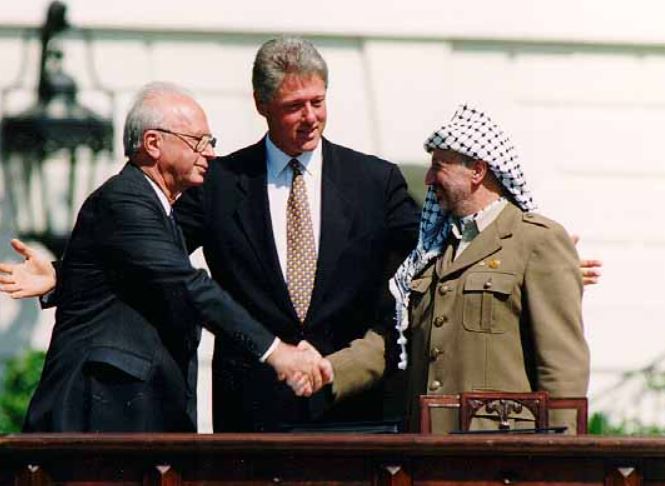
Israel controls the West Bank as a belligerent power and it has been doing so since 1967 in response to an all-out Arab war that aimed to destroy it. Israel successfully responded to an imminent Arabic invasion by defeating the Egyptian, Jordanian, and Syrian armies and conquering the Sinai, the Golan Heights, and the West Bank (previously occupied by Jordan). As of the 1990s Israel has given up civil authority in the West Bank to the newly formed Palestinian Authority as part of Israel’s policy described as “land for peace”. It also gave up control of Gaza. The Palestinian Authority was formed in 1994 as part of the Oslo Accords: a process where Israel began gradually giving up power over the West Bank and the Gaza Strip whilst recognising the newly formed Palestinian state as represented by the Palestinian authority. This peace process was jeapordised by Hamas and Israeli society reacted to the failure of the peace process by opting for hard-right politics as represented by Benjamin Netanyahu. The Israeli right exploited the failure of the peace process by allowing ever-increasing illegal Jewish settlements in the West Bank, and increased repression of the Palestinians.
Hamas is not fighting as a result of Israeli oppression: they have a genocidal mission
Hamas is not the result of the pain and suffering of Palestinians. It is neither a legitimate fighting force that is fighting for Palestinian rights. Hamas rules its people with an iron fist and has forced many of its Palestinian critics into silence. The mission and charter of Hamas are very simple and they aim to expel all the Jews from Israel and Palestine. If hypothetically Palestinians lived freely in Israel or Palestine without an Israeli occupation, Hamas would still exist with the same kind of aims. Hamas rarely speaks of the occupation in the West Bank, and they are ready to sacrifice their own people for their religious cause.
Why did the peace process fail?
Before Hamas scuttled the peace process and Netanyahu came to power, the Israelis were ready to accept a Palestinian state and in electoral terms, the peace-engaging moderates were successfully making progress, eventually leading to the handover of Gaza to the Palestinian Authority. The Israeli electorate’s position changed drastically when Hamas used Gaza as a base to begin firing rockets indiscriminately into Israel. On the other hand, the peace process was also marred by two points on which the Palestinians were very uncompromising and that is the return of all Palestinian immigrants and Jerusalem which Palestinians want as their capital. Jerusalem was the ancient capital city of the Kingdom of Israel, thus holding great significance for Jews. However, in the history of Islam and Palestine, it does not have the same historic importance.
The moral quandaries of the historical conflict
Given the great injustice perpetrated by the state of Israel on the Palestinians it expelled from their land, it is understandable that the Palestinians would be uncompromising on the issue of the immigrants’ return, but in practical terms, it is also very complicated having to force out many Israelis from their homes and replacing them with Palestinian Arabs that are hostile to the Israeli state. Concluding peace between the two different peoples would require many compromises with one side losing more than the other. Many Palestinians, however, are still of the very strong conviction that Israel shouldn’t exist in the first place and that it is their mission as a people to ensure the expulsion of the Jews or the abrogation of the state of Israel. Israelis on the other hand have experienced fatigue over the Palestinian peace process and have lost interest in its continuation. Meanwhile, Israel continues its oppression of Palestinians in the West Bank because Israelis no longer have any consideration for Palestinian lives or their future.
There is hatred on both sides of this conflict, and both sides perpetrate crimes against each other, but Israel who has the upper hand and is a belligerent occupying power, has the propensity nd power to commit atrocities on a wider scale. Israel could actually increase its oppression of Palestinians and no one would stop it. On the other hand, Israelis believe from their own experience of Hamas and Gaza, that giving more power and freedom to Palestinians would result in more conflict and more Israeli and Jewish deaths.
Peace will never happen if both sides have extremist leaders as is the current situation of today. If the Israeli liberals and left-wing political parties take power once again, a new peace dialogue would commence. If by then Hamas is removed from the equation, there will be a much higher probability of achieving some form of material and tangible process.

Website Editor
Historian and Publisher



Leave a Reply