



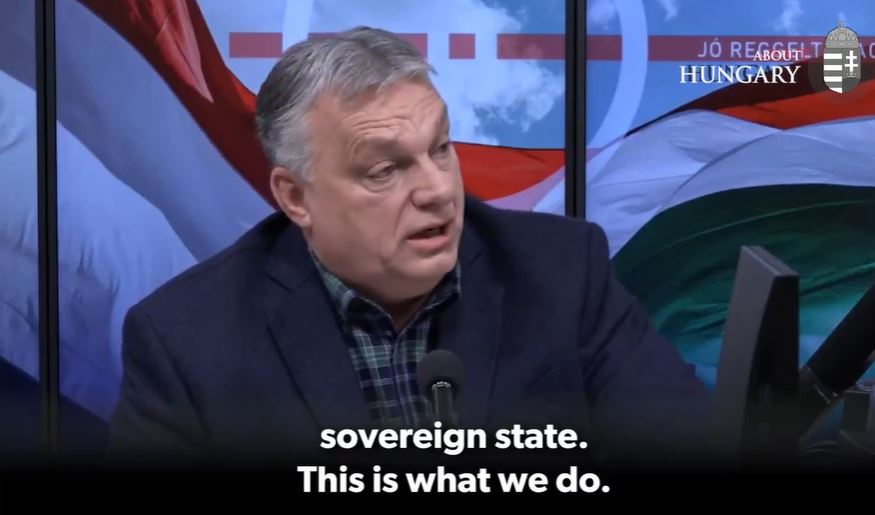
Polish Prime Minister Donald Tusk has recently said that the EU is suffering from “Viktor Orban fatigue”.
EU leaders are tired of having to strong-arm Hungary into accepting its united positions on foreign policy, especially on Ukraine and Russia. Hungary has taken an altogether different position from the EU on Russia and Ukraine, and apart from opposing sanctions on Russia, Orban, and his party ultimately side with Russia about its territorial claims on Ukraine, apart from using the conflict for Hungarian irredentist interests. As of lately, Hungary has been blocking the recent NATO membership submissions of Finland and Sweden.
Orban’s antics compromise Europe’s security as he unashamedly acts as the fifth coloumn in our continent regularly and consistently acting in favor of an enemy and adversary that is waging a hybrid war against us. It is strange that Orban acts this way because even Hungary can’t reap the economic benefits of his betrayal to Europe and its neighbours. Despite having persisted in buying Russian gas, Hungary had what seems to be the highest inflation spike in Europe during the Russian invasion of Ukraine.

Orban has been constantly saying that he fights for the national interest first when it comes to foreign policy. He says that Hungary, despite being in the EU, will first and foremost fight for its interests instead of for European common policy. It may be a good idea to revise this kind of “sovereign nation policy” in economic terms. EU common policy ultimately benefits all EU member states so going against this policy, would mean that one, supposedly, one has an even better plan. Viktor Orban has been Prime Minister of Hungary since 2010 and Hungary is still the penultimate poorest country in the EU. Romania has grown much faster and moved away from Hungary while the Hungarian economy is as nearly as big as Orban had found it when he entered office. Only Bulgaria is poorer.
 Exports of manufactured products have increased under Orban’s rule and this coincides with the industrial growth of the past decade in all of Eastern Europe. Hungary doesn’t seem to be benefiting from this industrialsation drive as other Eastern European states.

The Hungarian Forint is losing value against the Euro rapidly, which although may be good for Hungarian exports, it hurts consumers and forces them to pay higher prices for foreign goods and products (higher inflation).

Hungary was one of the most deeply affected EU countries by the Russian invasion of Ukraine, it was also in recession and it is supposed to enjoy a gradual recovery in 2024 and 2025. Hungary does not seem to be enjoying any national interest benefits from its anti-EU common policy.

Website Editor
Historian and Publisher

Leave a Reply