
Advertisement

The origins of “Ħamallu” and Malta’s first minimum wage

Maltese Instagramer Kurt Rumbajsa is uploading reels about the etymology and origins of Maltese words. He uploaded a recent one about the word “ħamallu”. He got it right in the beginning, but got sidetracked with other languages which often happens with these things. I’m adding the reference here to my discussion with him. I advise readers to follow him on Instagram because he is doing some interesting videos about the Maltese language.

The word “ħamallu” comes from the Arabic word “ħemel”, to lift. The order of the consonants are consistent with the Arabic and that’s what always matters in Semitic languages.

The “ħamalli” were port-heavers and coal-heavers. They were men who use to hang out in the ports lifting and transporting goods from ship to shore and vice-versa. In the late 19th century, after the Suez Canal was opened in 1869, Malta enjoyed an economic boom mainly due to coal as ships passing through the Mediterranean Sea stopped-by for coal and victualing services. Lots of men were employed as coal-heavers in Coal Wharf, Marsa were most of this coal was provided to ships. This boom also rapidly expanded the suburban areas of Paola and Hamrun. These coal-heavers or coal-porters were also called “Ħamalli”.

Coal-heavers were mostly paid daily rates depending on circumstances and work and didn’t have a steady-job. Many were employed on the spot and given there was no shortage of men wanting work, employers and brokers could employ men at very low rates. Consider these men in the same situation your Bolt Food delivery driver is in today.

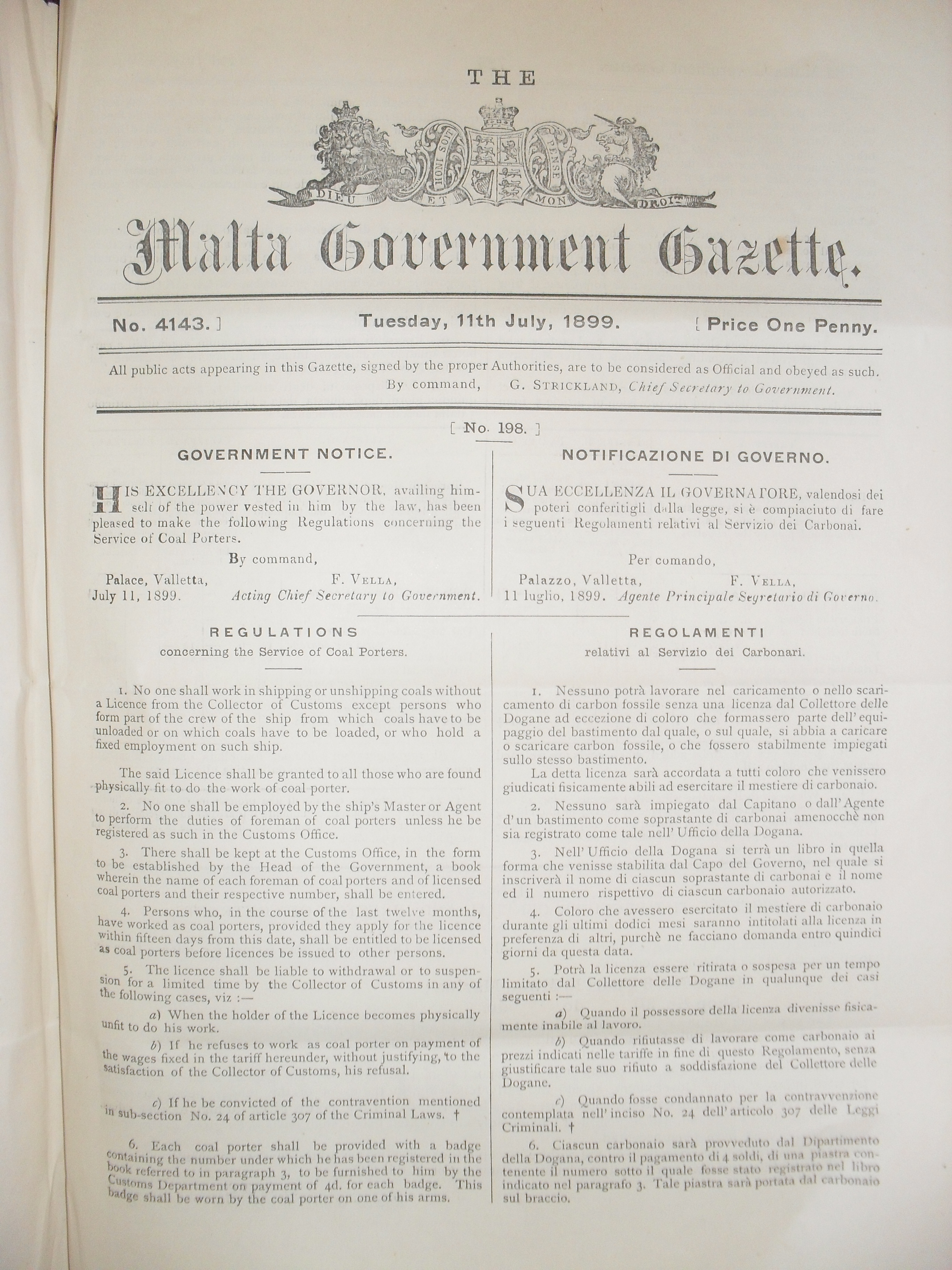
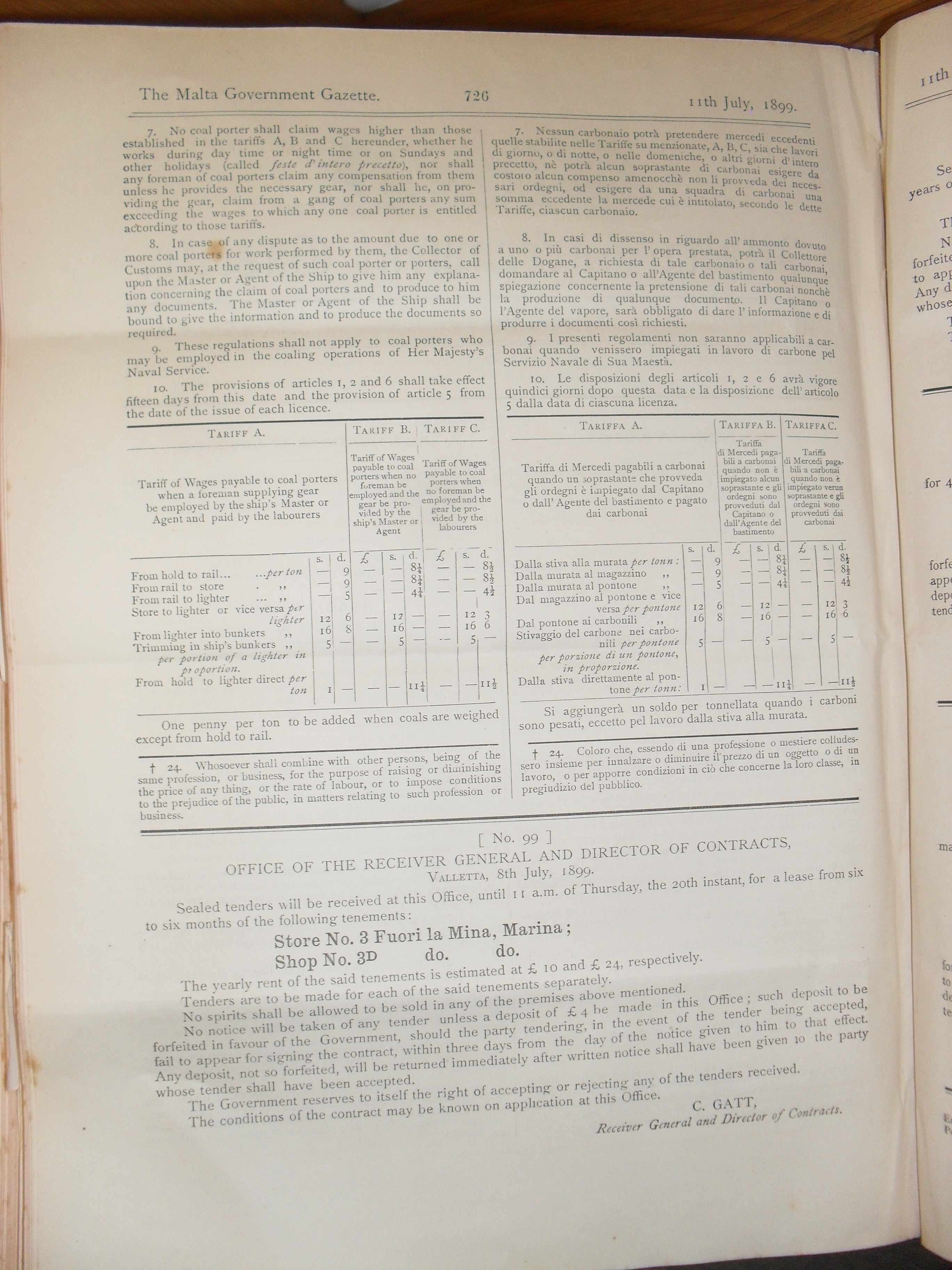
In Summer of 1899 these men rioted and striked at Coal Wharf demanding to be paid better rates, prompting the Imperial Government of that time to introduce a minimum rate for Coal Porters along with some employment regulations. The strike was also stopped by the police of that time.

This was the first ever regulation stipulating a form of minimum wage in Malta and it was all thanks to the “Ħamalli”.


Comments

  1. Expat Pat avatar
    Expat Pat

    Great article!

    Farsi has a similar word: “Hamal”. And it can be translated to low class

  2. Interesting – can the minimum wage be provided?
    Saves reading with difficulty the gazette – thanks.

  3. Paolo Soldi avatar
    Paolo Soldi

    In Italian too, they are called camalli, from Arabic Hamm?l.

  4. Leonard68 avatar
    Leonard68

    Great name for a Maltese rock band.

  5. Interestingly the word “pastass” also has a similar origin (this time from Sicilian am told)… he was the porter who carried your luggage in the port. Hence the reference to the “pastass” as being the one who takes the weight… as also used in the building industry, when a major ceiling support was – and is still i think – called the pastass”!
    (I stand to be corrected though!)

  6. Unfortunately nowadays the term ‘hamalu’ is used by some people (who prefer not to speak in maltese thinking that they are of a better breed ) to describe people who speak in Maltese – and to look down on them.

  7. Josephine avatar
    Josephine

    Hamalli to me are people with bad social manners and are rude and disrespecful to their betters.

    1. Yes, that is what the words means today. This article is about the origin of the word. The connection between the purported origin and the meaning today would be that such workers were considered low class and probably disrespected by people with better jobs and wages. Word meanings often evolve and become very disconnected from their original meanings.

      One also has to be careful about how much to take etymologies seriously. Origins of words are often lost in time and the etymologies we get today are of linguists, with very little written data, trying to trace the meaning of words, often taking wild guesses in the process, which is why there are often very different versions as to where a word might have come from. Always read claims of origins of words with healthy scepticism, unless backed by very solid writing (such as when an author literally invented a word and it is documented).

      A recently published book by Professor Anatoly Liberman called “Origins Uncertain: Unravelling the Mysteries of Etymology” delves into the subject of linguists trying to discover the origins of words, and often failing despite being sure their theories are right. Language evolution is mysterious and fun.

  8. It is interesting to note that the first minimum wage in Malta (no doubt improving many workers’ rights) also explicitly highlighted one of the problems with the minimum wage: “No coal porter shall claim wages higher than those established in the tariffs”.

    A minimum wage is a floor but it also often becomes a ceiling. No matter how industrious, ingenious or good at negotiation workers are, why give them more than what is legally required?

    Of course, it must be acknowledged that workers on the lowest rung of the ladder have very little negotiating power, but such problems with the minimum wage is why Germany (Western, rich and socially mobile) took until 2015 to introduce a federal minimum wage. It traditionally preferred giving negotiating power to individuals and unions, knowing that results of such negotiations would probably result in better wages than a blanket minimum wage across all sectors to all workers in all parts of the country, which would probably hold down wages rather than lift them.

    Alas, the pressure to conform with the rest of Europe eventually got the better of Germany, but there are still issues to be resolved with the concept. What is the point of a stipulated wage which does not help workers achieve minimum decent-living standards? And how can workers persuade employers that they are worth more than the wage stipulated by law? The minimum wage being so low in Malta is why pretty much the average person in the country is paid abysmally.

Leave a Reply

Your email address will not be published. Required fields are marked *
