



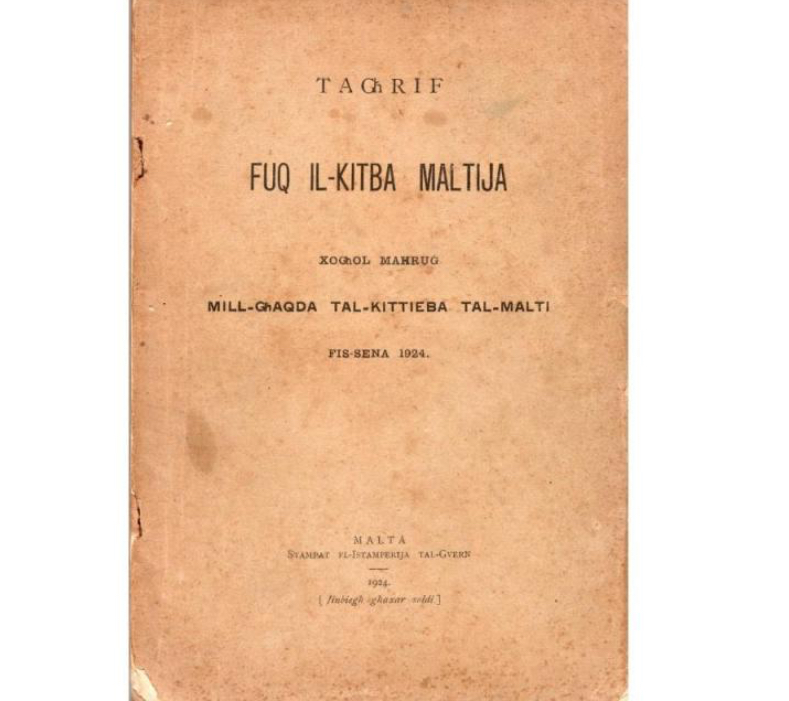
A landmark moment in Maltese linguistic history has been celebrated this Saturday with a conference marking the centenary of ‘Tagħrif fuq il-Kitba Maltija’. This pivotal 1924 publication by the ‘Għaqda tal-Kittieba tal-Malti’ (now ‘L-Akkademja tal-Malti’) laid the foundation for the standardisation of the Maltese language, transforming it from a sidelined dialect to an official language.
During British rule, Maltese was disparagingly known as ‘il-lingwa tal-kċina’ (the kitchen language), overshadowed by the perceived prestige of Italian and English. Maltese lacked a unified literary form, with fragmented writing systems causing confusion across education and literature.
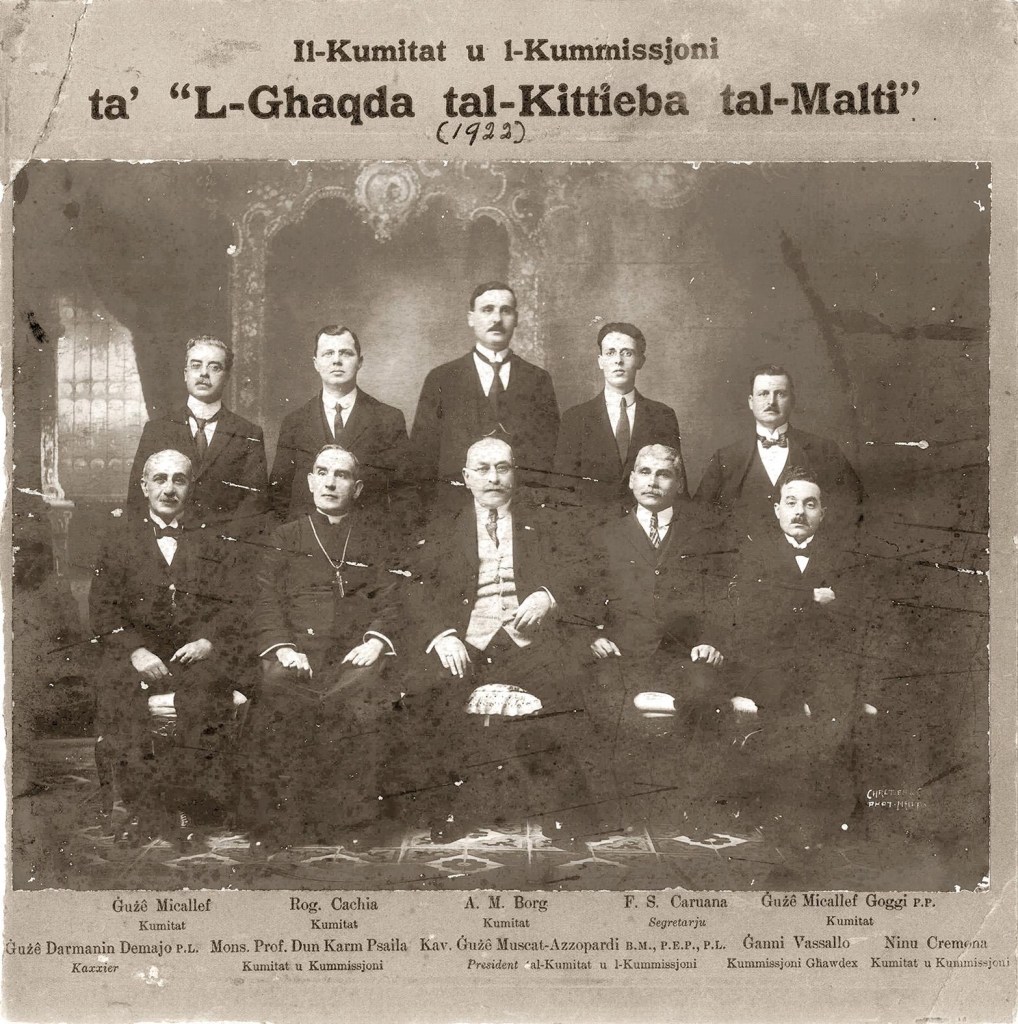
The ‘Għaqda tal-Kittieba tal-Malti’, formed in 1920, sought to address this linguistic disarray. By 1921, it had created a standard Maltese alphabet, following the principle of simplicity: one letter for each sound. This was the first step toward an official orthography, spearheaded by linguistic pioneers Ninu Cremona and Ġanni Vassallo. Their meticulous work culminated in ‘Tagħrif fuq il-Kitba Maltija’, published in 1924, establishing a scientific basis for writing in Maltese.
The publication’s first section presented clear rules for writing, while the second explored the morphology of the language, including word origins and structure. These efforts standardised Maltese, paving the way for its official recognition in 1934.
Saturday’s conference at ‘Dar il-Ħanin Samaritan’ in Santa Venera featured expert discussions on the historical, linguistic, and educational significance of ‘Tagħrif fuq il-Kitba Maltija’. Speakers delved into its enduring impact and the updates to Maltese orthography over the past century.

News Editor
Journalist and Newscaster


Leave a Reply