



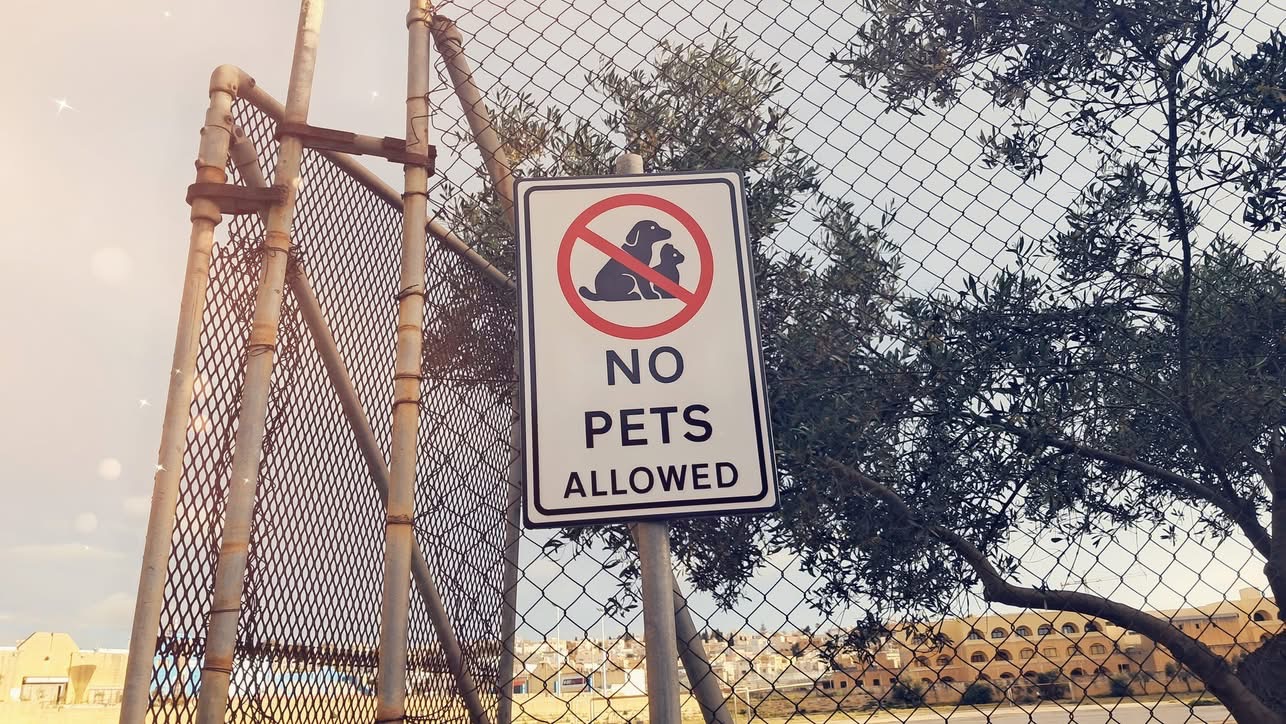
The University of Malta is in the spotlight following a sudden decision to restrict access to an old university track that has been a long-time favourite dog-walking ground for dog owners as a rare safe space for walking their pets. The move has sparked a wave of online backlash, led by ultra-endurance athlete and well-known animal rights activist Fabio Spiteri, who publicly condemned the university’s action in a strongly-worded Facebook post.
Spiteri, who cares for a blind rescue dog named Stevie, expressed both anger and disbelief at the news:
“After 10 years of walking my dogs here… today we find this notice and was stopped from entering the track. University of Malta, shame on you.”
For Spiteri and many others, the university track, left disused and open, represented more than just a patch of land. It was one of the last remaining open spaces in the area, and crucially, one of the few places in Malta where dogs could safely be walked without the risk of traffic, debris, or urban hazards. This is especially vital for pets with disabilities, such as Spiteri’s dog Stevie.
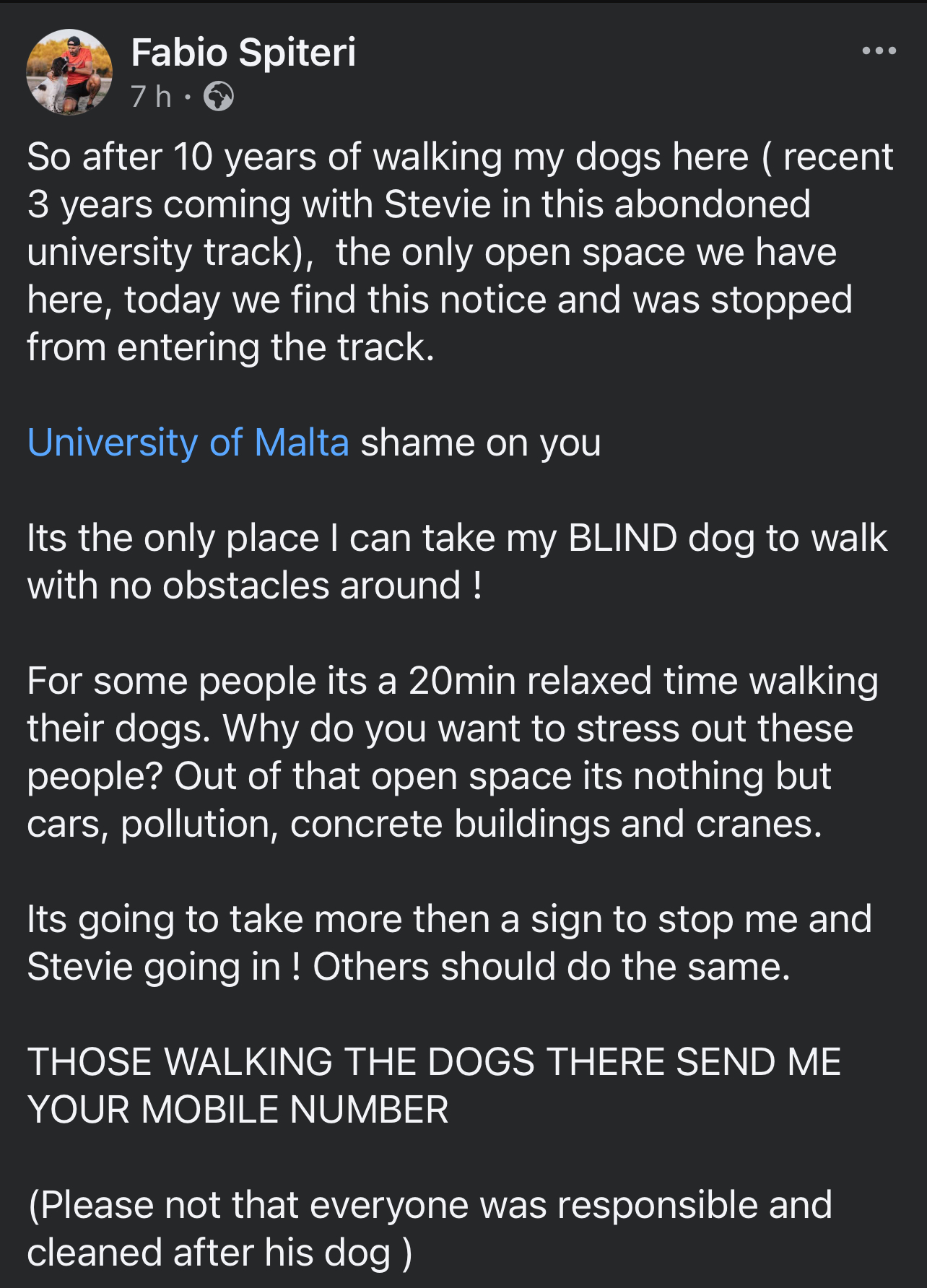
Spiteri’s post quickly gained traction, drawing hundreds of comments from concerned citizens, animal lovers, and local residents who echoed his frustration. Many pointed out that the space was always used responsibly, with owners cleaning up after their pets and maintaining respectful use of the grounds.
Commenters raised an increasingly common concern: “Is it going to become another car park?”
This question cuts to the core of a bigger issue – Malta’s rapid overdevelopment, where green and open spaces are paved over for infrastructural or commercial use.
As of publication, the University of Malta has not made any public statement regarding shutting down the site or future intentions. The sudden appearance of a ban notice, without consultation or warning, has added fuel to public outrage. Without any clear communication, suspicions abound. Is the university preparing the land for redevelopment? Could this site again fall victim to the pressures of urban expansion?

Other than the issue of pet walking, the situation touches on the psychological wellbeing, welfare, and overall quality of life for many citizens. Open spaces, in particular free and accessible ones, are becoming all the more scarce on the island.
For people like Spiteri, it’s not just about convenience. “It’s the only place I can take my BLIND dog to walk with no obstacles around!” he wrote, pointing out the real-world implications of such closures for vulnerable pets and their owners.
As the pressure mounts, the University of Malta will be compelled to respond. But it remains to be seen whether the voice of the people will be enough to preserve the track, or another sliver of green will fall victim to grey.


News Editor
Journalist and Newscaster

Leave a Reply