



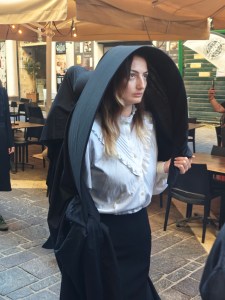
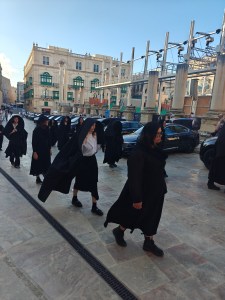
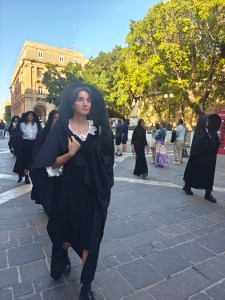
In a striking act of symbolic protest, a group of women walked silently through the streets of Valletta on Wednesday, dressed in traditional Maltese garments, including the iconic għonnella, a long-lost headpiece that historically signified both modesty and visibility. The procession was part of a demonstration organised by the Voice for Choice coalition to mark the International Day of Action for Women’s Health.
Moving wordlessly through the capital, the veiled participants carried a large fabric structure known as a pavaljun bearing the quote “noħlom b’ġisem li hu biss tiegħi” (“I dream of a body that is mine alone”). Designed by artist Lana Spiteri, the pavaljun featured vivid symbols representing feminism, justice, fertility (referenced through the traditional figure of il-mara l-ħoxna), and the Maltese natural landscape.
The silent march, organisers stated, was a deliberate response to what they view as the imposed silence on those affected by Malta’s restrictive abortion laws. “There is no other healthcare issue that is so heavily restricted,” the coalition asserted, arguing that the silence embodied the societal and legal constraints that prevent open dialogue on reproductive rights.
The choice of clothing – black, voluminous, and historically significant – was not incidental. “It symbolises the oppressive reality of living in a female body in Malta,” said one activist, pointing to the burdens of stigma, shame, and systemic control over reproductive autonomy.
Voice for Choice connected their protest within a broader critique of Malta’s abortion legislation, which remains among the most stringent in Europe. “Our lives do not belong to us, but are governed by laws rooted in the 19th century,” they said, referencing the colonial-era origins of Malta’s criminal code. “While Britain, our former coloniser, has long since liberalised its abortion laws, we are still shackled by them. It’s time to break free from the remnants of colonial control.”
The coalition’s demands are clear: decriminalisation and destigmatisation of abortion in Malta. With no legal avenue for elective abortion, Maltese citizens are either forced to travel abroad or risk criminal prosecution for seeking abortion pills online—an option made more precarious by legal threats and inconsistent access.
The pavaljun, with its painted sunrays, carried a final message of resilience. “We will remain resilient and keep moving forward,” the group affirmed. On a day dedicated to women’s health, the silent procession in Valletta cast a loud and urgent call for change.


News Editor
Journalist and Newscaster


Leave a Reply