



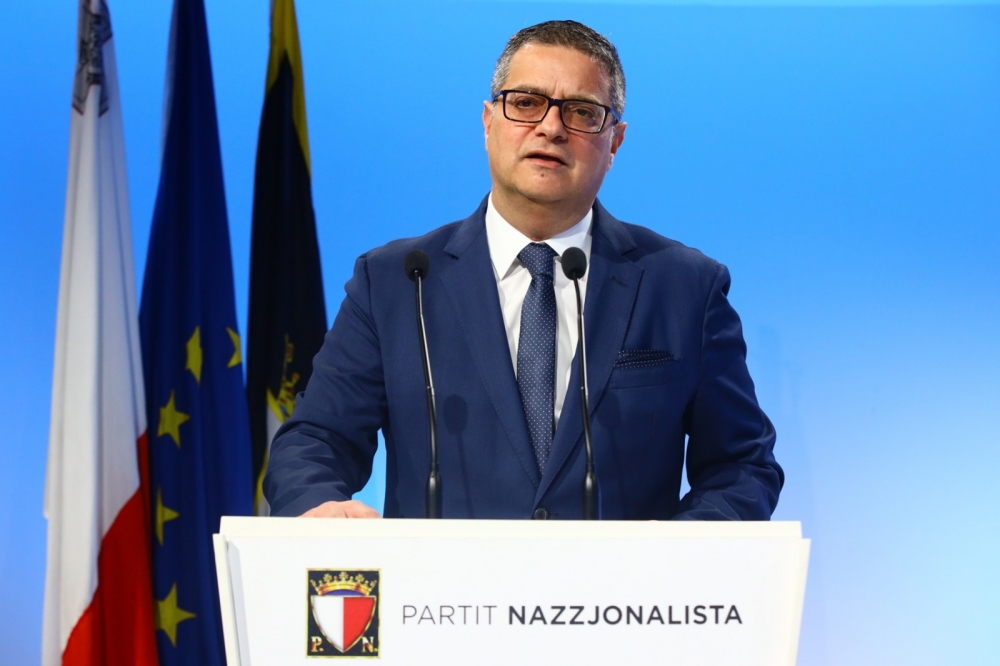
Adrian Delia’s formal entry into the Nationalist Party (PN) leadership race has reignited a polarising debate over his suitability for political power. Once ousted by his own parliamentary group amid plummeting polls and controversy, Delia now seeks a dramatic return – something no previous PN leader has ever accomplished.
While he speaks of personal growth and duty to country, his record remains a battleground. His tenure was riddled with scandal, debt, and allegations that still linger, but not without flashes of resolve, particularly his pursuit of the Vitals hospitals case. As he campaigns anew, a critical review of his past is essential.
From businessman to politician
Born in 1969, Delia built a career in law and banking, serving as a vice-president, and later president, of Birkirkara FC, and founding the legal firm Aequitas Legal. In 2017, he entered politics on a platform of grassroots change, winning the PN leadership with 52.7% of the vote.
A short-lived tenure marked by division
Delia served as PN leader between 2017 and 2020, elected by party members who wanted change from the political elite. His promise was renewal, but it quickly curdled into dysfunction. Internal revolt became routine. He lost the support of a majority of his parliamentary group, who in July 2020 voted for his removal. Bernard Grech was elected leader weeks later.
Much of this turmoil stemmed not just from leadership style, but from Delia’s unresolved baggage.
Tax troubles & financial vulnerabilities
Delia’s public image took a hit when it emerged he owed over €145,000 in unpaid tax dating to 2007 – settled only after his in-laws intervened to pay off substantial arrears. Additionally, he faces significant debt obligations, including €7.3 million via a development company and roughly €750,000 in bank loans.
Such financial frailty raises questions about his capacity to manage national finances and resist undue external influence.
Daphne Caruana Galizia’s investigations: The Soho cloud
In the early days of his leadership campaign, journalist Daphne Caruana Galizia published damning reports on her blog, Running Commentary. Her most serious claim was that Delia directed nearly £1million in monthly rental proceeds – linked to London properties used for prostitution – into a Jersey bank account he managed personally.
In one of her posts she alleged Delia acted as a front for money laundering. Documents were published, showing communications and transactions. Delia denied the allegations and sued for libel, but refused to call for a magisterial inquiry to clear his name – a move many saw as evasive.
After Daphne’s assassination in 2017, Delia softened his tone, eventually acknowledging that “at least some” of her reporting was justified. No independent investigation has confirmed or dismissed the accusations, leaving them as a toxic cloud over his reputation. He offered a public apology to Caruana Galizia’s family – one that was dismissed as insufficient by those close to the slain journalist.
Personality & leadership style
Daphne’s descriptions of Delia extended beyond finances. She critiqued his conduct, such as arriving late to his official swearing-in ceremony, as emblematic of “narcissism, grandiosity and megalomania”. In one blistering post, she called him “not to be trusted” and warned against giving someone of his temperament power over the party or country. MPs described his time at the helm as chaotic and combative. Yet, he also displayed tenacity – an unwillingness to be sidelined.
To his supporters, Delia is a man of the people, unjustly ousted by a disloyal political class. To his detractors, he is yesterday’s problem revived.
His most significant achievement: The Vitals case
Still, Delia’s legacy isn’t all shadow. His most significant contribution came after he was removed as leader: his legal fight against the fraudulent hospitals privatisation deal known as the Vitals Global Healthcare case.
Delia pursued the case as a private citizen and MP, filing legal action against the transfer of public hospitals to VGH and later Steward Health Care. After years of resistance, in 2023 the court ruled in his favour, declaring the deal “fraudulent” and ordering the return of the hospitals to the state.
Even his critics admitted: Delia, despite no longer leading the PN, achieved what the government and other political figures had failed to do – hold the architects of a corrupt deal to account. It was a major political victory and remains the strongest argument in his favour today.
Redemption or regression?
Delia’s defenders note his anti-corruption stance, particularly following Daphne’s assassination, as evidence of his commitment to democratic values. He insists he has matured since 2020, framing his return as an act of loyalty. “The country needs courage,” he declared last week.
Yet, the lack of external, formal reckoning for his debts and Soho-linked past remains a blemish. It’s especially problematic now, as he re-emerges to lead the party into a post-Grech era. His return isn’t just a personal gambit, it forces the PN to confront whether it values unity and fresh perspective over unresolved scandal.

Newsroom



Leave a Reply