



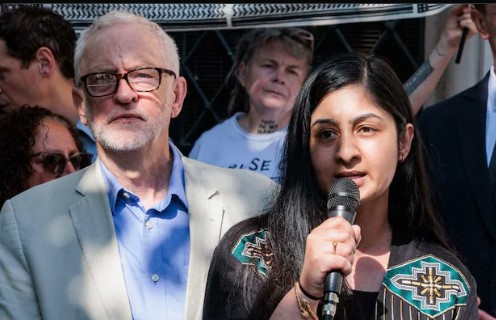
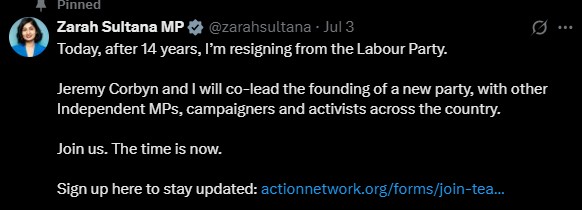
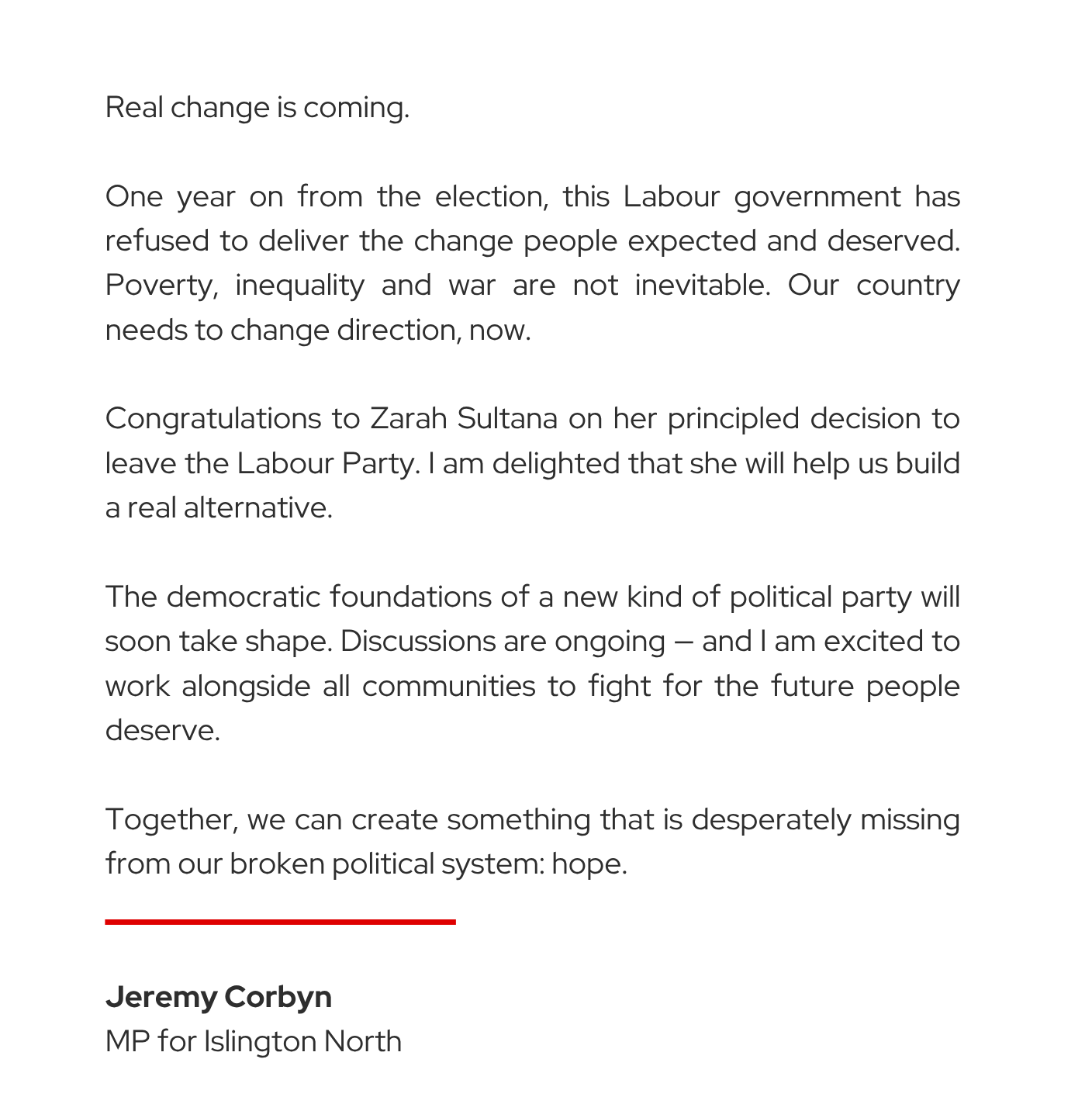
The resignation of Zarah Sultana from the Labour Party and her announcement that she will co-lead a new party with Jeremy Corbyn came as no surprise to Labour insiders, who have witnessed an exodus of far-left supporters since Corbyn’s suspension from the party in 2020 and his eventual ban from standing as a Labour MP.
Jeremy Corbyn is currently an independent MP after having secured enough votes from his constituency of Islington in London. Jeremy Corbyn holds a loyal and core constituency of voters, but his impact on the Labour Party in the last general election in 2024 was minimal.
Jeremy Corbyn had inspired many young voters from the left to join the Labour Party ever since he made his leadership bid for Labour in 2015, but many of these members who exclusively joined Labour to support Corbyn had already left the party before 2024. A significant number of Corbyn’s former supporters who previously backed Labour voted for the Greens or other smaller parties in the last general election.
Zarah Sultana resigned from Labour over Gaza, accusing the government of being complicit in the genocide for allowing arms sales to Israel. Jeremy Corbyn has raised the same issue and is calling for a public inquiry into the matter.
Jeremy Corbyn was suspended and later expelled from Labour after he defended comments that the scale of antisemitism in Labour was overstated. Internal inquiries had found that some of his team members were part of private groups sharing antisemitic content, but they did not conclude that Corbyn himself deliberately sanctioned or ignored antisemitic behavior. Other issues included Jeremy Corbyn’s very appeasing positions towards Hamas, Hezbollah and Iran.
However, the row over antisemitism in Labour was mainly initiated to hit on Jeremy Corbyn’s weak points to pressure him and his supporters to give up their influence and control over the Labour Party as Keir Starmer made efforts to make the party appealing enough to moderate voters.
Labour’s major challenge lies with Reform UK which made a sweeping victory in the last local elections in May, winning up to 677 council seats won, capturing approximately 41% of the total seats, and taking control of 10 councils. Smaller parties can enhance Labour’s fight against Reform, but the far-left had already abandoned Labour before 2024.

Newsroom


Leave a Reply