



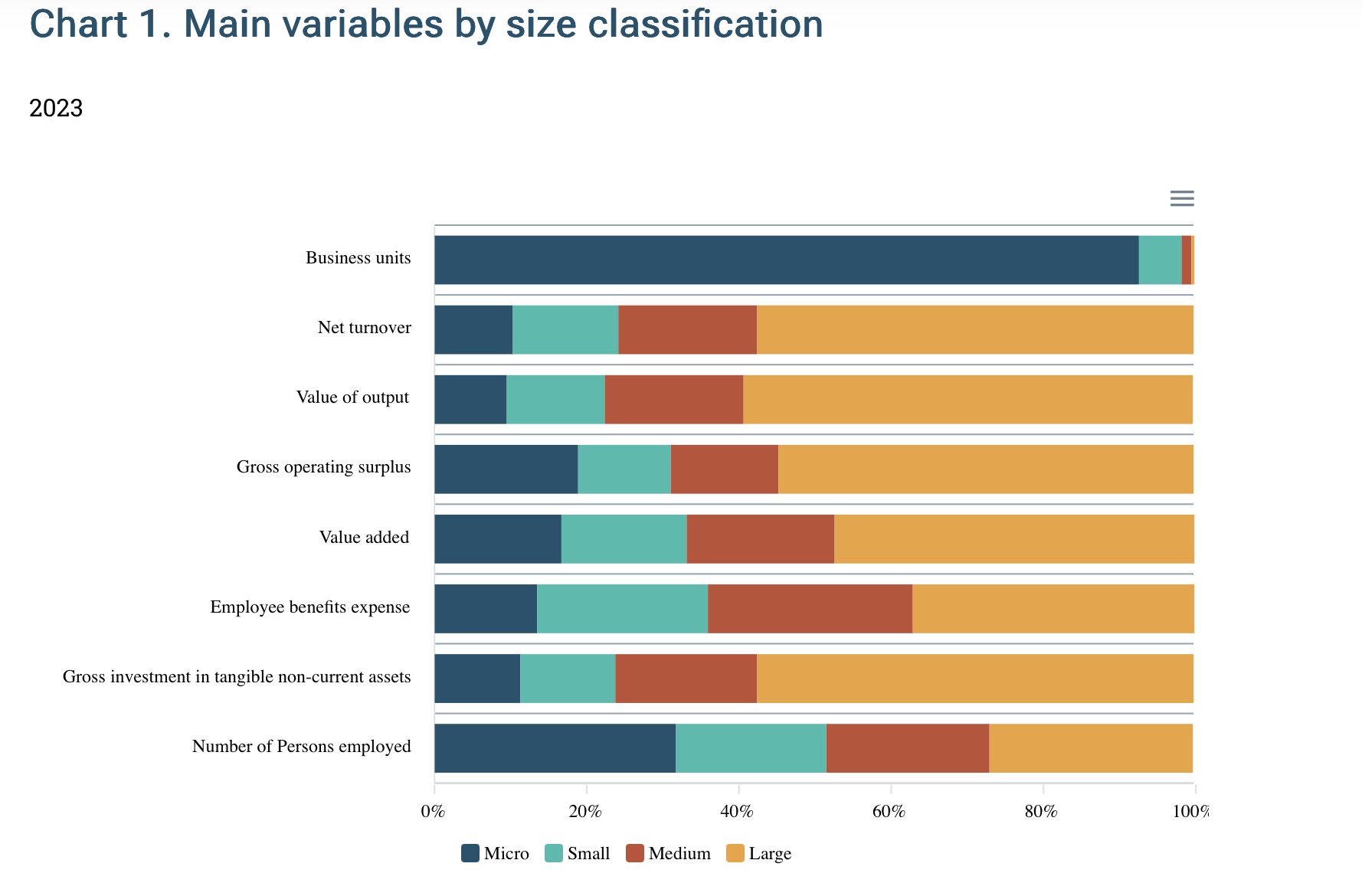
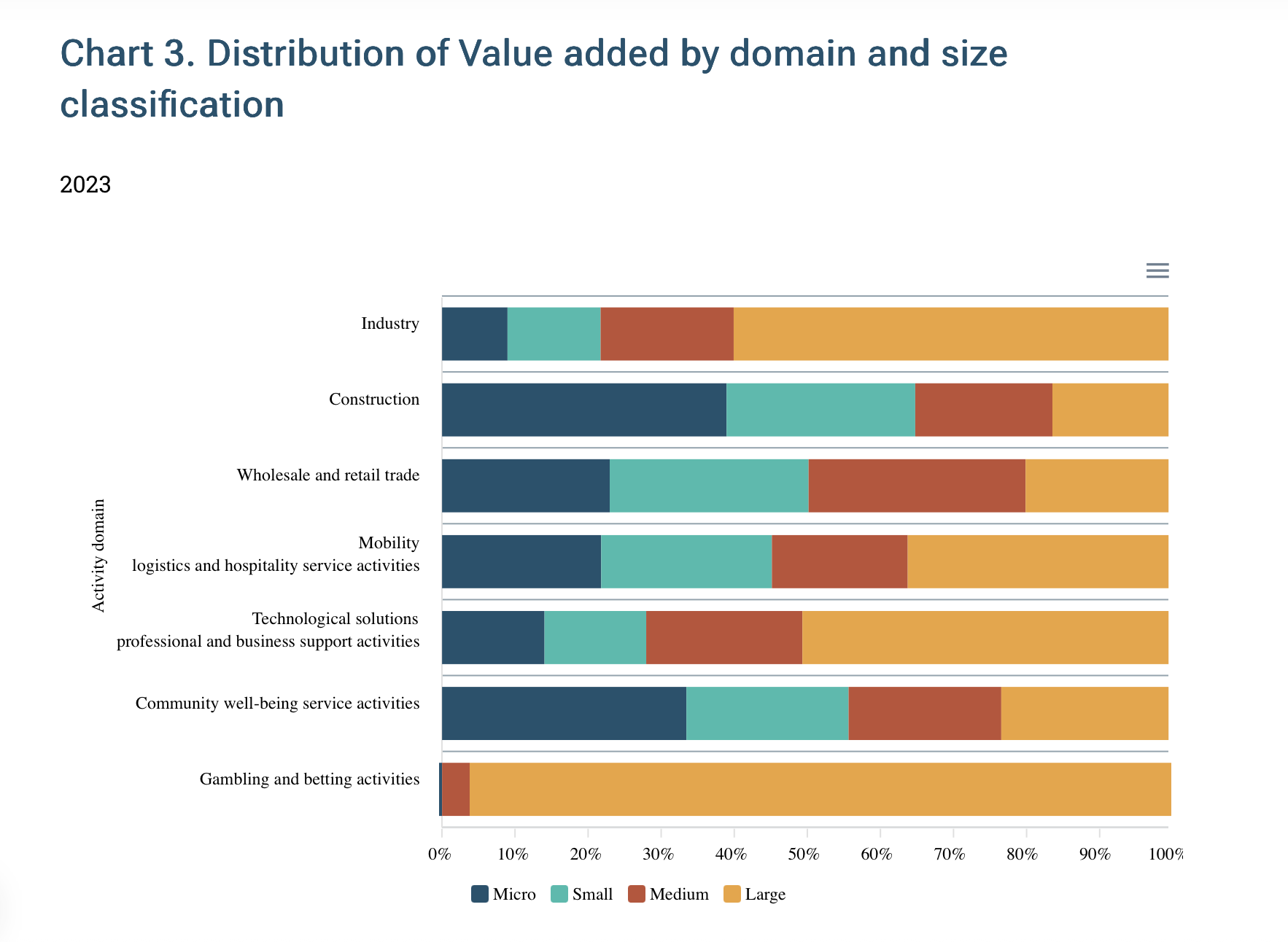
According to the latest statistics by the NSO, small medium-sized enterprises (SMEs) in Malta made up 52.6% of the GDP generated of all commercial and non-financial activities in 2023. The construction industry has the highest number of small businesses with small businesses making up 84% of the industry according to the NSO.
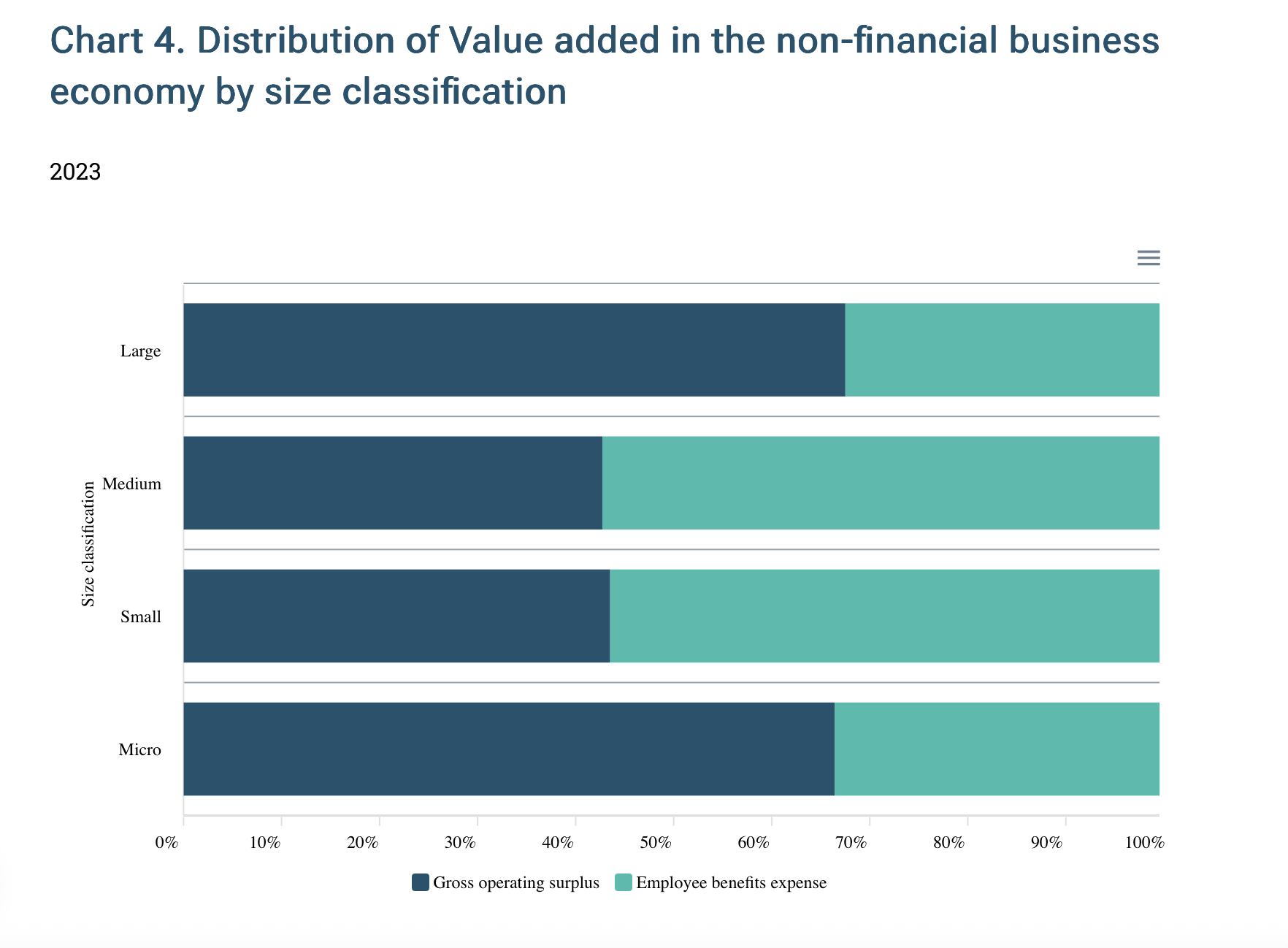
SMEs created up to €13.5 billion in value to the economy in 2023. This consisted of €7.9 billion in gross operating surplus (profits) and €5.6 billion in employee’s benefits. SMEs saw a 7.3% year-on-year increase in value added, with micro enterprises registering the highest growth at 8.9%.
The definition of an SME according to the Annex, Article 2 of Commission Recommendation 2003/361/EC of 6th May 2003 is a company with fewer than 250 employees, revenues not exceeding €50 million, and a balance sheet not larger than €43 million.
Malta’s small businesses also lead in the export-share of the local economy, registering a higher share than small businesses in other European countries.
Tech and mobility sectors lead turnover gains
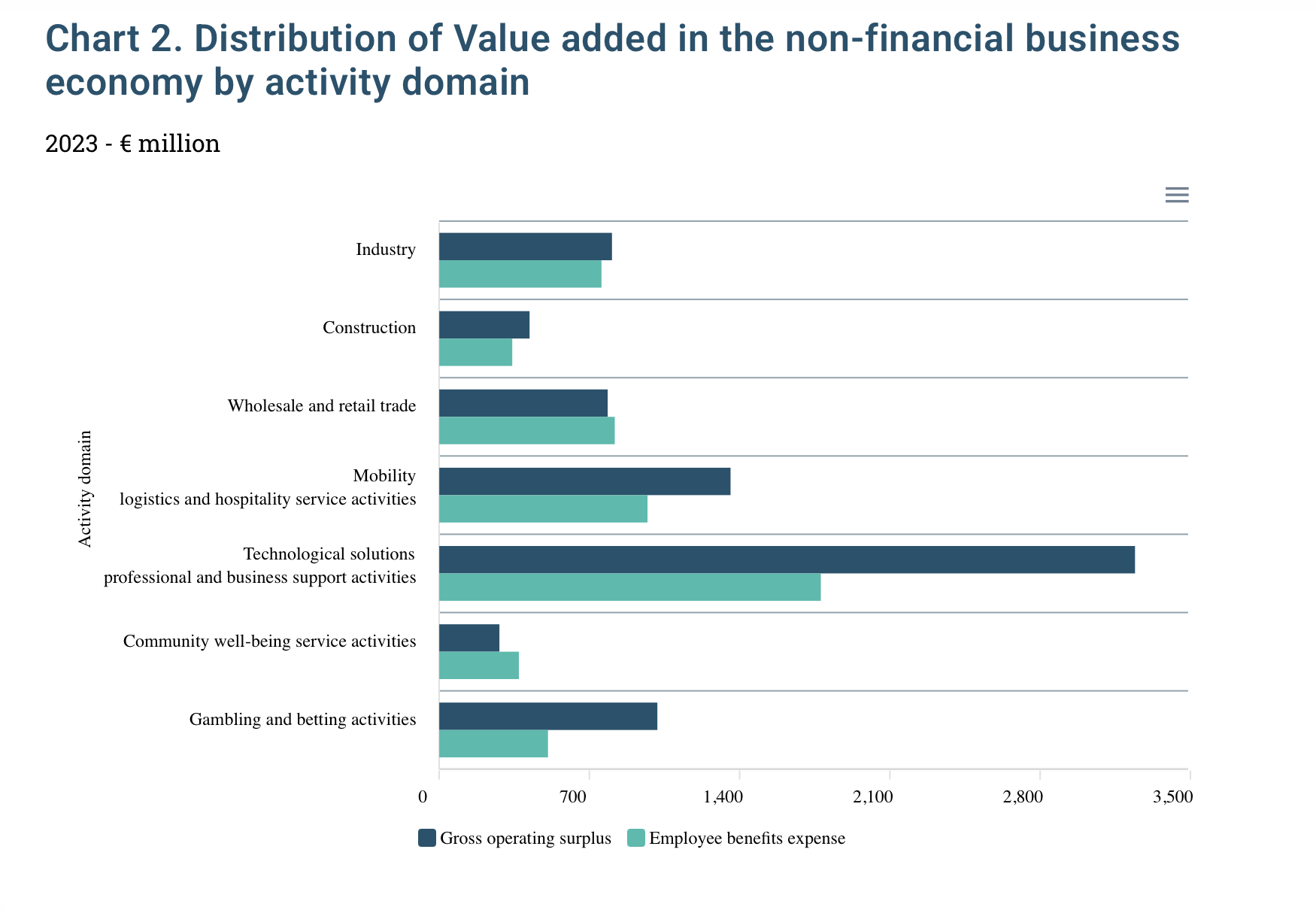
The strongest net turnover increase was recorded in the Mobility, logistics and hospitality domain (€2.7 billion), followed by technological solutions and business support (€2.0 billion). The latter also led in new business registrations (1,925) and workforce expansion (+6,201 employees), along with the highest rise in value added at 25.9%.
Large enterprises expand, but investment falls
Large enterprises boosted value added by 26.4% and net turnover by 20.7%, employing nearly 7,000 more people. However, they slashed investment in tangible assets by 50.8%, a notable drop that contrasts with growth across other metrics.
SMCs show resilience
Small Mid-Cap (SMC) enterprises contributed €447.4 million in value added – 3.3% of the national non-financial economy – up from 3.2% in 2022. They also grew employment and entered new sectors, notably Gambling and betting, which saw SMC presence for the first time.
Sectoral and local dynamics
Large tech firms led in gross operating surplus and value added, while medium-sized tech companies paid the highest wage bill (€555.7 million). Meanwhile, the construction sector remained dominated by SMEs, contributing 84% of its value added.
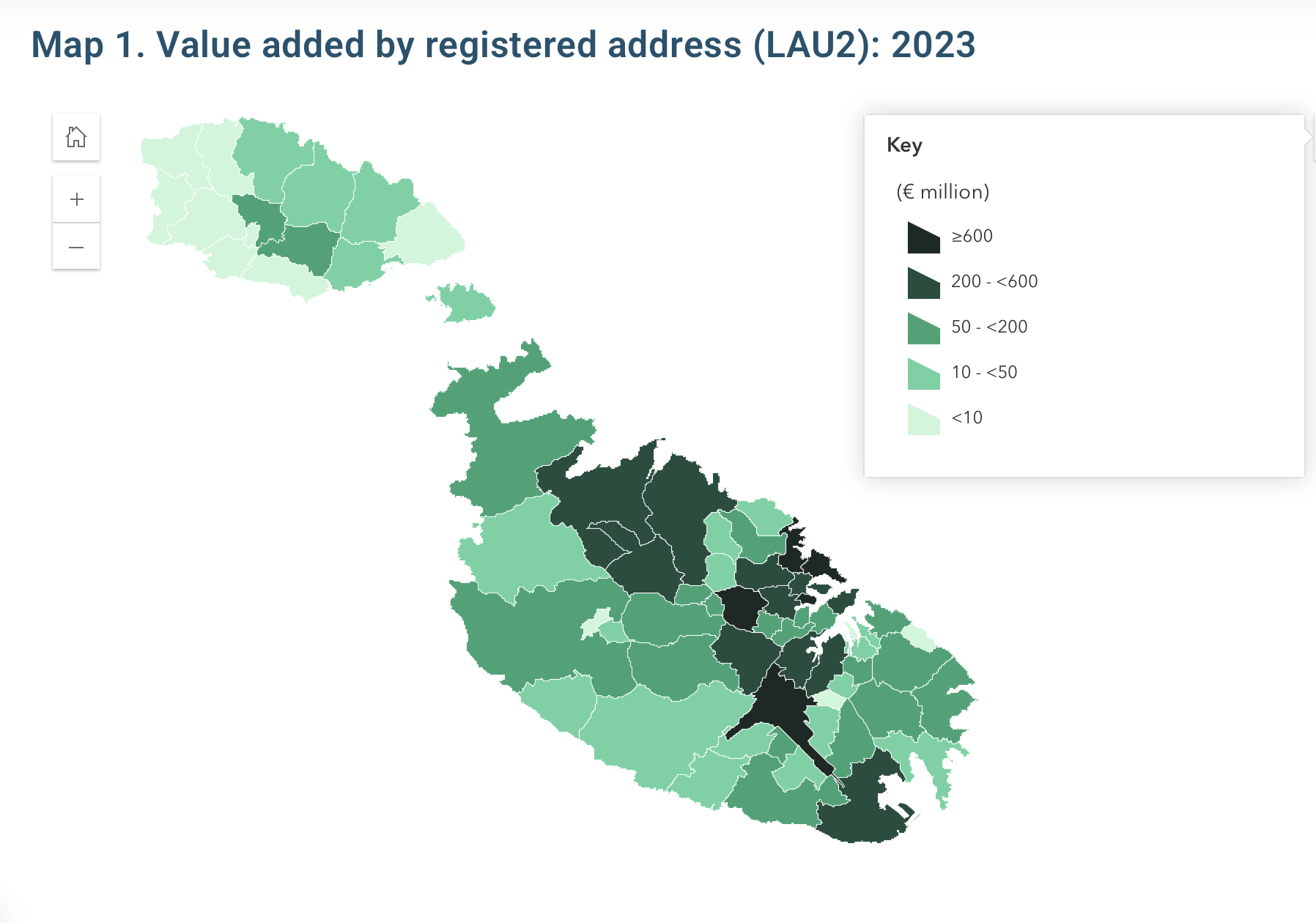
Geographically, Birkirkara, San Ġiljan, and Ħal Luqa emerged as top localities for value generation. Ħal Luqa alone led in gross investments in tangible assets, reinforcing its strategic economic importance.
Tourism rebounds
Tourism-related industries also posted strong numbers, adding over 4,000 jobs and €96.1 million in value added. A clear sign of post-pandemic recovery momentum.
Ownership trends
Sole proprietors and partnerships represented 75% of businesses, but limited liability companies employed 85.9% of workers and generated a dominant 88% of total value added.


News Editor
Journalist and Newscaster



Leave a Reply