



Malta’s construction sector shows no signs of slowing down. Data from the National Statistics Office (NSO) for the second quarter of 2025 reveals a sharp rise in approved building permits and dwellings, signalling intensified development despite ongoing debates about overbuilding, environmental pressures, and community impact.
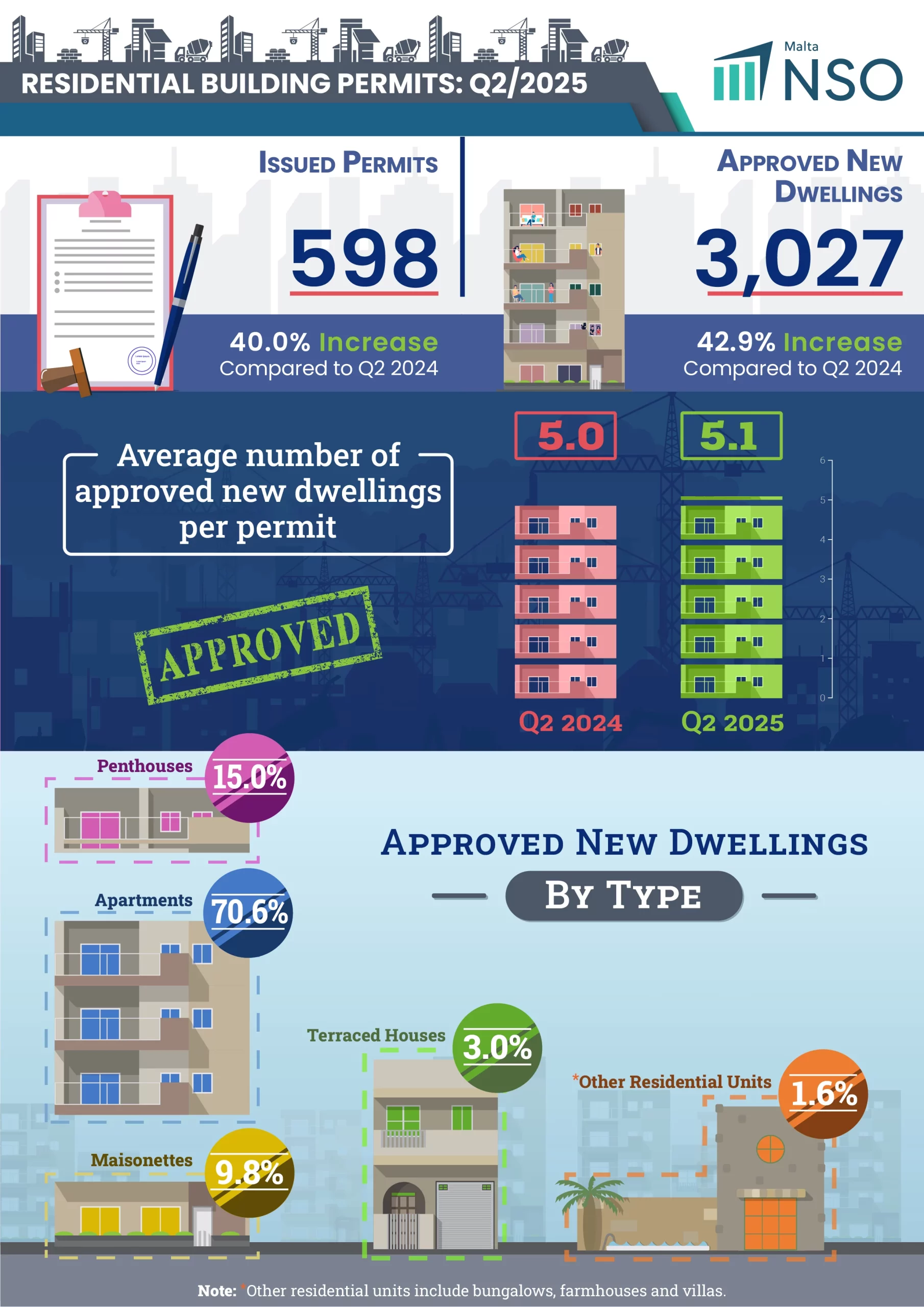
According to official figures, 598 building permits covering 3,027 new dwellings were approved between April and June 2025. This represents a 40% increase in permits and a 42.9% jump in approved units compared to the same quarter last year. On average, each permit accounted for 5.1 new dwellings.
Apartments dominate
The figures once again confirm Malta’s heavy reliance on high-density living. Of the approved dwellings, apartments made up 70.6% (2,138 units). These were followed by penthouses (453), maisonettes (296), terraced houses (91), and a small share of other residential units (49).
The dominance of apartment blocks underscores a trend towards vertical expansion, raising concerns over whether the market risks oversupply in certain regions, particularly given population growth projections and shifting housing affordability patterns.
Regional imbalances
The rise in approvals was most significant in Malta proper, where permits for new dwellings surged 51% year-on-year. Gozo and Comino registered only a 7% increase, suggesting a slower, though still notable, pace of development.
At district level, the Northern Harbour area topped the charts with 751 new dwellings approved, reflecting ongoing demand in densely populated urban zones. By contrast, the Southern Harbour district recorded the lowest number of approvals at 401 units.
Local hotspots
Certain localities emerged as development hotspots. San Pawl il-Baħar led with 321 approved units, followed by Msida (183), Fgura (164), Rabat, Gozo (141), and Żebbuġ (137). These figures suggest that already congested towns will face further pressure from intensified construction, with potential consequences for infrastructure, transport, and residents’ quality of life.
Looking ahead
While the increase in permits reflects investor confidence and signals continued economic reliance on construction, it also raises difficult questions. Can Malta’s infrastructure and natural environment absorb such sustained levels of development?

News Editor
Journalist and Newscaster

Leave a Reply