



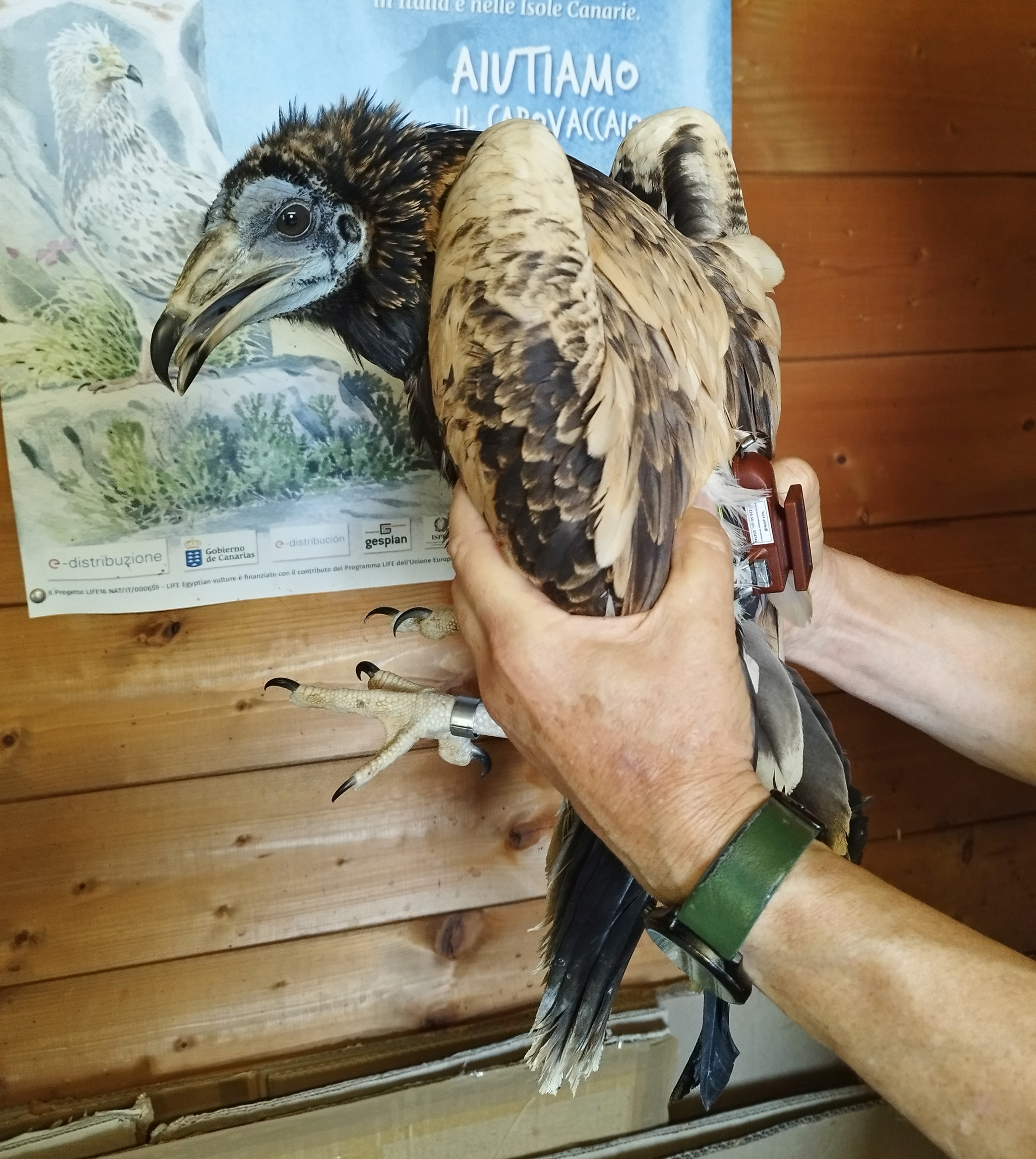
BirdLife Malta has confirmed that a rare Egyptian Vulture, named Hugo, successfully continued his migration to Africa after a brief and risky stopover in Malta coinciding with the opening of the hunting season on 1st September.
The young bird, one of only two chicks hatched this year at Italy’s Endangered Raptors Centre (CERM) in Tuscany, forms part of ongoing efforts to reinforce the wild population of one of Europe’s rarest raptors. Classified as Endangered on the IUCN Red List, only around ten breeding pairs remain in Italy, most of them in Sicily.
Tracked by satellite, Hugo arrived in Malta on Sunday after setting off from southern Italy on 26 August. His movements across Marsaskala, Marsaxlokk and Buskett drew attention from birdwatchers, while local volunteers and the Malta Rangers Unit closely monitored his roosting site along the Victoria Lines.
The timing, however, raised alarm. With the hunting season opening just hours later, the risk of illegal targeting grew significantly. BirdLife Malta said gunshots were heard near Hugo’s resting place, but thanks to joint vigilance by volunteers, police and the Environmental Protection Unit, the vulture was kept safe.
After two failed attempts to leave the islands due to strong headwinds, Hugo was given food at Majjistral Park to help him regain strength. On Tuesday morning, he finally managed a successful departure, crossing near Filfla with the aid of northwesterly winds.
BirdLife Malta Head of Conservation Nicholas Barbara said the event highlights Malta’s strategic role in protecting endangered species: “Safeguarding even one bird takes huge effort in a country where illegal hunting remains a serious threat.”
Earlier last week, BirdLife Malta also criticised a so-called “sustainability index” published by the hunting lobby, describing it as “misleading, unscientific, and dangerous for the future of wild birds.” The organisation stressed that “real conservation must be based on science and the protection of endangered species, not lobbying.”
CERM President Guido Ceccolini added that the case underscores the importance of international collaboration, noting that months of captive breeding work and significant resources would otherwise risk being lost to taxidermy or illegal hunting.
Hugo is now expected to continue his journey across the Algerian desert into sub-Saharan Africa, where he will likely remain until adulthood before returning to Europe to breed.



News Editor
Journalist and Newscaster
Leave a Reply