



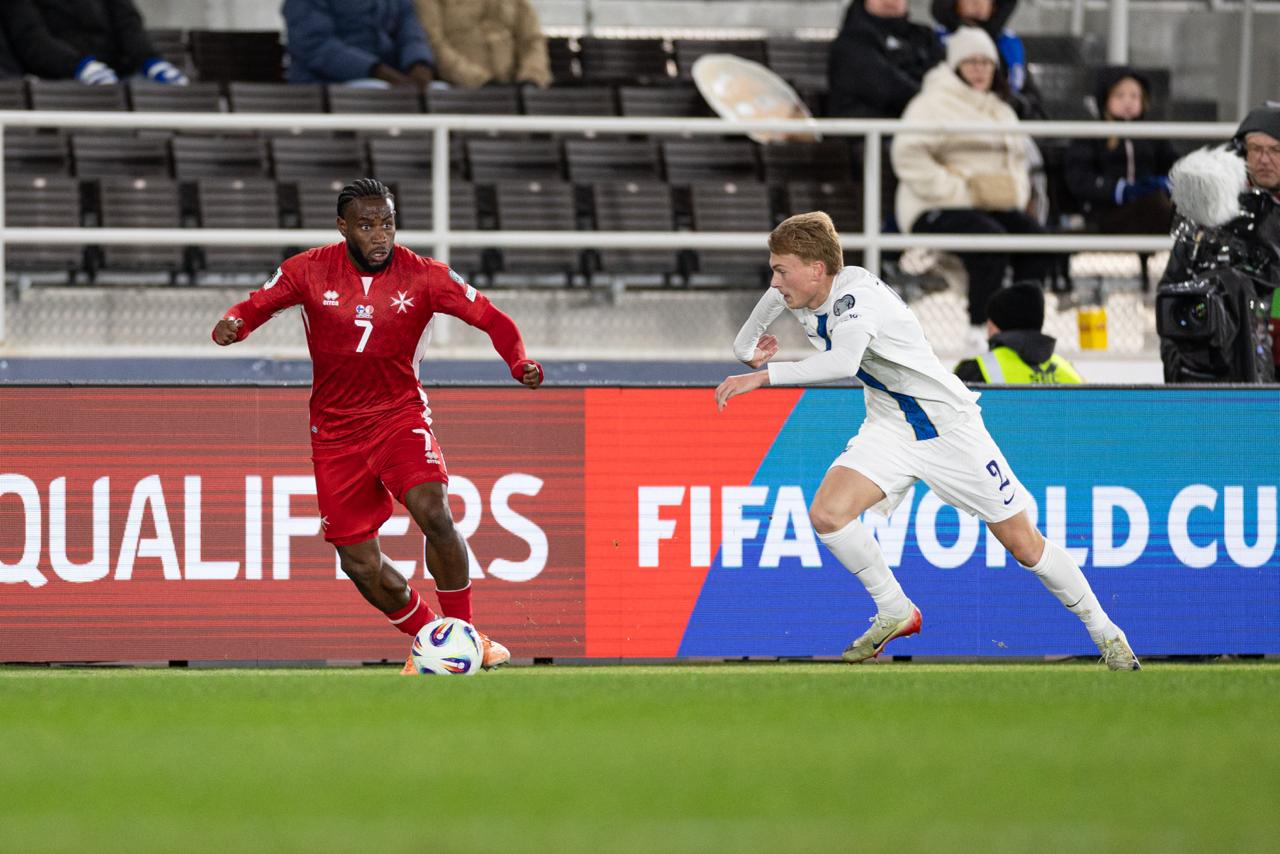
Malta’s national football team finds itself under growing scrutiny following a series of disappointing international results, with the latest setback in the UEFA Nations League reigniting debate over the direction of the game on the island.
A heavy 3–0 defeat away to Luxembourg in the promotion play-off — sealing a 5–0 aggregate loss — has once again highlighted the national team’s struggles on the European stage. The result means Malta remains among the few nations yet to achieve promotion in the competition since its inception in 2018, alongside Liechtenstein and Andorra.
As the dust settles, attention has shifted beyond results on the pitch to deeper structural issues within Maltese football.
Schembri Sounds the Alarm
Former Malta international André Schembri has emerged as one of the most outspoken voices in the aftermath of the defeat, describing the current situation as the product of a “fragmented culture” within the game.
While acknowledging the disappointment of the latest loss, Schembri insisted the real issue runs far deeper.
“For years, I have been critical, not out of negativity, but because I care,” he said. “I love my country and want to see it progress.”
At the heart of his concerns is the lack of cohesion in player development. According to Schembri, young footballers in Malta are exposed to multiple systems — across clubs, private academies, and schools — without a unified philosophy or clear developmental pathway.
“Everyone is involved, yet there is no real alignment,” he explained. “Who is responsible for a player’s development? Who tracks their progress? Who provides one clear direction? The answer is simple: no one.”
A Decade of Warnings
Schembri’s criticism is not new. A decade ago, following a heavy defeat to England at Wembley Stadium, he had already called for sweeping reforms in youth development and coaching standards.
Ten years on, he believes little has changed.
Despite significant investment by the Malta Football Association, including the appointment of several foreign coaches such as Devis Mangia, Michele Marcolini, and current head coach Emilio De Leo, results have remained inconsistent.
Efforts to modernise the system have yet to produce a steady pipeline of homegrown talent capable of competing consistently at international level. Additionally results at U-21 and U-19 level have proved to be disappointing.
Reliance on Naturalised Talent
In recent years, the national team has increasingly turned to naturalised players to strengthen the squad. Names such as Teddy Teuma, Ilyas Chouaref, Irvin Cardona, James Carragher, Jodie Jones, Trent Buhagiar, and Enrico Pepe have added quality and depth.
However, despite their contributions, Malta has fallen short of achieving its primary objective — promotion to League C — as outlined by MFA president Bjorn Vassallo.
Calls for Bold Reform
For Schembri, the solution does not lie in minor adjustments but in a complete rethink of the system.
“We don’t lack effort. We don’t lack people. What we lack is coherence, alignment, and courage,” he said. “Small changes won’t fix this.”
He argues that Maltese football must adopt a unified vision, with clear leadership and accountability across all levels of development.
What Comes Next?
With Emilio De Leo expected to remain in charge, the focus now turns to whether the Malta Football Association will undertake a comprehensive review of its long-term strategy.
Malta will now prepare for another campaign in League D, where they are set to face Andorra and Gibraltar — opponents of a similar level, but also a reminder of the team’s current standing in European football.
For many within the local football community, the message is becoming increasingly urgent: without structural unity, a clear footballing identity, and a long-term development plan, Malta risks remaining stuck in a cycle of underachievement.
The latest defeats may have hurt, but as voices like Schembri’s continue to stress, they are merely symptoms of a deeper issue — one that Maltese football can no longer afford to ignore.
Sports Editor
Veteran Journalist
Leave a Reply