




Labour has widened its advantage over the Nationalist Party to an estimated 19,600 votes, according to a new Times of Malta survey. This is an increase of almost 5,000 votes since the last survey conducted by TOM in October 2025.
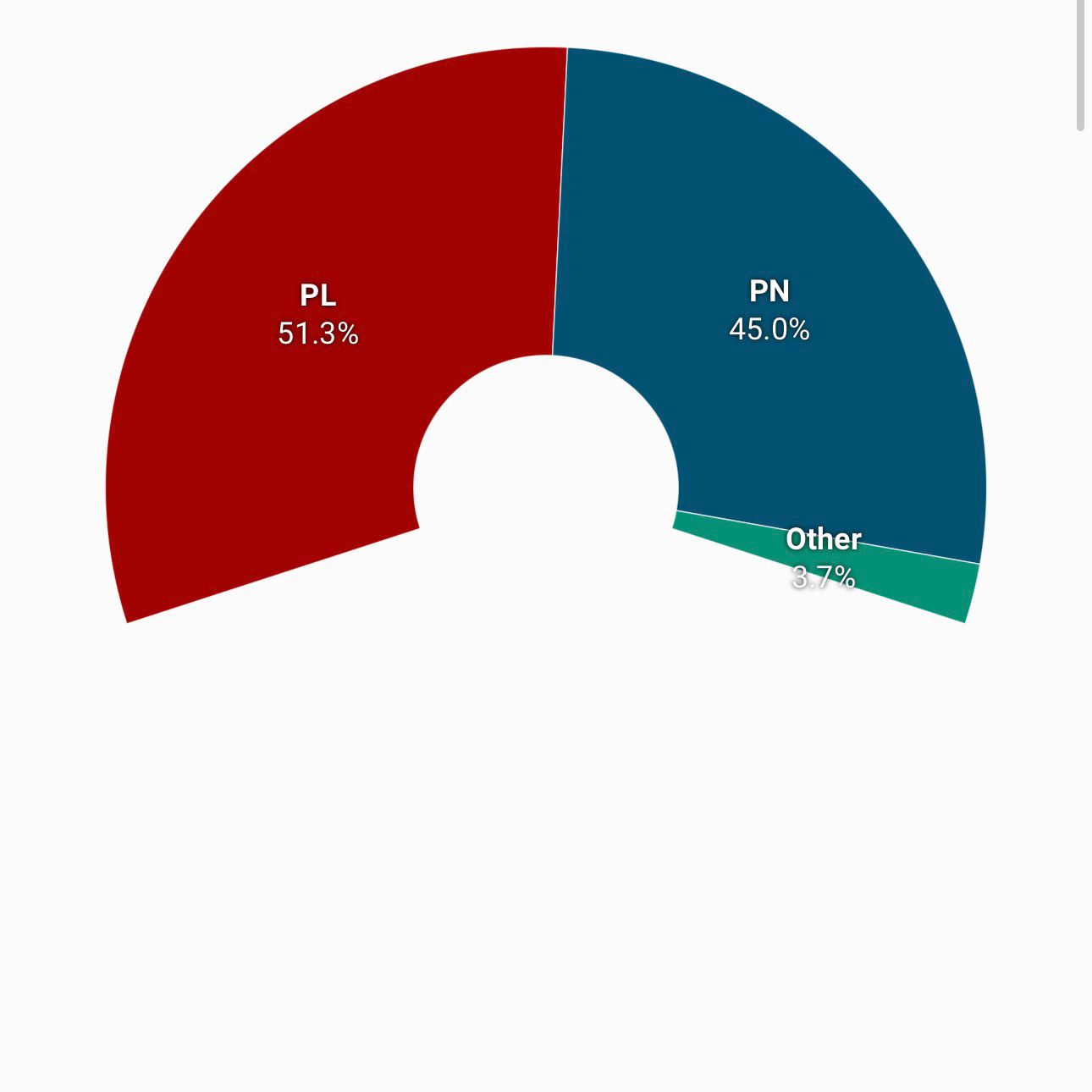
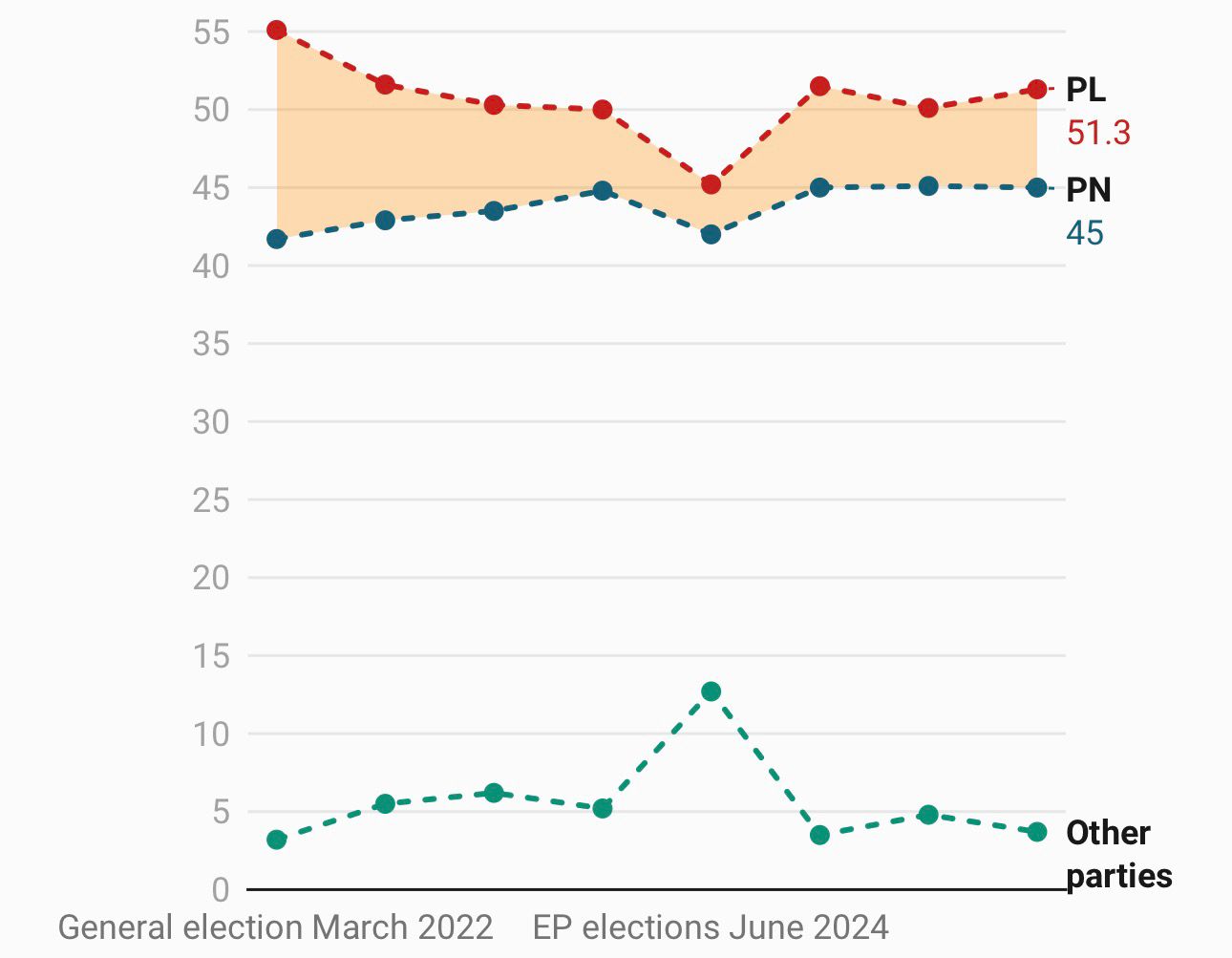
If a general election were held today, the Labour Party would secure 51.3 per cent of first-preference votes, while the PN would obtain 45 per cent, giving Labour a lead of 6.3 percentage points.
Smaller parties, including Momentum and ADPD, would account for the remaining 3.7 per cent of votes.
The latest figures show Labour increasing its support by more than one percentage point since the previous Times of Malta poll in October 2025, conducted shortly after Alex Borg was elected PN leader. At that time, Labour stood at 50.1 per cent.
The PN has remained largely stable since then, registering only a marginal decline of 0.1 percentage points. Support for smaller parties, meanwhile, has dropped by just over one percentage point. This means that around 1% of voters have switched from third parties to Labour.
Labour’s latest rise translates into an increase of almost 5,000 votes since October, when the gap between the two main parties was estimated at 15,000 votes.
The results are broadly in line with a February 2025 survey, which placed Labour ahead by 18,700 votes.
Turnout Estimate is very high when compared to other surveys
The latest figures are based on an estimated voter turnout of 84 per cent, suggesting that around 16 per cent of eligible voters would abstain if an election were held now.
Historically, however, turnout figures tend to rise significantly as election day approaches and political parties intensify mobilisation efforts.
At the 2022 general election, turnout reached 85.6 per cent. Labour won that contest with 55.1 per cent of the vote, securing victory by around 39,000 votes — considerably higher than the support reflected in the current poll.
The data suggests that while the PN has recovered some ground since 2022, when it secured 41.7 per cent of first preferences, it still remains some distance behind Labour.
However, it is estimated that turnout will be around 80% when a General Election is held so this figure of 84% is slightly high.
The survey also indicates a modest improvement in public perceptions of the government’s overall performance compared with October.
Respondents awarded the government an average score of 3.27 out of 5, up from 3.14 six months ago.
More than 42 per cent of respondents rated the government with either four or five points, indicating satisfaction with its performance. In October, that figure stood at 38 per cent, while in earlier 2023 surveys it remained below 30 per cent.
Views on the government continue to be sharply divided along party lines.
Among those who voted PN in 2022, almost two-thirds (62.4 per cent) rated the government negatively, awarding it the lowest possible scores of one or two.
Labour voters, by contrast, expressed increasingly positive views. In earlier surveys during the legislature, fewer than half of Labour supporters said they were satisfied with the government’s performance.
That rose to 65.4 per cent in October and has now climbed further to 77.2 per cent, suggesting Labour is successfully consolidating support among previously dissatisfied voters as the next election draws nearer.
Despite those gains, the government appears to have made limited progress with people who did not vote in the last general election.
According to the poll, 36 per cent of non-voters believe the government has performed poorly, while only 16 per cent gave it a positive assessment.

Sports Editor
Veteran Journalist

Leave a Reply