




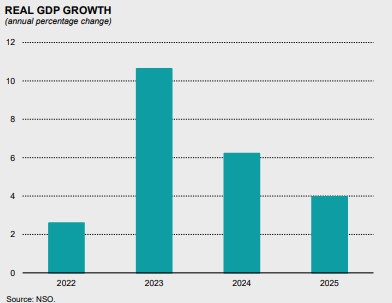
The annual report of the Central Bank of Malta describes an upbeat economy highlighting a 4% average annual growth for 2025 driven mostly by local demand with exports aiding to the growth. The Central Bank also praised the monetary policy of the European Central Bank which it deemed as successful in tamping down inflation.
The Central Bank also published upbeat economic forecasts with an estimate of 3.6% economic growth for 2026, however these estimates were created before the war in Iran broke out. The Central Bank also estimated that the HICP was to go down by 2.3% but inflation in Malta has gone up again due to the effects of the war in Iran.
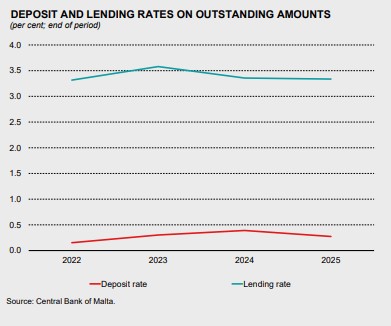
Total deposits held by all Maltese residents in financial institutions in Malta increased by 7.5% during 2025, reaching up to €27.47 billion. Total credit to Maltese residents increased by up to 8.6%, higher than the previous year’s increase at 7.7% with the total outstanding credit currently at around €22.67 billion. Most of this increase is also attributed to property loans with mortgage lending increasing by up 9.8% from the previous year.
Equity value at the Malta Stock exchange increased by up to 1.4% up to a total of €3.42 billion. Corporate bond debt increased by 15.8% totaling up to €2.67 billion.
The weighted average lending rate to Maltese households has decreased by o.2% down to 3.34%.
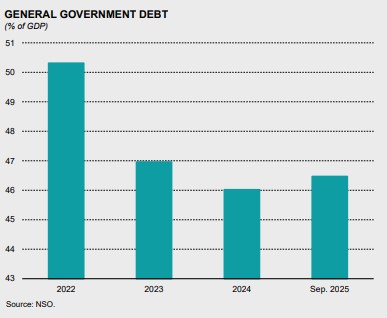
The three-month government bond-yield went down to to 2.1% by the end of the year from 3% indicating that risks related to the public debt decreased significantly by the end of the year. Bond yields however are going up again due to risk factors related to the war in Iran with yields going up again at around 2.4%.
The Central Bank also estimated that potential output growth continued to decline in 2025 from 6.2% in 2024 to 5.1% in 2025, in-line with a reading of 2023 being a record year for an upsurge in economic growth due to the Covid bounce. These readings are also reflected in the GDP data with declining domestic demand that rose by 3.6% during 2025, following a 4.9% increase in 2024. Private consumption rose by 3.3%, following a 5.8% increase in 2024.
The Central Bank is forecasting a 3.% GDP growth for the incoming years from 2026 to 2028. The effects of government expenditure on economic growth are estimated to decline as the Finance Minister attempts to balance the budget and recover a surplus by 2029.
According to the Central Bank of Malta’s Interim Financial Stability Report 2025, core domestic banks’ Liquidity Coverage Ratio stood at 401% under the baseline scenario in June 2025, well above the minimum requirement of 100%. Under the more adverse scenario involving the full withdrawal of committed facilities to NFCs and households, their LCR stood at 154%, up from 143% in December 2024.
You can find the annual report here.


Website Editor
Historian and Publisher


Leave a Reply