



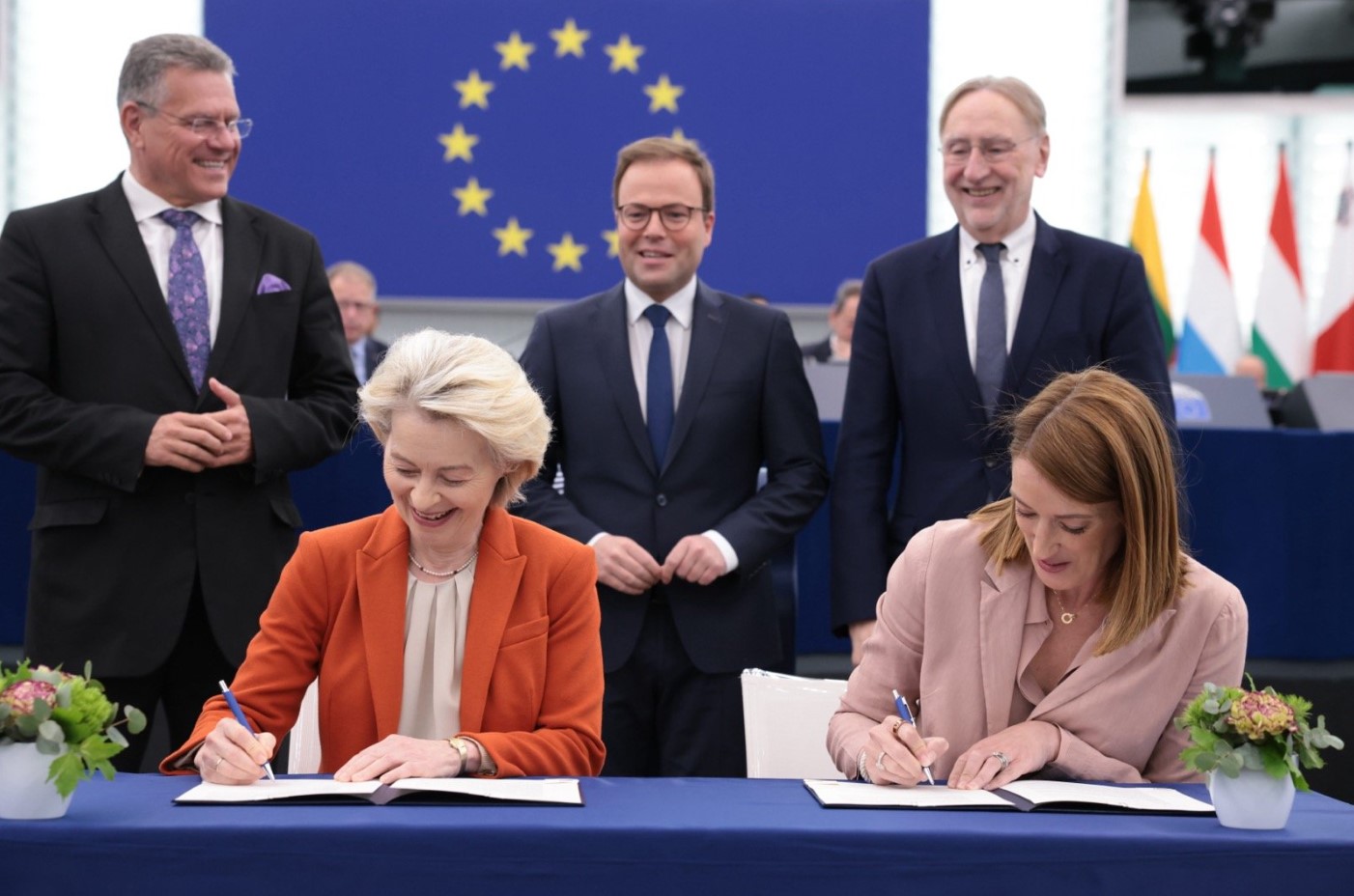
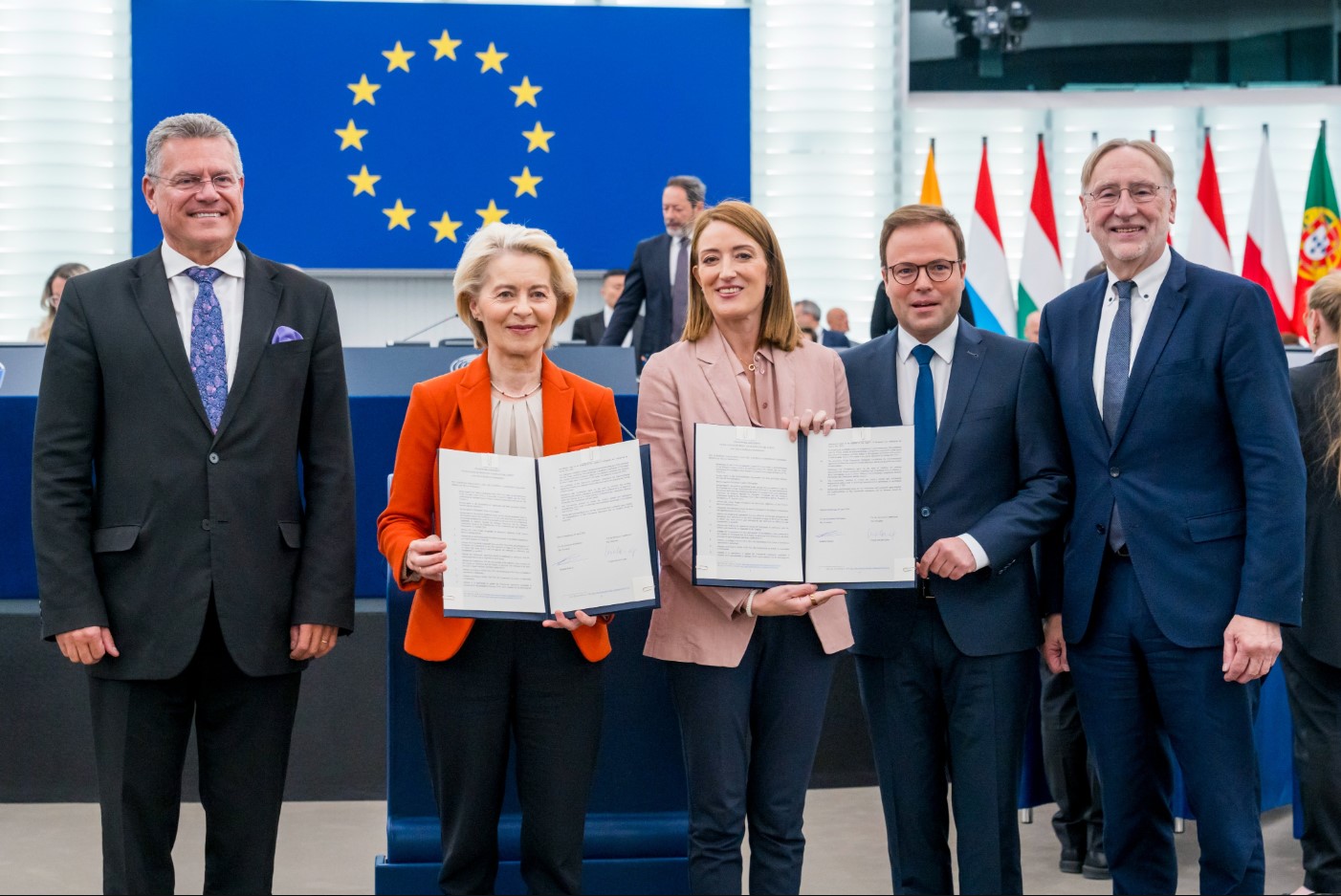
Under a new agreement signed yesterday by EU Commission President Ursula von der Leyen and European Parliament President Roberta Metsola, the European Parliament is set to to have a more active and important role in the European legislative process.
Among the new changes that will be implemented the European Parliament will received international treaties before they are signed and proposed laws by MEPs will also go to the European Commission. EU Commission officials will also be attending plenary committees to increase legislative collaboration.
The new agreement is definitely set to increase the European Parliament’s influence and role in the EU legislative process, which is currently dominated by the EU Commission.
The agreement has been signed in the backdrop of calls by the European Parliament to increase the European budget by up to 10% and also introduce European-wide taxes which would mimic federal taxes. The European Parliament ha overwhelmingly rejected the EU Commission’s proposed budget in a unprecedented move for the first time in history. MEPs are demanding a significantly expanded long-term financial framework that better reflects ongoing global realities. According to the official Parliament position, lawmakers are pushing for an increase of nearly €200 billion compared to the Commission’s proposal, arguing that “Europe cannot do more with less” in the face of mounting challenges ranging from defence and competitiveness to climate transition and migration.
Central to the Parliament’s demands is the creation of new “own resources” — effectively EU-level taxes — aimed at reducing reliance on national contributions. These include proposals for levies on digital services, crypto transactions, carbon emissions, and online gambling, alongside existing Commission ideas such as revenues from emissions trading and non-recycled waste.
MEPs have also insisted that repayments of the EU’s pandemic-era recovery borrowing should not come at the expense of core programmes such as agriculture, cohesion funding, and regional development. Instead, they propose treating these repayments as additional expenditure, thereby increasing the overall size of the budget rather than reallocating existing funds.
The Parliament’s position, adopted with a clear majority, sets the stage for a prolonged institutional confrontation with member states, many of which remain reluctant to increase national contributions or grant the EU greater fiscal autonomy.
Negotiations are expected to intensify in the coming months as both institutions attempt to reconcile diverging visions: one favouring a more federal-style fiscal framework with expanded central revenues, and the other prioritising tighter national control over spending.

Newsroom


Leave a Reply