



Inflation in Malta eased slightly in August, but food and housing costs continue to keep persistent pressure on household expenses, according to the latest Retail Price Index figures published today by the National Statistics Office.
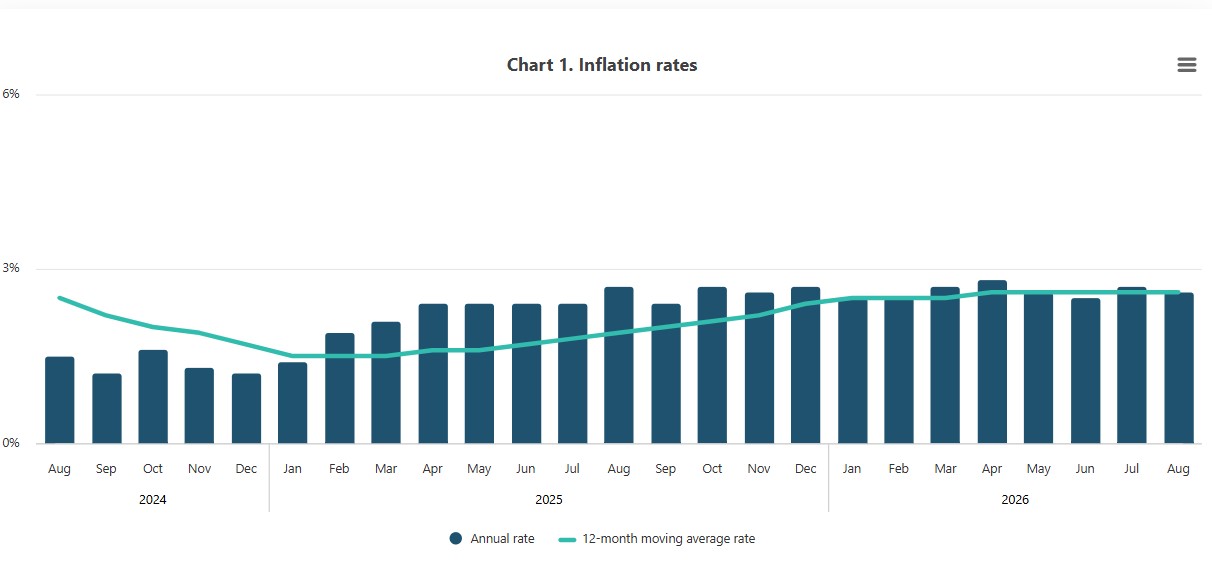
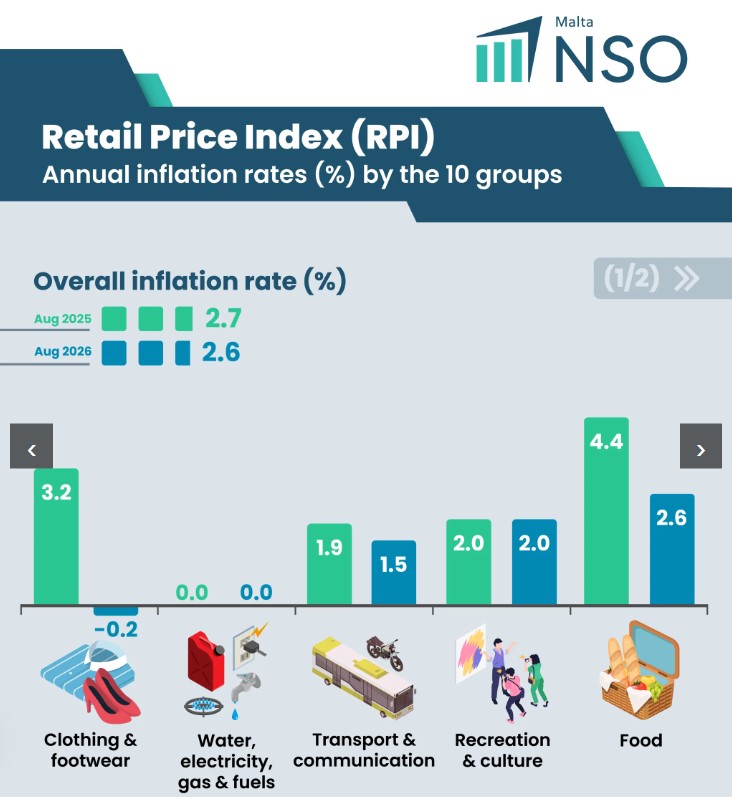
Annual inflation as measured by the RPI stood at 2.6% in August, down marginally from 2.7% in July. The 12-month moving average also remained at 2.6%.
The slight decline comes after RPI inflation jumped from 2.5% to 2.7% in July, with food and housing remaining the main items pushing prices higher.
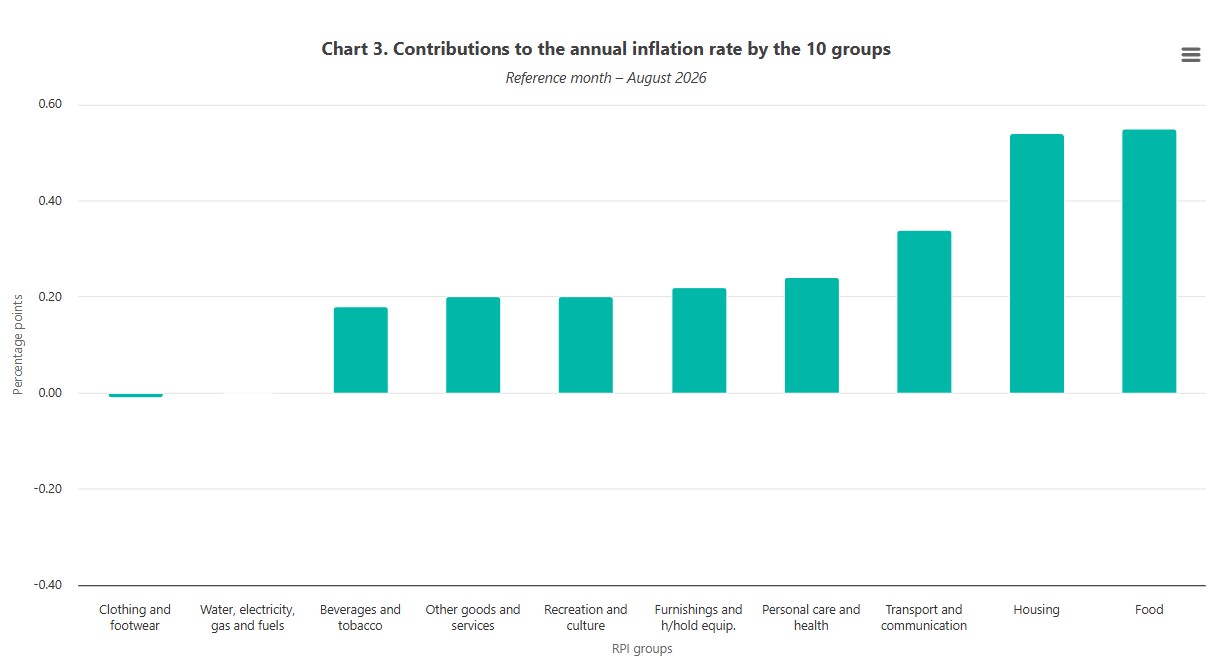
Food made the single largest contribution to August’s inflation rate, adding 0.55 percentage points. Housing followed closely with a contribution of 0.54 percentage points, while transport and communication added another 0.34 percentage points as land transport services became more expensive.
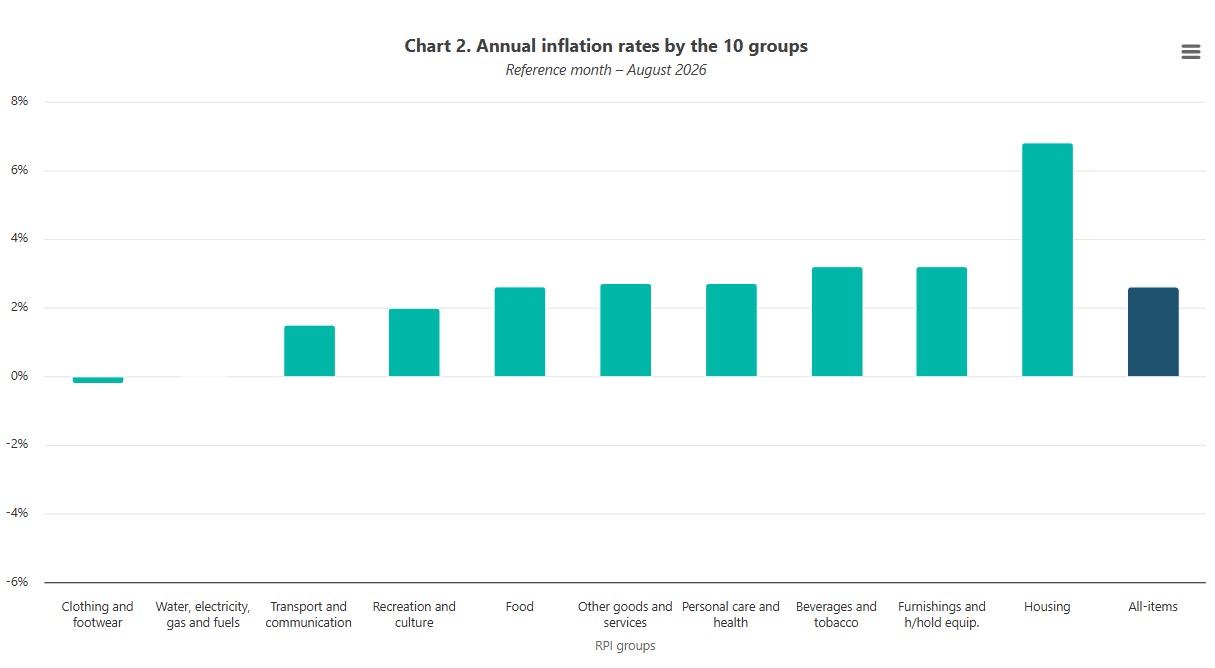
The Housing Index was 6.8% higher than a year earlier, with rents increasing by 3.5%, materials used for house maintenance rising by 8%, and house-maintenance services increasing by 6.7%.
Housing inflation has been persistently elevated throughout the year. It stood at 5.8% in April and had already risen to 6.5% by June before climbing further in August.
Prices for furnishings and household equipment were also 3.2% higher annually.
The only category making a negative contribution to inflation was clothing and footwear, where prices declined by 0.2% annually. Water, electricity, gas and fuel prices registered no annual increase due to government subsidies.
The wider Euro-area inflation rate surged to 3.3% in August, largely as a result of higher energy prices.
The latest RPI reading is also higher than Malta’s Harmonised Index of Consumer Prices. HICP inflation fell to 2% in August, highlighting the difference between the two measures. The RPI focuses on expenditure by private Maltese households, while the HICP also includes expenditure by institutional households and foreign visitors.
The RPI is particularly significant for Maltese workers and pensioners because it is the index used in the calculation of the annual Cost of Living Adjustment.
Despite inflation easing marginally from July, the latest figures show that the costs most directly felt by households — particularly food and housing — are continuing to move persistently higher.

Newsroom
Leave a Reply