



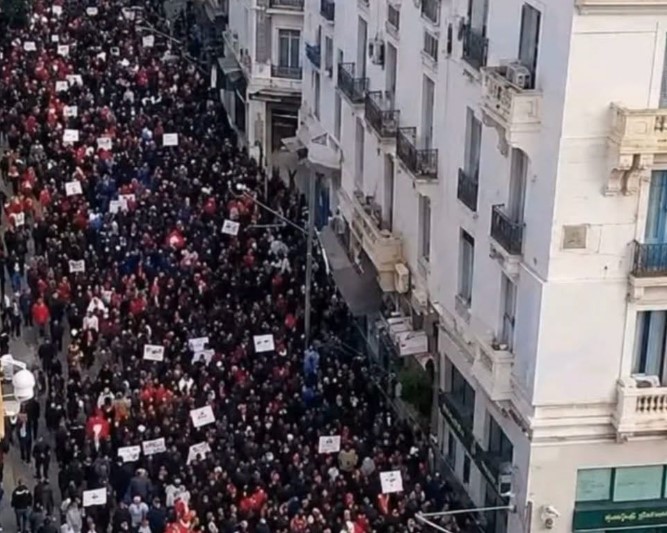
Yesterday in Tunis, the cpital of Tunisia, tens of thousands of thousands took to the streets to protest against the rule of Tunisia’s dictator Kais Saied. Demonstrators marched through Ħabib Bourguiba Avenue, the main thoroughfare in central Tunis, carrying placards calling for democracy, respect for civil liberties and the release of political prisoners. The march brought together trade unionists, opposition politicians, lawyers, journalists and civil society activists, in a rare show of unity among groups opposed to President Kais Saied’s rule.
Protesters chanted slogans demanding the government’s departure and accused the authorities of undermining democratic institutions and restricting political freedoms. Some carried signs reading “No democracy without freedoms” and “No dignity with poverty”.
The rally was led by the Secretary-General of the Tunisian General Labour Union, Salah Eddine Salmi, who called for greater unity among opposition groups and said that “silence will no longer be acceptable”. He criticised the concentration of power in the presidency and argued that political decisions taken since Saied’s July 2021 power grab had failed to deliver the promised improvements.
The demonstrators also demanded the release of detained journalists, activists and political opponents, as well as an end to repression on freedom of expression, the press and trade union activity. The National Union of Tunisian Journalists and the country’s lawyers’ association also took part in the march, calling for judicial independence and fair trials.
The protests come amid a prolonged economic crisis, with unemployment, rising living costs and deteriorating public services adding to public frustration. Tunisia has also faced recurring water and electricity cuts and shortages of medicines and other essential goods.
The scale of Saturday’s demonstration was particularly notable because Tunisia’s opposition has remained divided in recent years. The participation of trade unions, political parties, lawyers, journalists and civil society organisations brought together groups that have often struggled to coordinate their opposition to the president.
The demonstrations are reviving the spirit of the Arab Spring that began with Tunisia’s 2011 revolution, and overthrew longtime dictator Zine El Abidine Ben Ali. Protesters are now warning that the freedoms and democratic gains secured after the revolution are at risk, while continuing to demand jobs, dignity and improved living conditions.

Newsroom
Leave a Reply