



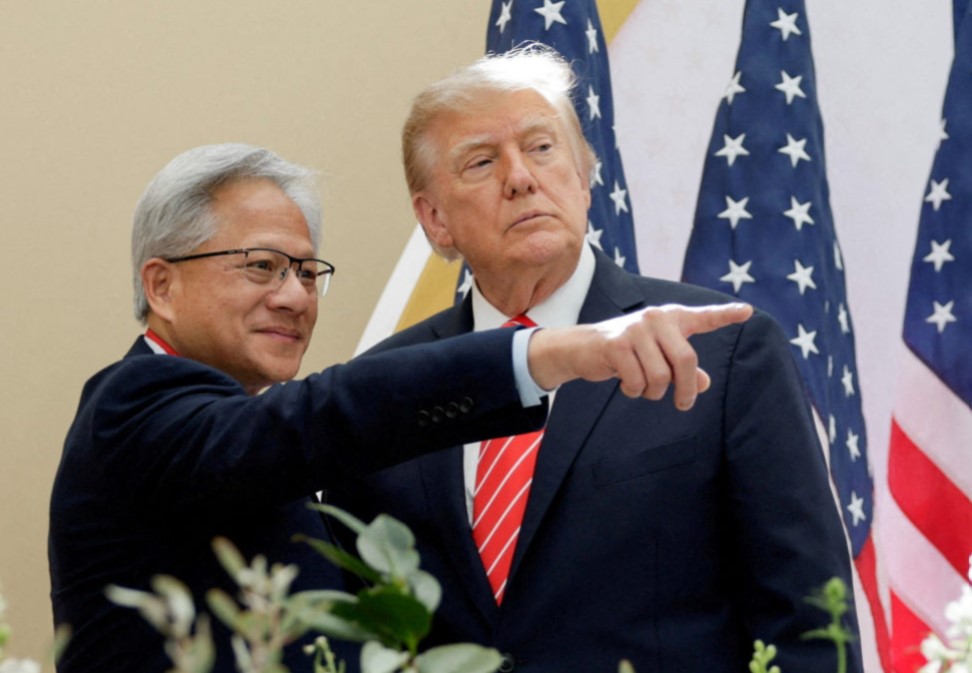
Since Nvidia was founded in 1993, Jensen Huang has been the face of advanced computing. Nvidia’s graphics cards revolutionised gaming and brought him global fame, but more importantly, they helped kickstart a revolution in computer processing that eventually enabled the sophisticated GPUs and processors of today, which have driven the AI boom.
Jensen Huang was the tech titan who mattered, but this was also because, like the other tech titans, he became a monopoly. Nvidia has virtually no competitor in high-end AI chips. The AI boom is being powered by his company’s processors, and Nvidia has not missed many opportunities to sell its products. Huang has pushed Nvidia beyond simply selling chips. In August 2026, the company announced partnerships with major financial institutions to establish financing platforms intended to mobilise more than $500 billion in third-party capital for AI infrastructure. This was part of an aggressive expansion of the industry, with Nvidia helping customers finance the infrastructure built around its own technology. Huang seemed to be financing the AI-boom himself.
His downfall following the revelation of his affair with a Chinese spy has been dramatic, but to say the least. It was not only unexpected, but very much unforeseen by most. His role in the AI boom had begun to seem personal and indistinguishable. After his resignation from the company, rumours have been published by Reuters that he is planning a comeback. Acceptance may have not even arrived.
There were those who had warned us, though. The story about Megaspeed’s imports had already been reported by The New York Times and other outlets. US authorities had been examining whether Megaspeed was routing advanced Nvidia chips to Chinese companies in breach of American export restrictions. Singaporean authorities also investigated the company over possible false declarations relating to server purchases.
Megaspeed denied the reports, saying there was no evidence of illicit chip transfers and that it was conducting legitimate business. The press seemed to have overlooked the issue, but in reality there was already a background history which had set the direction of policy and affairs. This is why the scandal did not appear to come entirely out of nowhere.
During his second term in office, President Donald Trump approved the export of advanced Nvidia chips to China. Then in December 2025, Trump announced that Nvidia would be allowed to sell its H200 AI chips to approved Chinese customers, with the US taking a share of the sales. The Commerce Department subsequently introduced a case-by-case licensing process for these exports. This marked a significant shift from the restrictions imposed by the Biden administration. Meanwhile, the importance and risks associated with these chip exports only grew as the technology became more advanced. Concerns that China could overtake the US in the AI race became increasingly serious.
Jensen Huang had made it very clear where he stood. He repeatedly stated in interviews that US technology, including AI, should be exported to China. His view was that maintaining access to the Chinese market would strengthen the American technology ecosystem, allow American companies to compete globally and ensure that the world continued to build on American technology rather than Chinese alternatives. Huang did not seem particularly concerned that he was advocating the sale of some of the most advanced American technology to the country’s major global rival. He believed that it could even benefit the US.
It was a sex scandal and an affair which tied together the negative aspects of his views and business practices concerning China and brought them into a single frame. There is no doubt that the Chinese state would want to get its hands on the most advanced US technology, whatever it may be. The woman with whom Jensen Huang had an affair, is now reportedly living in Beijing.
The scandal is not stopping there, though. Did President Trump know about alleged illicit transfers of GPUs to China? Did he know about Megaspeed? And why did he do nothing after being briefed on intelligence concerning Jensen Huang’s relationship?
The Commerce Secretary, Howard Lutnick, is getting the blame. Treasury Secretary Scott Bessent has publicly criticised the Commerce Department for failing to place Megaspeed on the US Entity List, while some press reports say that Lutnick delayed efforts to restrict the company. The Commerce Department has disputed reporting about its handling of the matter. Meanwhile, Lutnick is also facing separate scrutiny over his past contacts with Jeffrey Epstein, which he addressed in testimony to a congressional committee earlier this year. Will he be the fall-out guy for the Trump administration as Trump tries to bury the Nvidia scandal?
Feature photo by PBS (US).
Read more about the AI boom here.

Website Editor
Historian and Publisher
Leave a Reply