



Books are afforded a lot of slack that other media do not benefit from when it comes to quality. Who cares, we ask, if some books are bad? At least people are reading, right?
Why don’t we say the same about TV? Or movies? Why don’t we say the same about music? That TV series is abominable, but at least they’re watching it. TV can be just as educational as literature, after all.
It’s understandable that books have earned a reputation for doing no wrong. They are the staple or have been the staple of a good education for a few centuries now. Or is this about the threats to the book industry, which has been seemingly waning for a while now? Is it simply the overlords of business who keep saying, shhh, I know it’s bad but at least they’re reading something, you know?
The truth is that there’s nothing wrong with being a little snobbish about books because, just as with every other medium, literature can offer up its most mangled and frightful products. Bestselling English author, Matt Haig, has a history of decrying this snobbish behaviour.
“Yes,” he writes on his website, “have taste. Read, write and publish things because you genuinely like them. But snobbishness is never okay. When things like thrillers and women’s fiction and kids books are dismissed in a blanket way, then that is wrong.”
Matt Haig is being a little manipulative here because, of course, nobody is dismissing, say, Patricia Highsmith or Agatha Christie for writing thrillers, or Helen Fielding and Jane Austen for writing romance novels. The problem is not the genres but the quality of the writing.
Fads are a thing, even when it comes to literature. For a while and perhaps following the unmatched quality of Anne Rice’s first vampire novel in 1976, Interview with the Vampire, we’ve seen a surge of romance novels of the bloodsucking variety, some of which were turned into blockbusters or successful TV shows. Matt Haig’s The Radleys is very much a part of this fad.
This thin line between love and violence later transformed into the un-supernatural love stories involving questionable love interests, dark and broody but infinitely alluring male suitors. So you get something like Fifty Shades of Grey.
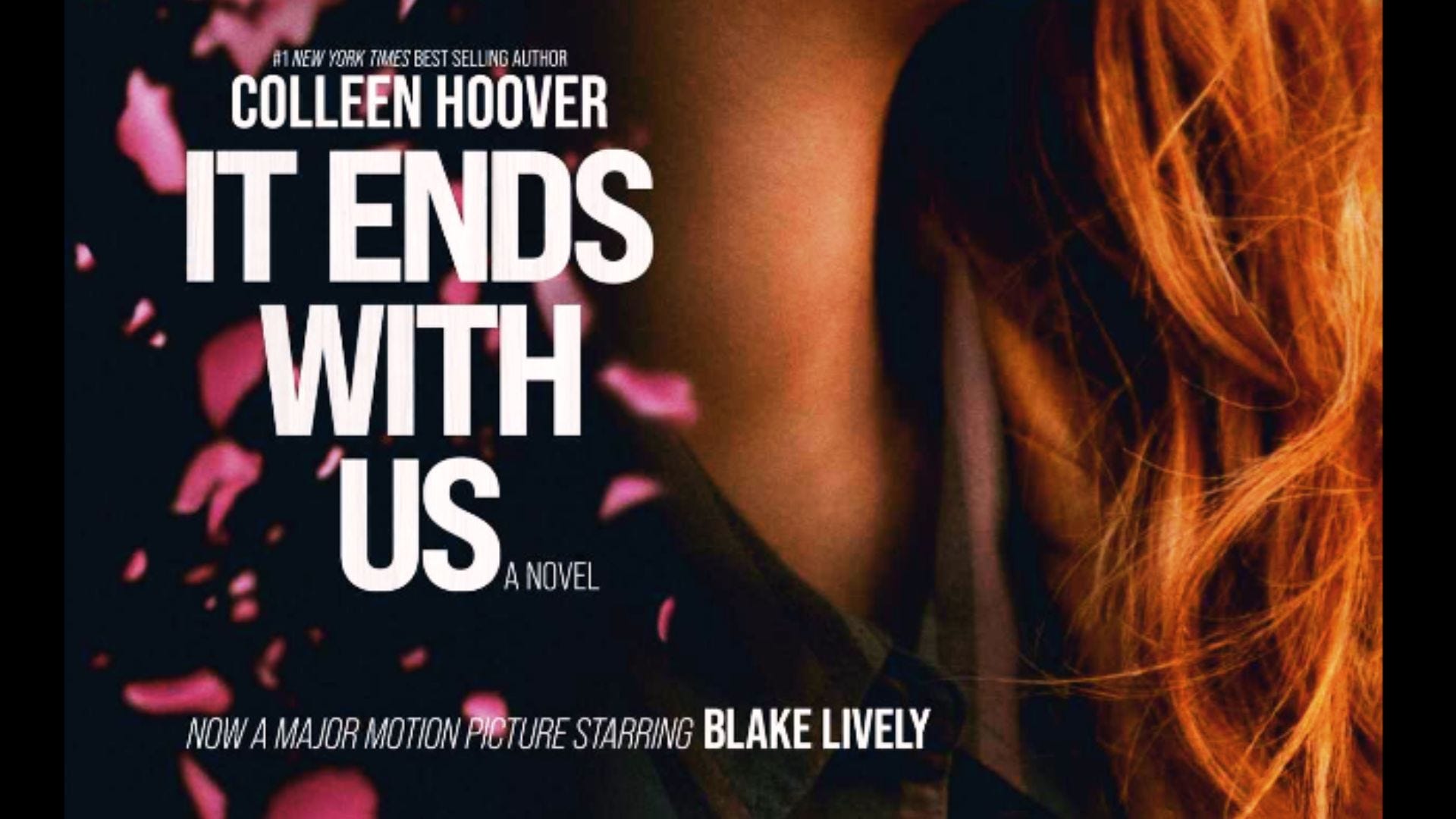
The latest author who made the most of this contentious fad is the queen of BookTok, Colleen Hoover. Her 2016 novel, It Ends with Us, has recently been produced into a money-raking blockbuster film.
So should we be happy that, sure, it’s Colleen Hoover but at least they’re reading? Or should we stop cutting literature slack and say, no, this sucks and people shouldn’t be reading this? After all, that’s the unenviable and tough job of a critic: to tell the audience that there are better alternatives out there and that people who don’t usually read (i.e. plastic consumers) shouldn’t make booksellers and other readers happy for keeping their beloved industry afloat; it’d be nice to see something more sustainable than a cheap and badly written paperback.
It Ends with Us tells the story of Lily who falls for a charming neurosurgeon called Ryle Kincaid. Ryle is hard to please, doesn’t date by his own rules, but he falls for Lily. It turns out that he has more than just a temper problem. Enter Atlas Corrigan, a man from Lily’s past, and things get even more complicated. And violent.
I won’t go into the writing quality just yet; there’s plenty of examples on the internet of the bad writing that constitutes this book and the rest of Hoover’s bibliography. I won’t even comment on the bad PR involving a publisher attempting to release a tone deaf colouring book for a novel that deals with domestic violence or the fact that Hoover seemingly romanticises abusive behaviour.
What I will say is that Hoover has highlighted something that went very wrong in the book industry in recent years and that it’s possible that publishers have become so greedy that they’re willing to do unspeakable and irreversible harm beyond the industry.
That’s right, Matt Haig, it’s not just okay to be snobbish about literature but, sometimes, it’s morally reprehensible not to be. Bad books have bad consequences.
In 2016, famous YouTuber, Bookerly, was one of the first people to give a scathing review of It Ends with Us. She said, “I was really hesitant to put up this review, by the way. Really, I’m just afraid of the backlash.”
The problem isn’t just that the Hoover bibliography gives young girls — the intended audience — a very skewed picture of abusive relationships or that there are so many pop culture references — that age quickly — that are questionable, such as Hoover’s obsession with Ellen Degeneres and her charitable character (which people who worked with her denied following some scandalous behaviour). The problem isn’t even with Hoover’s obsession with money as the privileged and rich lifestyle of the characters in the novel suggest.
If those were the problem, we might as well go after Quentin Tarantino and his violent movies and confer to him the power of thwarting young impressionable minds. Tarantino was the subject of many of these accusations though no correlation between violent films or video games and real world violence has ever been found.
No, the problem goes beyond the book. Through a combination of pandering to a young and uncritical audience, the bad writing, and the content of the stories, the Hoover phenomenon has created a bubble of violent fans that threaten detractors and critics. We’ve heard of Swiftie violence but have you heard of Hoover hounds?
After all, don’t we always say that the pen is mightier than the sword? Well, there are armies of die-hard fans willing to harm critics because they’re on Team Ryle and don’t see anything wrong with the content or the writing of their hero. The newly released eponymous film based on the book has made the same mistake. It marketed the film as a feel-good romance.
Blake Lively, the lead, promoted her own products and her booze during the press tour and when asked about the darker parts of the story, she was glib and facetious and pretended like the questions weren’t relevant. If she’s playing the role of an abused heroine in a story about domestic violence and assault, one would expect her to have a more responsible persona on show.
This has created a rift between Blake Lively and Justin Baldoni, the male lead. Baldoni took on a more serious tone during interviews. He answered questions pertinently. The press who covered this film and its production made a meal out of the apparent clash between him and Lively.
Again, social media became an arena of cut-throat conversations and disagreements about who is right and who is wrong. A multi-million controversial production ended up giving nothing back to its audience: not an original story, not a satisfying one, definitely not a worthwhile distraction from daily life or a complex and didactic narrative, and definitely not one that did an ounce of good. It Ends with Us ended up being reduced to nothing more than an online spat.
And what did we expect? It’s about time that certain projects stop getting the platforms they don’t deserve. So what if Colleen Hoover did very well as a self-published author? Shouldn’t publishers be held accountable for publishing rubbish, even if it sells? Isn’t literature supposed to transcend the crass principles of business at all costs? There used to be this idea that a publisher is a gatekeeper of good literature, that if something has a nice cover and a neat typescript, then it must be good. This is no longer true. It’s no longer true either that a bestselling author can live off his craft. Publishers rake in the money while some of their writers are paid a pittance.
With some of Hoover’s characters being as deep as tracing paper and writing like this — “He made me promise I’d never become vegan. That was a simple promise. I love cheese too much. I told him we had to start some kind of charity, or at least donate to ones. He said he already does, and that made me want to marry him even sooner.” — the publisher should have said, no, thanks, I’d like to put my efforts on a very good book instead. And it will sell because I’ll put in the work.

Culture Editor
Author and Literary Critic

Leave a Reply