



When the ambitious plan for an Olympic-sized swimming pool and revamped sports complex in Gozo was announced, it promised to be a transformative project for the island. Today, the project lies incomplete, burdened with soaring costs, missed deadlines, and allegations of corruption, illegalities, and favouritism.
The Gozo Ministry, its contractors, and a web of financial and political intrigue lie at the heart of this controversy. A court application filed by lawyer Jason Azzopardi has brought into light a series of troubling decisions and actions that exposed what some have called blatant abuse of public funds.

From Promise to Scandal
It started way back in 2017, when the government called to build an Olympic pool next to the Gozo Sports Complex, which costs €9 million. What followed was an expensive alteration from what the people had become accustomed to. Instead of building in front of it, contractors totally demolished the complex, which was only recently revamped, removing newly laid parquet flooring which cost half a million and its new €1 million roof-all paid out of EU funds.
This was not part of the original tender and raised immediate questions. According to investigative platform The Shift News, the project’s scope expanded inexplicably, and costs rose to €16 million by 2021 and now near €20 million. Taxpayers wonder why a public facility completed just a few years earlier had been demolished without explanation.

Adding to the concerns, Gozo Minister Clint Camilleri and his Permanent Secretary, John Borg, are accused of sanctioning these actions without proper oversight. Parliamentary questions about the sudden changes and cost hikes remain unanswered.
A Web of Private Interests
It gets even deeper, as it was between the construction magnates Joseph Portelli and Charles Polidano, more commonly known as Iċ-Ċaqnu. Despite a €40 million outstanding tax bill by Polidano and despite laws which bar such contractors from government projects, their consortium was given the tender.
Investigations by The Shift News and court filings show that most of the concrete was supplied from an illegal batching plant in Kerċem, owned by Portelli himself. The plant has been operated without permits on government-leased land and continues to operate to this day in spite of enforcement orders by the Planning Authority. According to reports, the Gozo Ministry and Enemalta are among the public entities that have issued direct orders to the illegal plant, hence endorsing its operation.
While the illegal plant churned out hundreds of tons of concrete for the sports complex and other public projects, the authorities did nothing to stop it. The Lands Authority, which owns the land, did not file a court case. Meanwhile, Portelli and Polidano reportedly pocketed millions of euros as the project’s costs spiralled out of control.
A Pattern of Delays and Deflections
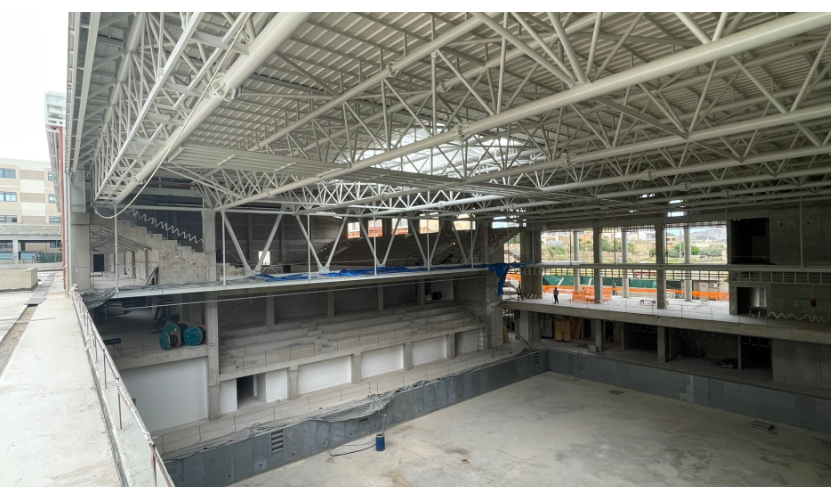
The project, originally scheduled for completion in 2021, has now missed five deadlines. Its most high-profile target-was meant to host the 2023 Games of the Small States of Europe – a target it missed. Sports Malta was forced to abandon any plans to make use of the Gozo facility, instead shifting aquatic events on Malta.
The Gozo Ministry still insists the project is going “according to plan” despite the delays. During a site visit in early 2024, Minister Camilleri announced another completion date – the pool would open later that year, he said. Far from being operational, the site of construction is a skeleton.
Allegations of Corruption and a Call to Justice
The suit filed by Jason Azzopardi accuses both Camilleri and Borg of conspiring to commit a string of crimes: money laundering, circumvention of the law on public procurement, and corruption. He alleges intentional over-expenditure, where funds were being diverted to private interests.
“Somebody decided that in order to double the cost of this project, demolition and rebuilding would have to be performed,” it added. Similarly, the Gozo Ministry has allowed illegalities, like buying concrete from an unlicensed concrete batching plant.
The filing in court goes further, however, and describes systemic issues – a mafia-like infiltration of public administration that it likens to Palermo in the 1960s, when uncontrolled corruption in the building industry allowed organised crime to grow unchecked.
The Bigger Picture
It is not an isolated case. In the past decade, Gozo has been the theatre of some big infrastructure projects characterised by delays, cost overruns, and shady dealings. The case reflects a general culture of poor governance and political favours.
The Gozo Sports Complex serves as a glaring example of how accountability erodes public trust. For now, Gozitan athletes are still without proper facilities while the taxpayers have been left to foot a bill that is far over the initial promise of €9 million.
With calls for an independent inquiry growing louder, the case highlights the urgent need for transparency, stricter enforcement of procurement laws, and accountability for those entrusted with public funds. Whether this investigation will lead to meaningful change or become another unresolved scandal remains to be seen.

The Main Players in the Scandal
Joseph Portelli: Gozitan developer with a history of illegal construction activities, including the Kerċem batching plant.
Charles Polidano (Iċ-Ċaqnu): Construction mogul implicated in public procurement scandals.
Clint Camilleri: Gozo Minister accused of sanctioning illegality and over-expenditure.
John Borg: Permanet Secretary, accused of complicity in public fund mismanagement.

Newsroom

Leave a Reply