



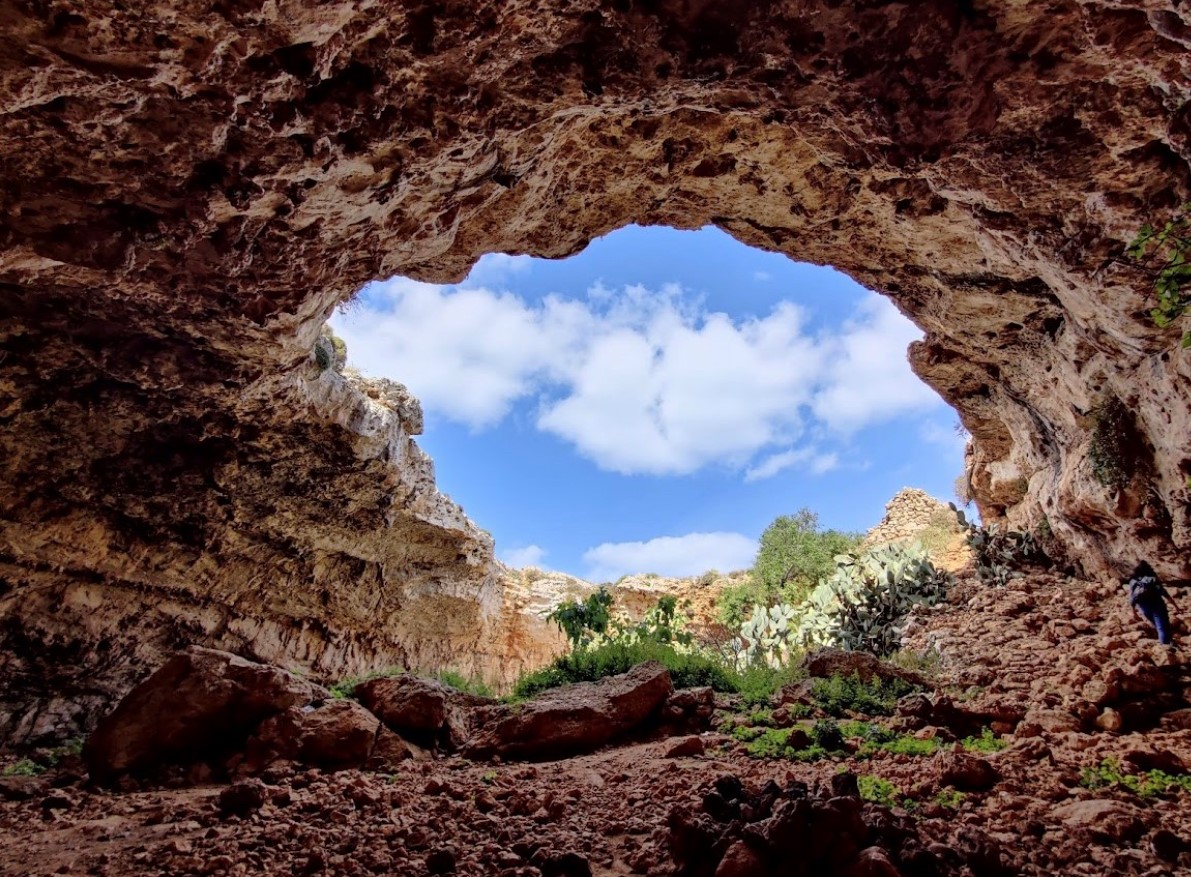
The press was very quick to report the statements made by the University of Malta on the Tal-Latnija (Għar Tuta) discoveries by archeologists, but often these discoveries are published in lengthy papers that are then scrutinised by many other experts. This is why we took our time to actually read what was published and do some background reading before rushing to publish any headlines.
The discovery was published in one of Nature’s journals and was published in a short-article form by Dylan Gaffney, who is an Associate Professor of Palaeolithic Archaeology in the School of Archaeology, University of Oxford. Gaffney is helping a team of archeologists from the University of Malta and the the Max Planck Institute of Geoanthropology identify and study a number of remains that were found in Għar Tuta. In his article, Gaffney states that radiocrabon-dating of charcoal remains in the cave are more than 9,000 years old. Inside the cave, other remains were found such as tools and animal bones.
Archeologists are claiming that this is a ground-breaking discovery because it is the earliest evidence of human activity in the Maltese islands. If the radiocrabon-dating is true, the archeologists may very well be right in claiming that this is ground-breaking by pushing the earliest known human settlements in Malta even earlier. However, more items need to be dated so as to compile a strong case. We also haven’t seen a comprehensive archeological study with all the layers laid out and the investigations are still ongoing.
Prior to this discovery, the earliest evidence of human activity in Malta consisted of tools and pottery dating to between 5,000 and 6,000 BC.
We’re also not experts in prehistory so we can not judge the many theories that are being laid out, but many archeologists agree that the first human settlers in Malta came from Sicily.
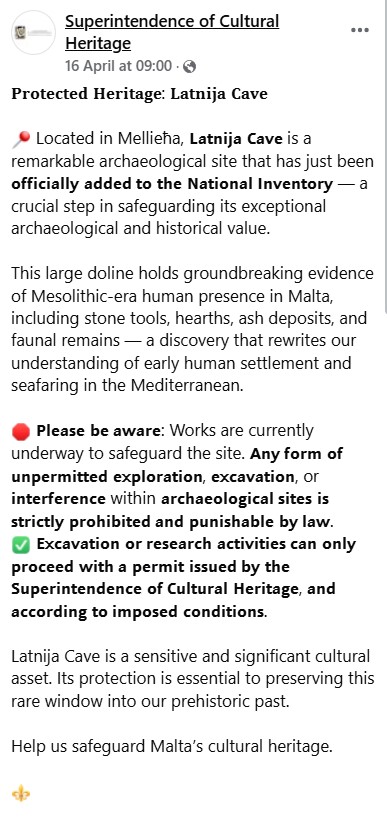
This is one of the only major ongoing archeological investigations in Malta and hopefully the discoveries will encourage the government to be more respectful of our national heritage, which is mostly being buried under cement. The Superintendence of Cultural Heritage is in the process of scheduling the area with an emergency conservation order and the area is now sealed off from the public. I have been one of the lucky ones to have visited the cave in the past before it has become an archeological site.

Website Editor
Historian and Publisher

Leave a Reply