



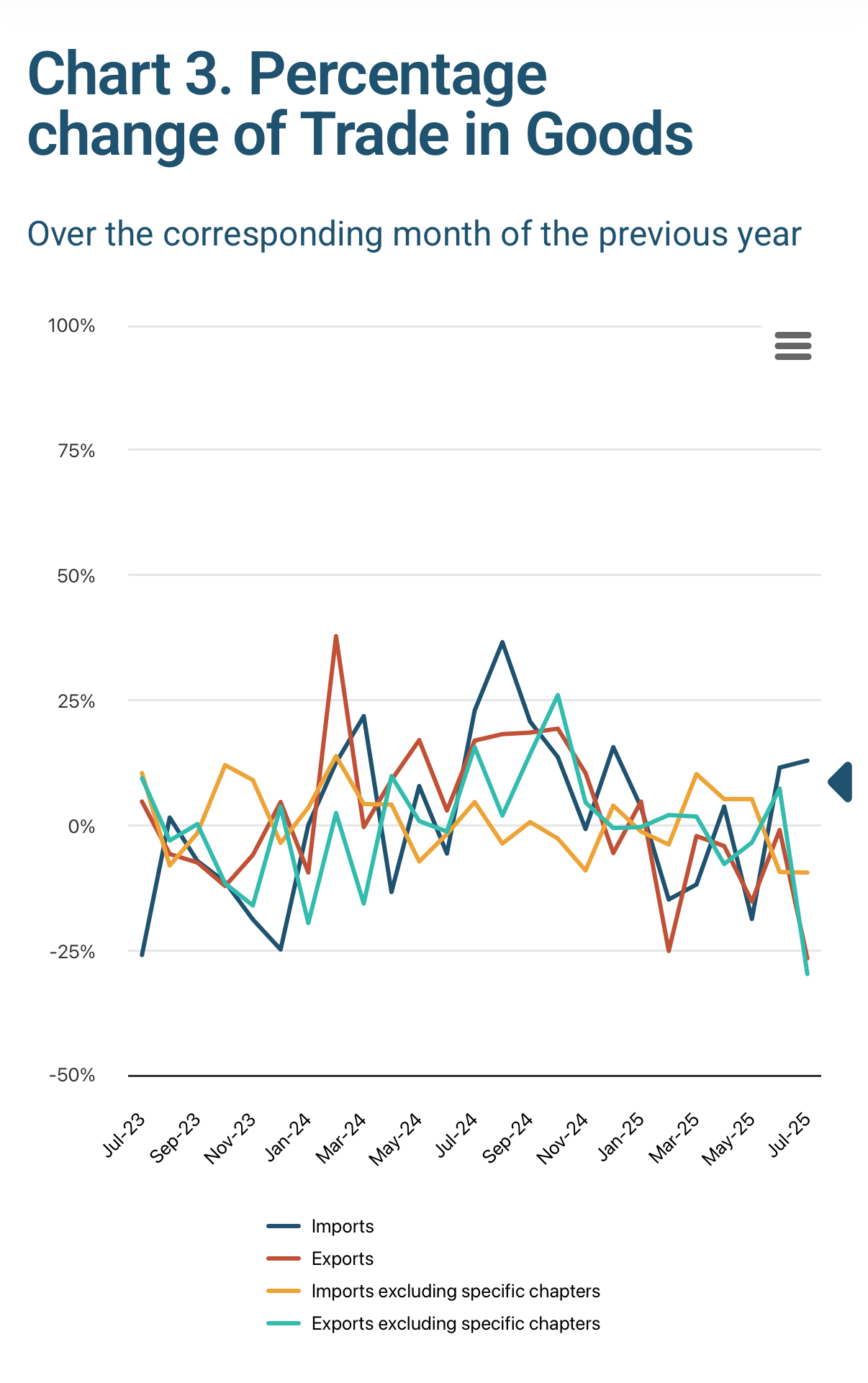
Malta’s international trade in goods deteriorated sharply in July 2025, with provisional figures showing a deficit of €904 million, up from €640 million a year earlier. Imports rose by €141.6 million to €1.24 billion, while exports fell by €122.3 million to €335.6 million.
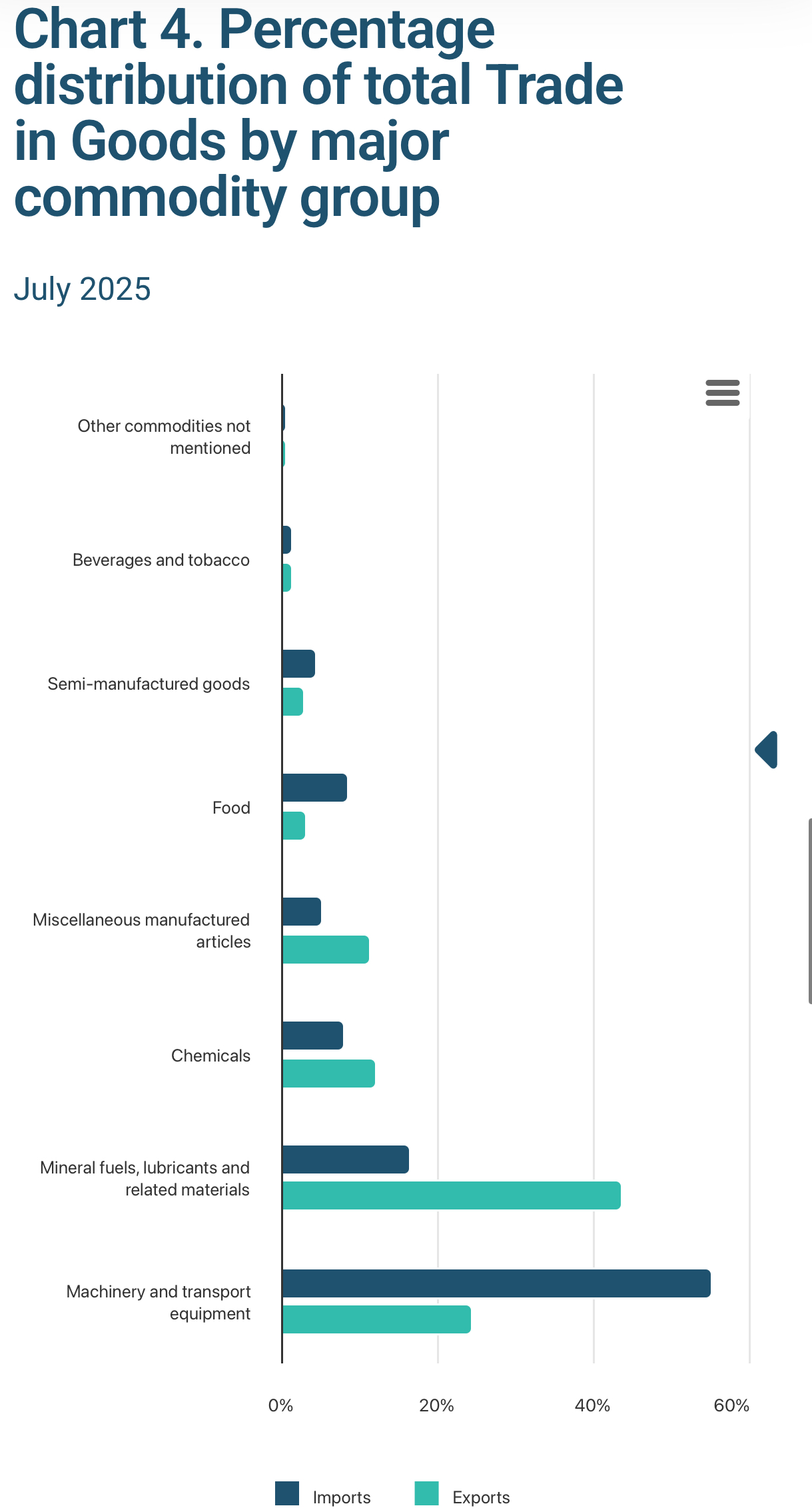
The increase in imports was mainly driven by machinery and transport equipment (€319.4 million), partly offset by a €164.4 million drop in mineral fuels and lubricants. On the export side, the steepest declines were recorded in mineral fuels (€42.4 million), miscellaneous manufactured articles (€38.4 million), and chemicals (€16.9 million).
Between January and July, the trade gap widened further to €2.87 billion, compared with €2.62 billion in the same period last year. Imports totaled €5.4 billion, down slightly by €70.1 million, but exports fell more heavily, down €321.7 million to €2.53 billion. This imbalance highlights Malta’s growing reliance on imports despite overall weaker trade flows.
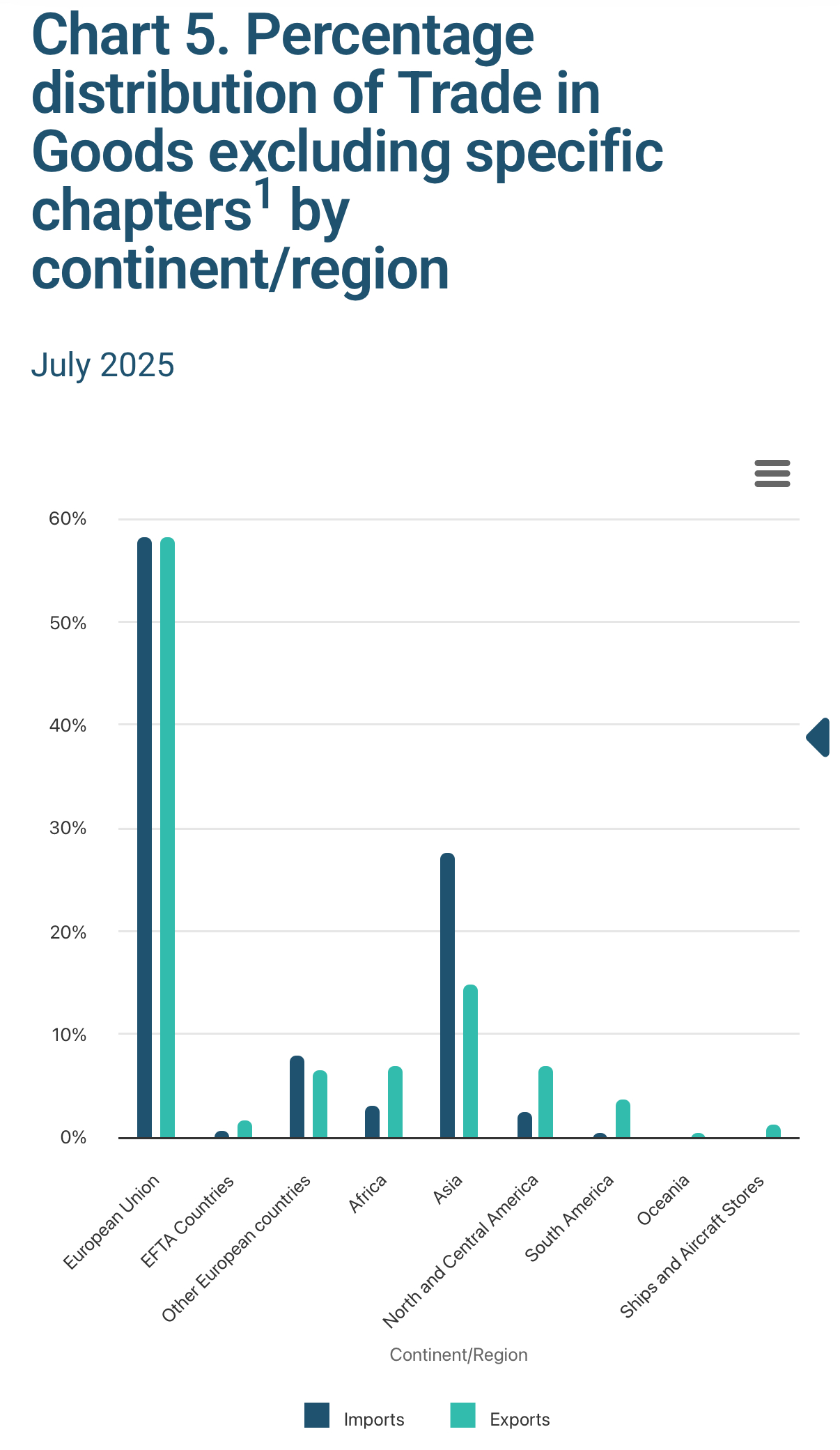
The European Union remained Malta’s largest trading partner, accounting for 63.3% of imports and 36.3% of exports. Imports from France surged by €384.4 million, while those from Italy fell by €109.4 million. Exports to Turkey increased by €94.3 million, but sales to the United States plunged by €121.2 million.
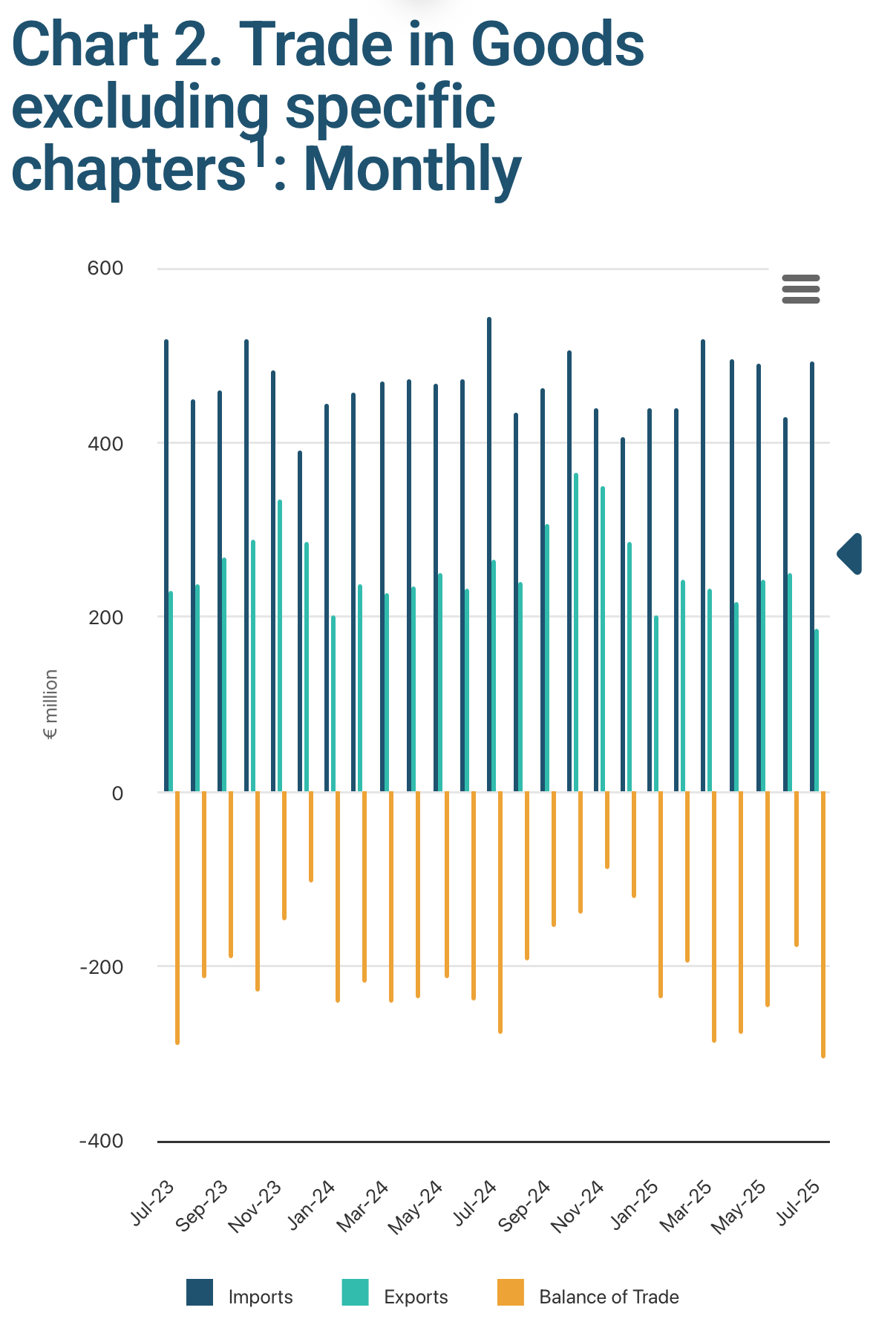
Even when excluding volatile categories, the trade deficit still widened, reaching €305.4 million in July and €1.73 billion for the first seven months of 2025. Both imports and exports declined in this measure, though exports fell more sharply.


News Editor
Journalist and Newscaster

Leave a Reply