



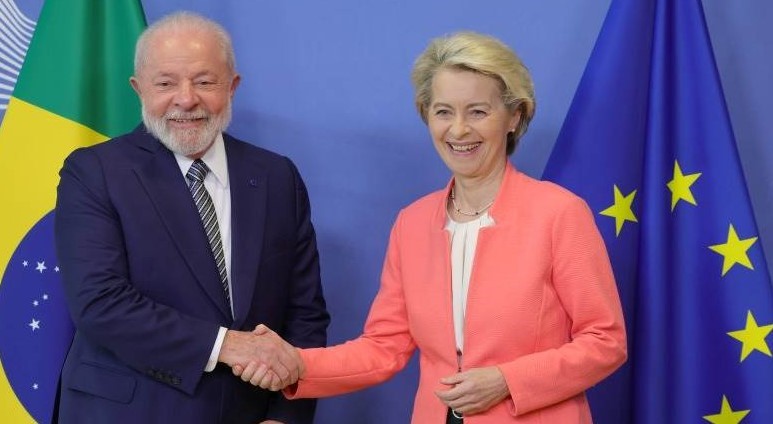
At the end of the week, the Mercosur agreement was finally approved by the European Council with a qualified majority, sidelining France’s opposition to the agreement. Formal negotiations on the Mercosur agreement began in March 1991 and will create the largest free trade-zone agreement in the world between the EU and South American countries including Uruguay, Argentina, Bolivia, Paraguay and Brazil. Venezuela was also a member until 2016. Colombia, Chile, Peru, Ecuador, Panama, Suriname and Guyana joined as Associate Members.
The French, mainly French farmers are opposing the deal.
Primarily, the agreement will create a customs union but this is not fully free as one may assume. Tariffs on up to 91% of the products will be phased out gradually and not necessarily immediately and a list of sensitive products will be protected by quotas. These include beef which is protected by an import quote of up to 1.6% of the EU’s production. Specific tonnage quotas have also been applied to ethanol, sugar and poultry. On the other hand, tariffs for most fruit and vegetables are expected to go down along the years, also potentially putting downward price pressure on these products.
In turn, South American countries are also expected to bring down tariffs on up to 91% of EU imports including tariffs on EU cars and vehicles which are currently substantial. Clothes, textiles and industrial goods will also have their tariffs phased out. EU standards will also apply to all imports.
Services will not be integrated in the agreement which mostly focuses on goods. However, Spanish banks and mainly Banco Santander, which has a large footprint in Latin America, are t to benefit from the Mercosur agreement. Spanish banks have also been strong advocate for the agreement as they try to increase their customer base in the region.
The details of the agreement can be read here.

Newsroom

Leave a Reply