



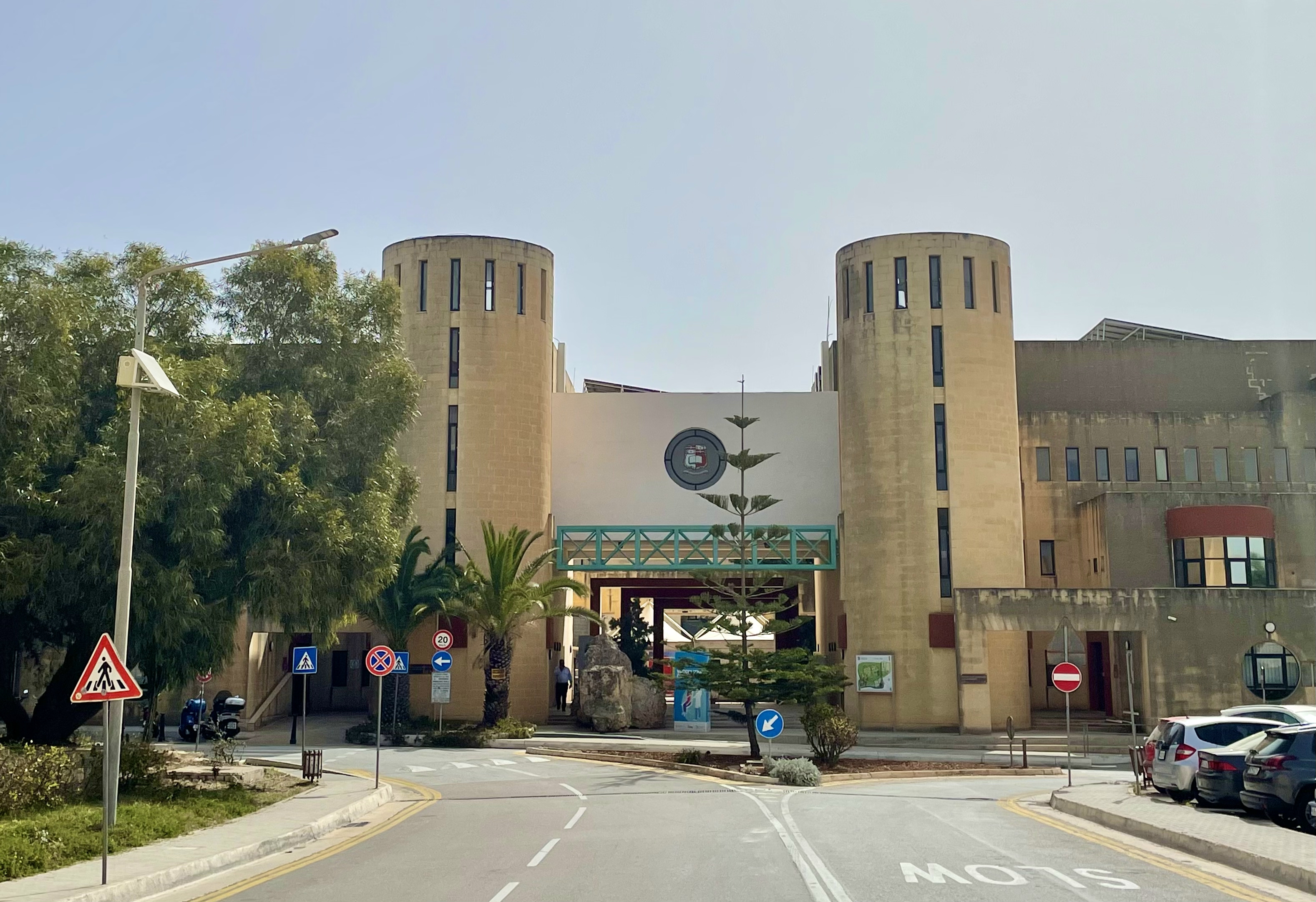
Malta’s system of government is rapidly evolving into an illiberal regime and one of the underlying factors that is enabling this process is the manipulation of public discourse and the free press. This process is not fulfilled in isolation – it needs the constant and active collaboration of editors, academics and intellectuals.
The government has just awarded academics with a very significant pay rise. This pay-rise is not being made in isolation to ongoing political processes and event and it is made in a context in which the government is systematically monopolising the public discourse by manipulating the free press. It has become a rule that when the Labour government funds local intellectuals or public entities: it expects payment back in the form of political loyalty and propaganda – the University of Malta is no exception to this process.
Intellectuals and academics at the University of Malta do not need to be Labour Party members to serve the government’s needs and interests – although some of them do so openly and actively. All they need to do is to remain passive in the national political process in which Labour is monopolising and manipulating the public discourse. In this system, where everyone “does their job”, academics become self-referential in their “critique”, turning into tokens of nominal intellectualism rather than as effective producers of public knowledge. A case in point was the letter against Roberta Metsola on Gaza. The letter didn’t help Palestinians, neither did it put any pressure on the EU authorities – it did however attack a local figure of the Opposition in the local political discourse, where it was mostly effective. The only effect the letter had was to appease the government, and this was also the original intention of many of those who signed it.
The University of Malta has active and ongoing research agreements with China while its academics openly advocating for good relations with Beijing. There is no genuine concern by these intellectuals about imperialism, and genocides against Muslim or Arab peoples. The letter on Gaza was not just inauthentic, it was also deeply deceptive and imbued with partisan-ideology and interests that have shaped the thinking and behaviour of intellectuals at the University of Malta. Russian and Chinese universities also made statements and public positions on the war on Gaza – but this doesn’t mean that these universities have freedom of speech or that these intellectuals have taken some sort of risk.
Just like in China and Russia, bar a few exceptions like Vicki Ann Cremona, intellectuals at the national university have been mostly absent in contributing to the national discourse and their self-referential pseudo-critiques have only contributed to the acceleration of the Labour government’s illiberal regime. The lack of research and innovation at the university is also the result of this intellectual stagnation and power dynamic.
The university runs on a system of personal loyalties, nepotism and politics with families and individuals having specific positions of power that goes unchallenged. The Dean of the Faculty has the power to single-handedly determine your academic future on the basis of his personal likeness, preferences and interests and the Dean goes unchallenged as academics depend on him for very valuable promotions. This is also why research at the university is gutted and stagnant with academics turning into public media frauds because they have nothing to show for their research.
Case in point is Alexiei Dingli who was rapidly anointed as professor at the University of Malta by the Lawrence Gonzi administration and turned into a media personality on Artificial Intelligence. He has been bragging about his expertise on artificial intelligence for years on end and has literally nothing to show for it except for a very stupid idea-proposal he conjured about solving Malta’s traffic problems with AI, for which he needed government funding to implement. Another excellent example is the Department of History which has been stagnant and gutted by a very spiteful, petty, and morally corrupt Dean, who is also Labour Party supporter, with the department producing nothing of value ever since Professor Godfrey Wettinger passed away. The university hasn’t even been able to come up with a Maltese spell-checker. The situation is indeed very desperate.
Obviously, you won’t hear intellectuals and academics celebrate Malta’s writers and dissidents – it does the opposite by attacking and isolating them and even conjuring pseudo-academic narratives that attempt to downgrade their legacy and work.
Malta needs a new counter-culture intellectual movement to save the information space and preserve what remains of the intellectual discourse in society. This new intellectual movement should seek to uplift the intellectual discourse, rejuvenate research and innovation and foster actual critiques whilst supporting dissidents. If this new intellectual movement won’t be created, Malta’s intellectual development will stagnate further enabling the further Dubaification of all aspects of society: including the economy, culture and also intellectual discourse. This new intellectual movement should be guided by some basic principles. I will try to list them below.
1. Recognition that Malta’s intellectuals have failed
Malta’s intellectuals have failed top foster research, development and critical discourse in society. They have become part of the government system which is manipulating public discourse and allocates public resources to loyalists while isolating and actively attacking dissidents.
If there is no recognition about this state of affairs, the Labour government will accelerate its monopolistion of information in society and the state of intellectual discourse will remain stagnant.
2. Peter Serracino Inglott has failed to produce a rigorous academic institution
Peter Serracino Inglott was very important in Malta’s history of academia and intellectual discourse because he enabled free speech and greater academic freedoms. His error was to disregard academic and productivity metrics for the sake of greater freedom. This excessive freedom has been abused as nepotism and stagnation took over.
This is why the national university needs to transition to an established private managerial system free from government control and the control of the Deans.
3. Against Anti-Semitism and Terrorism
This issue is important as it measures the courage of the Maltese intellectual and the risk they are willing to take.
The Labour Party has a very strong pro-Palestinian tradition and this political position has been rigorously adapted by many academics especially at the Faculty of Arts. This position does not stem from genuine concern about genocide or belligerent regimes, but it is part of the partisan and political dynamic that exists at the university. This is also why on October 7th 2023, you had academics publicly calling for the one-State Palestinian solution, and implicitly justifying Hamas with the anti-colonial armed struggle theories.
It does not take any intellectual courage to admit that Israel is actively committing a genocide against Palestinians. This is clear to anyone. In the political context of the University of Malta you do not need to have any courage to issue statements against Israel. However, you do need some intellectual courage to admit that the law applies the same way to everyone, including to those participating in justified armed-struggles – and this means that the existence of Hamas, that oppresses its own people and conducts terrorism on Israeli civilians, can not be justified with abstract intellectual theories of armed-struggle.
If an intellectual doesn’t have the intellectual courage to tell the truth and be critical in totality, they are not an intellectual but a propagandist or an ideologue.
4. We need new structures and a new ecosystem
The Labour government is successfully monopolising the information space with academics at the national university being fully complicit in this process. We need to build new structures and entities funded by private capital which fosters critical discourse, research and innovation. This is a massive task, but it is indispensable if actual intellectuals in Malta want to survive. On the other hand, private capital will be much more efficient to create critical and intellectual discourse in society. A university much smaller than the University of Malta, can still serve as a better academic alternative on many levels.
5. Categorical rejection of mediocrity
We should recognise that mediocrity is increasingly becoming normalised in academia, sport, culture, art and that we should be honest and categorical in the rejection of this mediocrity.
6. Europe is imperfect but it is our only solution
The European Union is failing in many aspects and issues however it remains the biggest international institution for freedom and democracy, and effectively it is the home of our freedoms. We should embrace the European project and strengthen it even further.
8. Russia is Europe’s biggest existential threat
As Europeans, our biggest and most immediate concern is the ongoing existential threat that Russia poses to Europe and to our freedoms. This threat is extended via the far-right parties in Europe which are supporting Russia. Europe’s biggest immediate concern is to ensure a Ukrainian victory in the battlefield and the total prevention of the far-right from taking power in Europe – these two issues are directly interlinked. Malta is not isolated in this international political prodcess but the far-right elements that are becoming more evocative in Europe are currently merging from the Labour Party – including the disdain and disregard for free speech and independent institutions.
7. This is a fight for Malta’s survival
The state of Malta’s critical and intellectual discourse is interlinked with the state of political affairs. Creating a new counter-culture intellectual movement is necessary not as a self-referential exercise – it is necessary to uplift the country from an illiberal regime and a potential dictatorship.




Leave a Reply