
Advertisement

The Nationalist Party embraces the era of AI grift and fraud

In his speech at the start of the new year, Opposition Leader Bernard Grech said he wanted to modernise the country and mentioned Artificial Intelligence, “AI”, because of course he would. It is the latest buzzword which sounds important and life-changing, so everyone wants AI including the Nationalist Party.

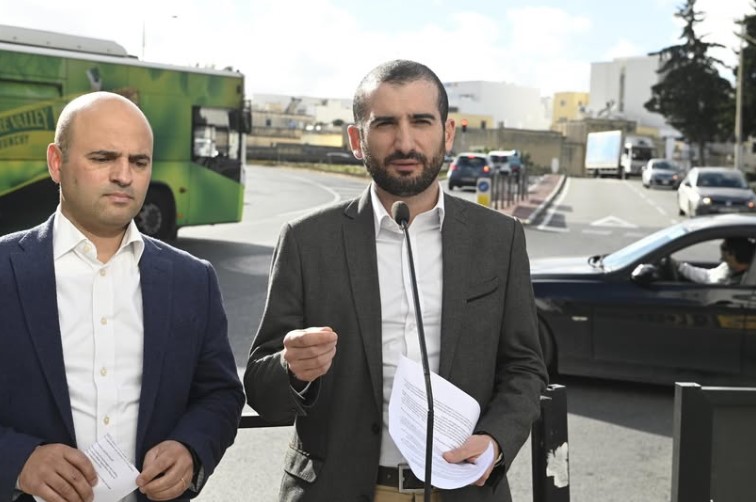
They don’t have a policy about AI, yet, so we don’t know what they mean about AI, but yesterday, Nationalist Party MPs Mark Anthony Sammut and Ryan gave a press conference and protested the government’s decision to refuse support for a startup that apparently intends to solve Malta’s traffic problems. The Nationalist MPs complained that the startup now is being tested in Macedonia instead of being tested in Malta.

Surely, anyone who is well informed about many the context and themes behind this story will already be laughing at the massive amount of red flags about the Nationalist Party’s statement. For starters, the Nationalist Party seems to be implying that the Macedonian government is doing a favour to a couple of Maltese, which already sounds very fishy.

The actual subject is about an application developed by Alexiei Dingli, a previous mayor of Valletta and also a member of the Nationalist Party. Alexiei Dingli went on the Maltese version of Shark Tank and received a โ‚ฌ1.3 million investment for his app called Digital Traffic Brainย from Mark Bajada of the Bajada group (the solar panel importer) and is now investing his capital as a venture capitalist, something applaudable in our economy. The only issue here is that apparently, Mark Bajada wants the government to help him get a return on his investment, and the Nationalist Party seems to be very willing to help their colleague.

Another red flag about all of this is that other applications similar to the one pushed by Alexiei Dingli already exists in different forms. One of them is called Greenroads. So far, I’ve never read an article by the owners of this application pleading for government help in the Times of Malta.


Another issue with this is that there also international applications that have similar services like Google. These are basically applications that help you avoid traffic and make use of unallocated road space. They are very popular in the apps industry and they come with all kinds of services including audio and even video and an automated assistant. The government says it is also developing its own software for local use which would undoubtedly be offered to residents for free.

At the same time, the Maltese government even has a fund supporting the development of these online applications, and the fund is run by Malta Enterprise. The government is pooling public money to support entrepreneurs who are connected with venture capital to develop online apps and AI technology. Unfortunately, for me, there’s no way to short this stuff.

In reality, we all know that AI won’t solve our traffic problems. It’s not as if Alexiei Dingli is going to magically inform us of new roads that we don’t know about which we will start using that will eventually solve all our traffic problems. We simply need people to get off their cars, use public transport and taxis, and build a metro. โ‚ฌ1.3 million for a traffic application in an island that can be crossed from one side to another in a day sounds really a bizarre investment to begin with. Surely, the government can’t be blamed for its failure, and it’s incredible these people are making me say things as if I’m siding with the government.

Please note that statistically, the absolute majority of the investments that you watch on US, UK and Canadian Shark tanks are in the deep red in terms of losses. Very few of the companies went on to be a success and in fact the absolute majority of startups don’t make it.

What’s concerning is that this may be a glimpse of things to come with a Nationalist government. Apparently, their idea of having an AI policy is to support the development of applications, an industry that is rife with rife fraud and grift, not to mention the broken dreams and the absolute garbage that comes out of most of the investment done in this venture capital sector.

A serious government would look at AI policy from a macroeconomic level: importing foreign direct capital investment in chip-manufacturing industries, and introducing new intelligent industrial estates with high-rise buildings. If the Nationalist Party wants to help people develop their “AI” apps, they can easily do so by putting more money to Malta Enterprise’s fund. I don’t think we need politicians to start advocating for startup apps. Let’s not be ridiculous.


Comments

7 responses to “The Nationalist Party embraces the era of AI grift and fraud”

  1. bryan james avatar
    bryan james

    “The actual subject is about an application developed by Alexiei Dingli” did he develop the application himself, as in write the code himself, or he is the frontman and has other people do the actual application code?

  2. The Maltese government producing its own app does feel like unnecessary duplication of what’s already on the market. However, having watched the Shark Tank episode in which Alexei Dingli took part, I got the impression that he did not have anything fully developed or innovative. I think he only got the nod from an ‘investor’ because he is a university professor.

    As for the problem Prof. Dingli is supposedly helping us solve, I think the app is just tinkering around the edges and will provide minimal improvements, at best. Presenters on radio stations have been giving traffic advice for years, after all, and the app is, I suppose, just a slightly more sophisticated version of that.

    The real solution is a metro. Yes, it will take many years to complete and it will create havoc during the building phase, but future generations will thank us for making the effort. The Elizabeth Line in the UK was approved in 2007 and started operating in 2022. It was an instant success. Something similar can happen in Malta, I believe.

    Curiously, both the Nationalist and Labour parties have proposed metros at different points in time but each time they accused the other side of electoral gimmicks and never approved or contributed to each other’s plans. This is something which needs a bipartisan, long-term approach. It can be done. We just need the political will.

    To be clear, I do not begrudge people using their personal cars. I think the idea of ‘mobility’ (the current buzzword) promoted by ride-hailing companies and green types is too simplistic. For many people, a car is not just a means for a single individual to travel to and from work, as mobility boosters seem to think.

    People want to criss-cross the country to get to their part-time job, run errands and pick up people. They want a vehicle they can carry equipment and their shopping in, and they want something for emergencies and late night drives when public transport has stopped running. Sometimes, they also want to sleep in their vehicle because it happens to be the best place to be. A car is so much more than a means of mobility that only a fool would ever think that people will give them up.

    Besides, cabs remain prohibitively expensive for anyone but the well off to use on a very regular basis (sure, not as in the old days when the only things around in Malta were white taxis, but still expensive), and walking or cycling has limited uses and requires certain lifestyles which we cannot expect the average person to adopt.

    Having said all this, though, I think that an underground, hyper-efficient metro could really be a game changer. For all those trips when being in one’s personal car is unnecessary, I think people will use it. Tourists certainly would. We just need to agree to start building it. Then, we should also agree on parking and congestion fees. For the carrots (metro and free-to-use buses), you also need sticks (hitting car users in their pocket). Unfortunately, all this requires political courage, and our politicians seem to be intent on coddling the populace and providing everything ‘for free’ without any inconveniences.

  3. […] of the actual paperwork. I was very skeptical about the claims being made in the media that Mark Bajada is stupid enough to throw €1.5 million into developing a traffic application for use in Malta, and in fact he […]

  4. […] all looks so ridiculous, and even more ridiculous is that the Nationalist Party is supporting this grift. In fact, I’ve been contacted by several other contestants who were promised investments by […]

  5. […] Nationalist Party is continuing with its campaign of supporting bizarre companies having recently visited the factory of General Soft Drinks which produces Coca-Cola, and is owned […]

  6. […] who persistently tries to present himself in the media, with one of his latest appearances being on Maltaโ€™s Shark Tank, where he pitched an AI solution for Maltaโ€™s traffic problems that could only be implemented if […]

  7. […] literally nothing to show for it except for a very stupid idea-proposal he conjured about solving Malta’s traffic problems with AI, for which he needed government funding to implement. Another excellent example is the Department […]

Leave a Reply

Your email address will not be published. Required fields are marked *
