



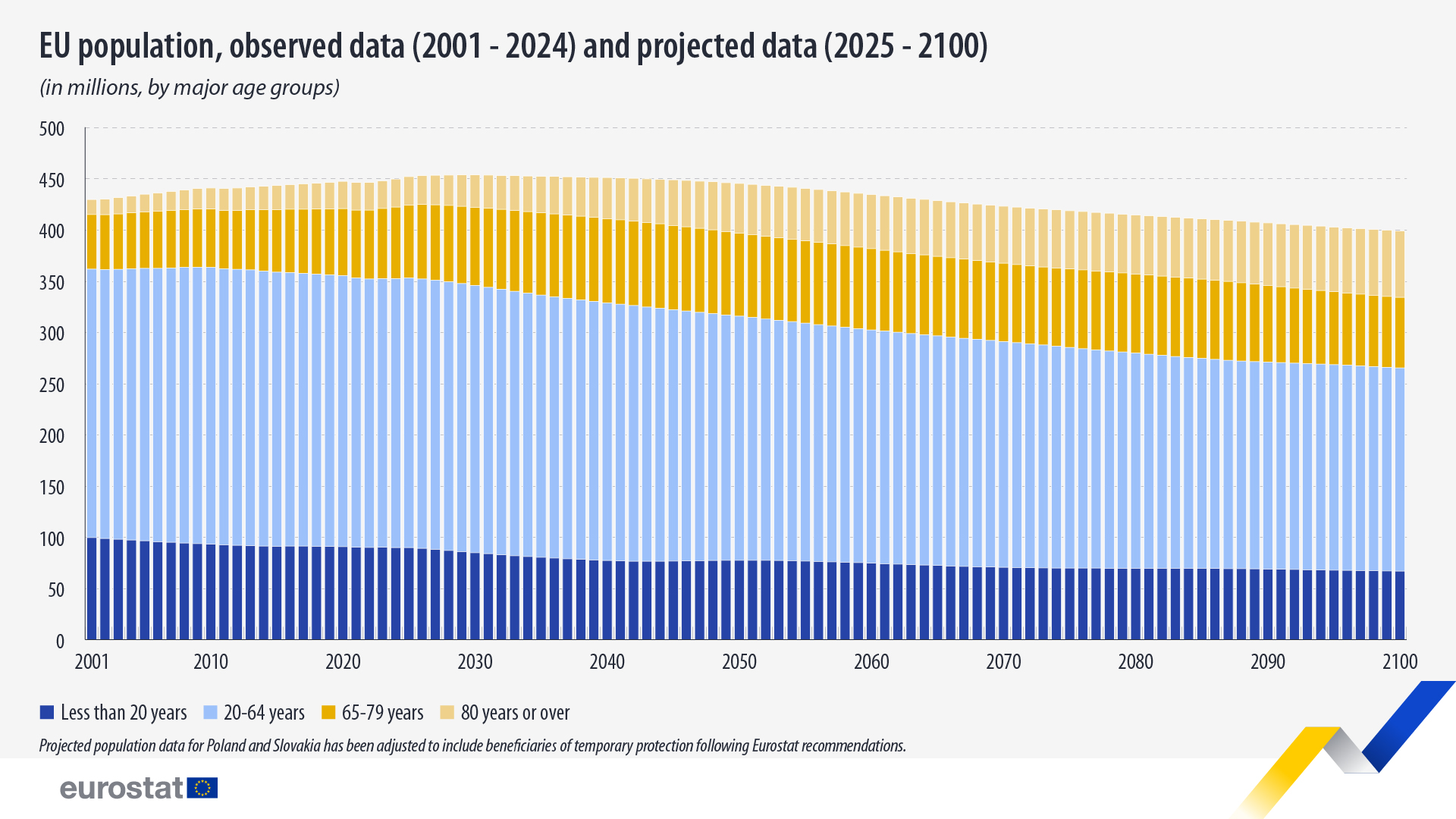
According to the latest Eurostat figures, the population in the EU is expected to decline by a considerable 11.7% by the year 2100, to below 400 million. The decrease is predicted to be 53 million from the 2025 population of 451.8 million.
In 2025, the EU population was estimated at 451.8 million people, having resumed its growth trend in 2022 after the COVID-19 pandemic disruption in 2021. This recovery was largely driven by migration, which has become the main factor offsetting a natural population decline caused by more deaths than births.
The population is projected to continue to increase over the next few years, peaking at around 453.3 million before entering a gradual but sustained decline. It is estimated to fall to approximately 398.8 million by 2100, reflecting a long-term structural shift in Europe’s demographic profile.
The projections also point to a rapidly ageing population. The share of people aged 65 and over is expected to rise significantly, while the working-age population will shrink, placing increasing pressure on labour markets and social systems.
Malta’s population figures, show consistent growth from 520,174 people in 2022 to 574,250 in 2025, largely driven by migration and economic expansion.
Data shows that Europe is entering a prolonged period of demographic decline, with ageing and falling birth rates reshaping the continent over the coming decades.

Newsroom


Leave a Reply