



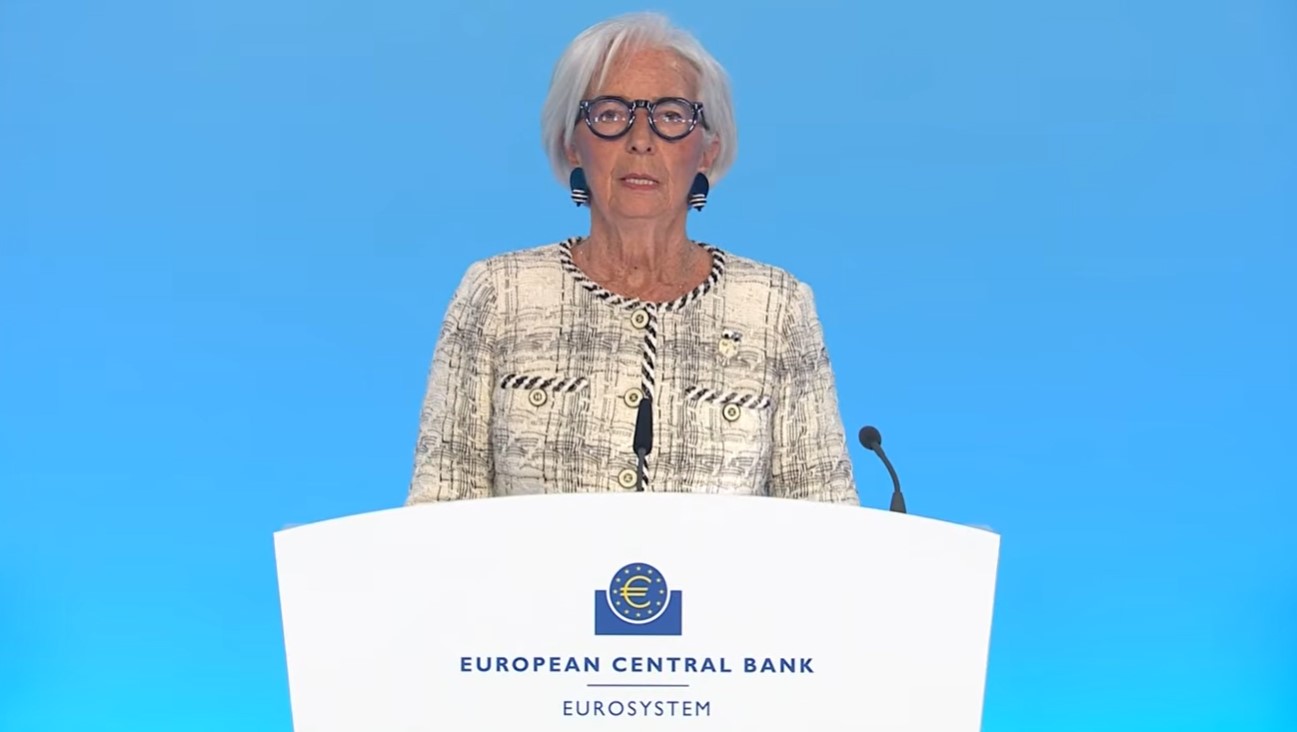
European was doing well before the Iran war broke out according to the European Central Bank Chief Christine Lagarde. Domestic demand remains the main driver for growth but prices are coming under pressure due to the energy shock.
Speaking at today’s press conference, Lagarde said that the Euro area economy had been showing signs of recovery at the start of the year, supported by consumption and a resilient labour market. “Domestic demand has been holding up,” she noted, with wages and employment continuing to underpin growth.
However, this trajectory has now been disrupted by rising energy prices. Lagarde confirmed that inflation has increased again, with headline inflation reaching around 3% in April, up from 2.6% in March and 1.9% in February. The increase was driven primarily by energy, with energy inflation rising sharply to around 10.9%, reflecting the impact of the war on Iran on global markets.
At the same time, underlying inflationary pressures showed some easing. Inflation excluding energy and food stood at around 2.2%, while services inflation declined to approximately 3%, suggesting that domestic price pressures are moderating even as headline inflation rises due to external shocks.
The European Central Bank therefore decided to keep interest rates unchanged, signaling a pause in the policy cycle. Lagarde reiterated that the ECB will remain fully data-dependent, taking decisions “meeting by meeting” based on incoming data and inflation dynamics.
A key message from the press conference was the shift in the balance of risks. Lagarde acknowledged that risks to inflation are now tilted to the upside due to energy prices, while risks to growth are clearly on the downside. Despite this, she rejected the idea that the Euro area is entering a stagflationary environment, pointing out that the labour market remains strong and inflation expectations are still anchored around the ECB’s 2% target.
She also addressed the risk of second-round effects, noting that while higher energy prices could feed into wages and broader pricing behaviour, the ECB does not yet see strong evidence of such developments. Nevertheless, policymakers remain “extremely vigilant” to any signs that inflation could become more persistent.
Lagarde further warned governments against broad-based fiscal interventions, stating that support measures should be “temporary, targeted and tailored.” She stressed that structural reforms and investment, particularly in energy, are essential to strengthen long-term growth and reduce vulnerability to external shocks.
On growth, Lagarde noted that the Euro area economy remains weak, with output expanding only marginally in the first quarter. Surveys point to slowing momentum and weaker confidence, although domestic demand continues to provide some support.
The ECB’s position is therefore one of caution. The Euro area entered 2026 on a relatively stable footing, but the energy shock has reintroduced inflationary pressures and increased uncertainty. The rate-cutting cycle that characterised 2025 has now been paused, with the ECB waiting to determine whether the current inflation surge is temporary or becomes embedded in the economy.
You can view the the ECB’s statement here. You can watch the press conference here.

Newsroom



Leave a Reply