



The new trend of Labour Party economics isn’t new and neither innovative. Direct subsidies have been the common feature of Third-World economies where there is a wide discrepancy between the average and minimum salaries and the cost of living. That a government needs to issue subsidies is also a sign of the weakness of the purchasing power of the subsidised-recipients.
In socialism, the welfare state has been mostly used to create a safety-net along with a baseline of services that guarantee individuals a decent life and social mobility. Therefore, and in principle, the welfare state is meant to provide a foundation for economic growth, but it is not by itself the propeller of economic growth.
Unfortunately, what the Minister of Finance, Clyde Caruana is refusing to admit, that when he suddenly started announcing a totally different fiscal programme from the one he had presented to journalists back in April, he has also formalised Labour’s new economic policy which is very distinct from whatever we have had until now.
Previously, the Labour Party’s fiscal policy argued that tax reductions were affordable because of economic growth, and that the reductions would also help propel local consumption. Now, the government intends to propel local consumption with a double-whammy of tax reductions and direct subsidies. No one is even discussing inflation during this campaign and it’s as if it no longer exists in the economic discourse. Things seem to be getting seriously out of hand.
Economic growth in Malta is dependent on local consumption which is being boosted by high tourism figures and an ever increasing volume of government expenditure. The problem with this government expenditure is that it is increasing in the recurrent section and not in the capital category. The government has gone from using subsidies as a safety-net, to a main tool for economic growth – this is not just unsustainable, but also the prerogative for an underlying economic and growing economic crisis.
Personally, I am mostly on the optimistic and bullish side of affairs. However, like any other human being, I struggle with my own stupidity and human error, and in order not to err excessively, I retain some some degree of caution. The latest government’s fiscal policy is removing altogether the element of caution as it puts all of its bets on an the long-term success of its subsidies spending plan. In simple terms, the Finance Minister was supposed to reduce the economic weight of government spending in the GDP growth forecasts – instead he is upping up its intensity.
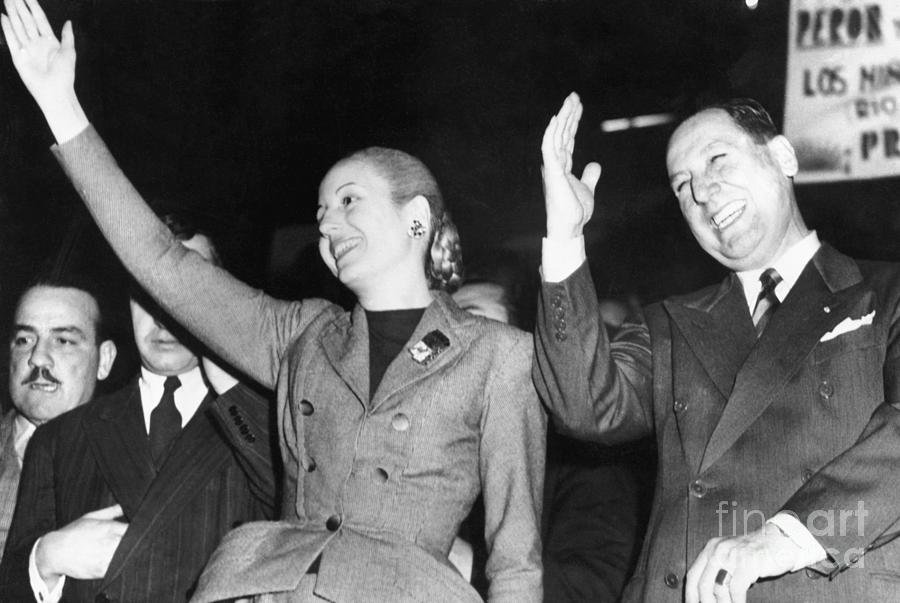
This reckless economic policy has been tried many times before, especially in Argentina, where politics are so distinct and far removed that they often appear to outsiders as a reality of their own. In some ways, they are. For more than half a century, Argentina’s politics were dominated by Peronism, a broad cross-ideological movement that blended nationalism, populism and elements of socialism under the legacy of Juan Perón. The movement extended across both the left and the right, with Peronist factions dominating much of Argentine political life for decades.
Argentina’s major political forces became locked in a relentless bidding war for electoral support through subsidies, public sector jobs, state contracts and direct aid programmes, while long-term structural reform and major capital investment were repeatedly neglected. Despite the country’s enormous natural wealth and economic potential, recurring cycles of populist spending, inflation and fiscal crises left large parts of its resources underdeveloped and its economy chronically unstable.

Website Editor
Historian and Publisher



Leave a Reply