



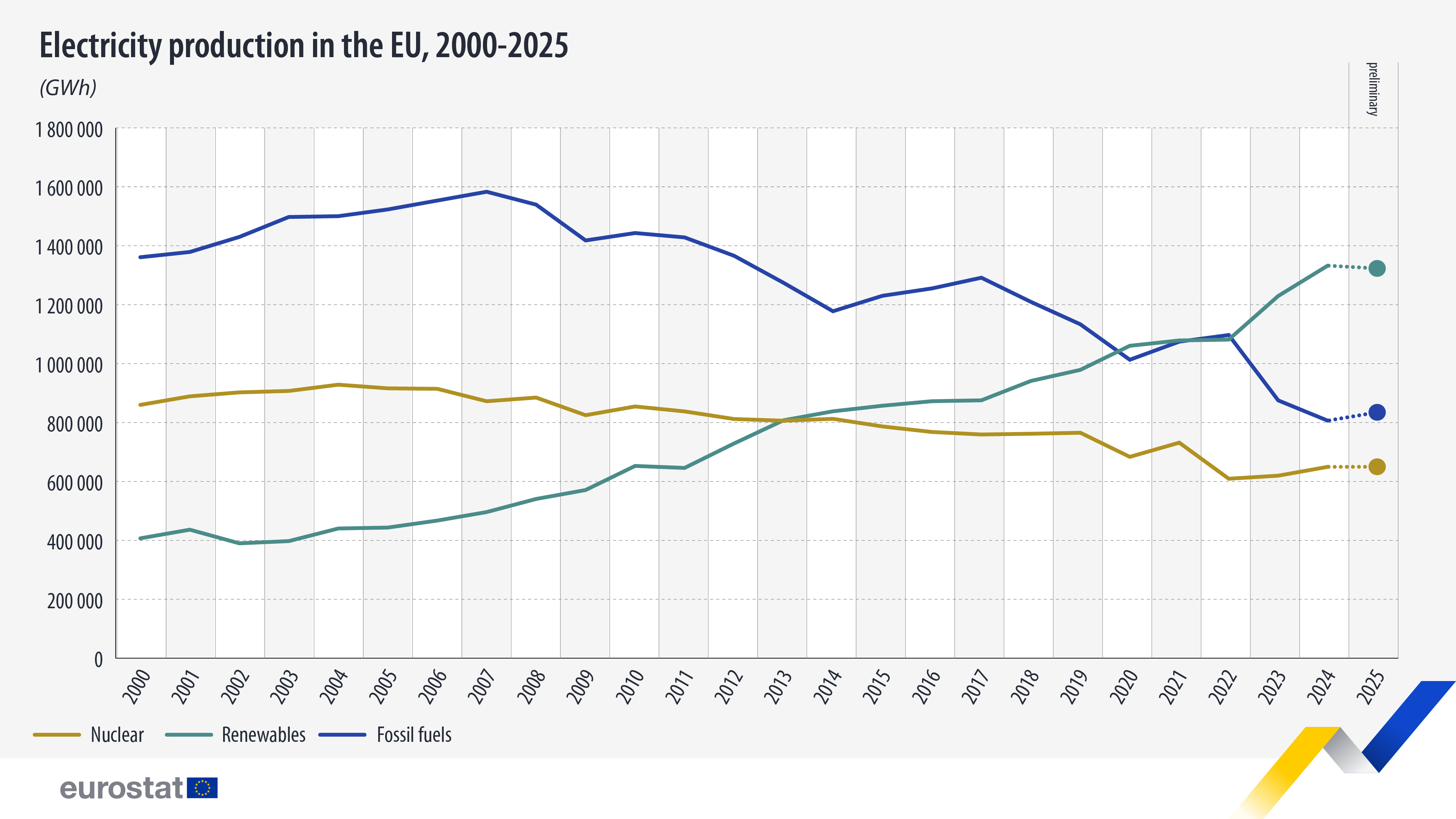
According to the latest Eurostat figures, Europe used more gas and slightly more nuclear energy for electricity generation in 2025, while oil and coal continued to decline.
Renewable energy sources remained the largest source of electricity generation in the EU, accounting for 47.2% of total electricity production. Renewables generated 1.33 million GWh in 2025, although this was a slight decrease of 0.5% compared with the previous year. Eurostat attributes the decline mainly to lower hydro-power output.
Fossil-fuel electricity generation increased mainly because of higher gas use. While coal and oil continued to decline, natural gas supply rose for the second consecutive year, increasing by 2.3% in 2025. This pushed fossil-fuel electricity generation up by 3.2%, even as Europe continued to reduce its dependence on coal and petroleum products.
Nuclear energy generated 0.65 million GWh, representing 23.2% of EU electricity production, with output increasing slightly by 0.2%.
While renewable electricity generation declined marginally, overall renewable energy supply increased by 1.4%, reaching 11.5 million terajoules. This means that renewables continued to grow in the wider energy system, even though their electricity output fell slightly because of weaker hydro-power production.
Coal continued its long-term decline. Brown-coal supply fell by 7.7%, while hard-coal supply fell by 3.2%, with both reaching their lowest levels since Eurostat’s data series began in 1990. Petroleum-product supply also declined, falling by 2.8% compared with 2023.

Newsroom


Leave a Reply