



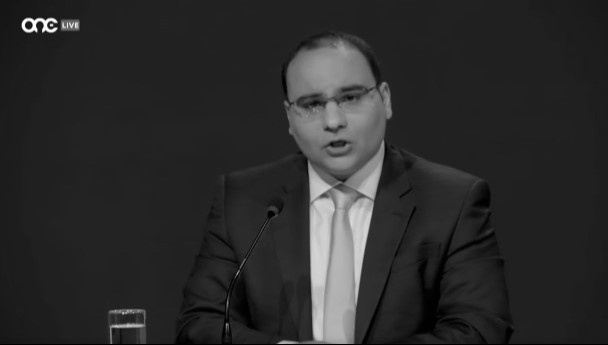
Yesterday, Times of Malta, published an interview by Bank of Valletta’s CEO Kenneth Farrugia who said that Malta does not risk getting grey-listed again by the Financial Action Task Force (FATF) because local banks have introduced a wide-range of measures to combat money-laundering.
This is a very nuanced statement which deserves a reality-check and a critique. Originally, Malta was grey-listed by the FATF following Malta’s rule-of-law crisis involving a backdrop of wide-scale and repeated money-laundering cases by government politicians and their associates. The crisis was very publicly evident to Moneyval, the EU’s anti-money laundering body and grey-listing by the FATF seemed as the logical conclusion.
Since then, the Labour government has enacted a very systematic and rigorous campaign coordinated by Finance Minister Clyde Caruana to introduce a swathe of anti-money laundering checks and measures in local banks to convince Moneyval and the FATF of Malta’s will to tamp down money-laundering. This was even one of the highest priorities by the Finance Minister and the Prime Minister even praised his Finance Minister during the general election campaign for his success in convincing the FATF to strike us off the list.
The cost of the Finance Minister’s anti-money laundering campaign are the new wide-range of AML practices mainly targeted at ordinary people who now are being subjected to excessive oversight by the authorities. Meanwhile, those who actually conduct money-laundering, embezzle public funds, and depend on organised crime were left basically unmoved with the Finance Minister’s new regime.
How many politicians investigated over corruption and the embezzlement of public funds have had their bank accounts closed? How many associates of these politicians have had their business and financial practices tamped down under the new regime and how many assets have actually been permanently seized of these individuals by the local Courts?
The answer is surprising because it is at absolute zero.
The biggest victims of these new measures were the iGaming industry, local financial traders, and the government’s dream of enabling the crypto industry in Malta, all of which have been completely stunted by the new AML regime. Meanwhile, organised crime and the political elite who engaged in corruption have remained untouched.
Moreover, economic sectors involving potentially sanctions-busting players have been left untouched, making BOV’s claims on AML rather suspicious, if not laughable. Malta’s largest oil bunker operator, Alkagesta, is still operating freely despite its owner being arrested over Russian oil trading. BOV was even listed in a UN report as a potential facilitator of Libyan oil sanctions busting. BOV even refused to cooperate with the UNSC’s investigation. You can find a copy of the report here.
Meanwhile, the FIAU is waging an AML war based on the number of STRs rather than on the value of assets eventually seized on the back of its reports, presenting a ridiculous façade without any substance whatsoever.
Many honest and genuine economic players have been stunted by this new regime, yet they are afraid to speak in public fearing they be labelled as cheats and criminals.
A proper AML war can only be declared victorious by the value of assets ultimately confiscated from organised crime. By that measure, Malta is failing completely, while the little guy is sacrificed as a statistical offering to produce the illusion of a nuanced clean bill of financial health.

Website Editor
Historian and Publisher

Leave a Reply