



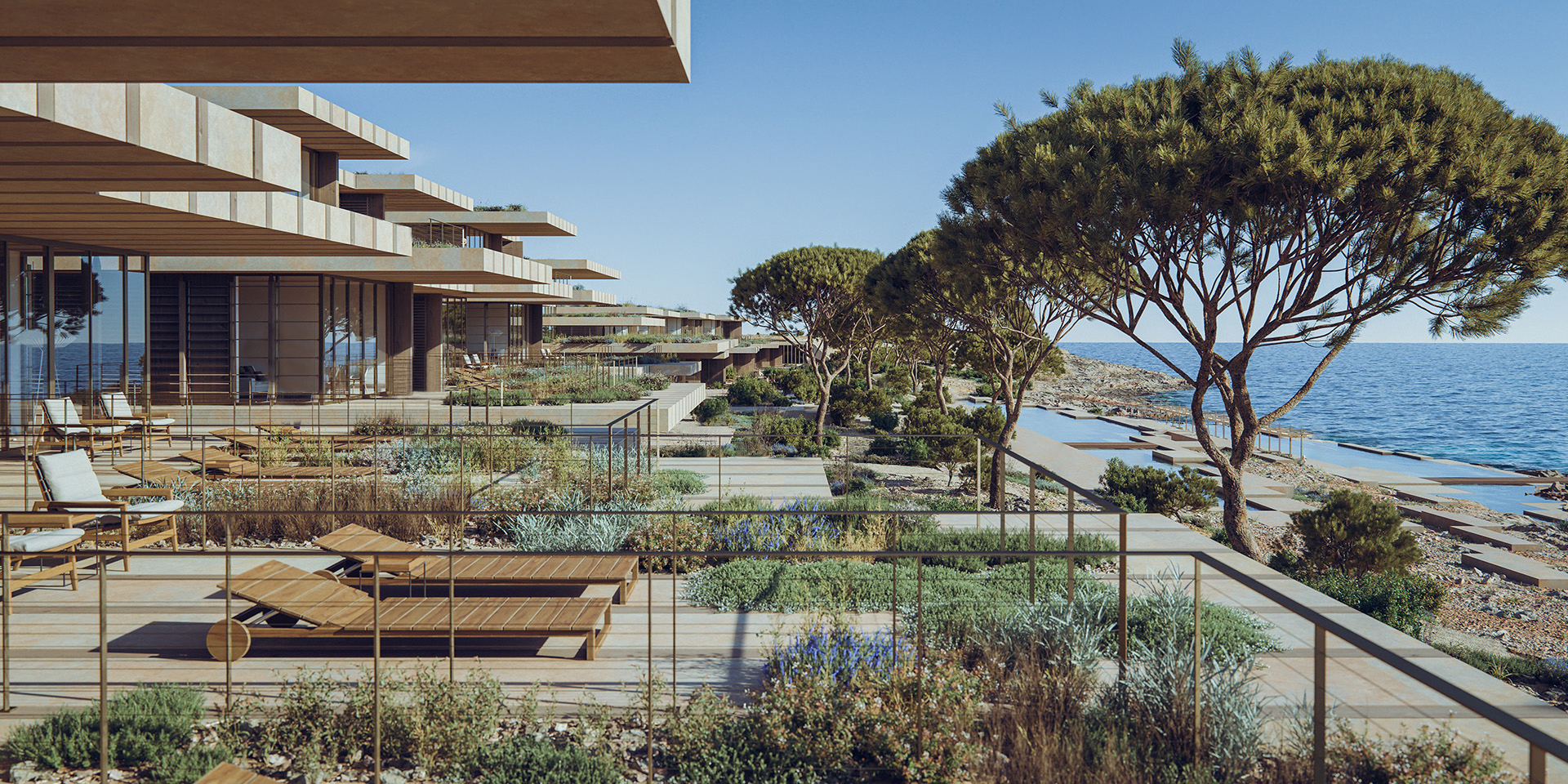
The Malta Chamber of Scientists has said it is concerned about the decision by the Environment and Resources Authority to allow Hili Group to uproot existing trees in Comino. The decision came with an obligation for Hili Group to plant up to 540 indigenous Maltese trees to replace the existing trees.
The Malta Chamber of Scientists said that replacing mature trees with saplings cannot be considered an equivalent environmental trade-off, arguing that mature trees provide established habitats, store carbon and help stabilise soil.
The Chamber also raised wider concerns about the environmental impact of the proposed development, including its water requirements, waste generation and pressure on Comino’s protected ecosystem.
It called for the project to be assessed holistically rather than through separate permits, arguing that the cumulative environmental impact of the development should be considered as a whole.
One of the members of the ERA Board involved in the decision on the uprooting of trees in Comino is University of Malta Professor Emmanuel Sinagra, who is the Dean of the Faculty of Science and Head of the Department of Chemistry. He is also the Deputy Chairperson of ERA and chairs Malta’s Scientific Advisory Council for the Environment.
Malta Chamber of Scientists raises environmental and sustainability concerns ERA’s Comino decision
The Malta Chamber of Scientists notes with disappointment the Environment and Resources Authority’s decision to approve the preliminary works and tree removal, which allows for construction on an island already under severe strain from the seasonal influx of visitors it receives each summer.
This permit clears the way for invasive construction works, including excavation and demolition, so that the developer can proceed with a hotel, villas, and swimming pools on a protected nature reserve.
The Chamber questions how sustainability was considered in the decision-making processes. A development of this scale raises basic questions that deserve clear public answers before a single machine arrives. Where will the water for those pools come from, on an island with no natural freshwater capacity to spare? What additional load will the resort and its guests place on waste management, on the marine environment, and on an ecosystem that is already buckling under summer pressure?
The MCS argues that economic growth must be assessed within the framework of environmental accounting, and calls for genuine accountability for the waste and environmental cost generated by tourism and construction. The Chamber urges that urban planning be conducted within the context of preserving and protecting the country’s nature reserves and agricultural land, and that public policy expands green spaces rather than destroying them. The Comino decision runs against both principles.
More generally, where mature trees are removed as part of a development, their environmental role cannot be equated with numerical replacement ratio. A mature tree (its canopy, the habitat, the carbon it holds, the soil it stabilises) is not directly replaceable by ten saplings, and requirement for replacement planting must therefore be accompanied by a binding commitment to the long-term care and monitoring of those saplings to ensure that they survive and develop into established vegetation. Malta, Gozo, and Comino are already dotted with the evidence of what happens without it: replanting sites left abandoned, saplings and shrubs dead or dying. A replacement ratio is only meaningful if an entity is held fully accountable for the outcome decades from now.
However, the issue at hand extends well beyond the uprooting and replacement of trees. Genuine environmental accountability cannot be achieved when decisions relating to a development are considered piecemeal. A particular intervention may, when examined in isolation, appear limited or capable of being mitigated. Yet the environmental consequences of a project arise from the combined effects of its construction, operation, resource requirements, waste generation, increased human activity, pressure on surrounding habitats and contribution to wider sustainability objectives. These impacts must therefore be considered collectively rather than as a series of separate decisions.
The MCS consequently calls for a development and regulatory model grounded in holistic sustainability assessment. The overall environmental impact of a project should not emerge from individual entities considering separate elements solely within their respective and necessarily limited remits. Instead, decision-making must take account of the cumulative impact of the development as a whole, its compatibility with the protected status of the site, and its alignment with Malta’s broader environmental and sustainability goals. Environmental protection requires accountability for the complete consequences of development, not simply justification of each individual intervention when viewed in isolation.

Website Editor
Historian and Publisher

Leave a Reply