



According to the latest Eurostat figures, the EU’s GDP for the second quarter of this year grew by 0.5%, while employment increased by 0.1%. GDP increased by 0.4% in the Euro area.
The latest figures show an improvement from the first quarter of the year, when GDP remained stable in the Euro area and increased by just 0.1% across the EU. Compared with the same quarter last year, GDP increased by 1.0% in the Euro area and by 1.2% in the EU.
Employment increased by 0.1% in both the Euro area and the EU during the second quarter. Compared with the same period last year, employment was up by 0.5% in both areas.
Eurostat has not yet published Malta’s GDP figure for the second quarter in this flash estimate. In the first quarter of 2026, Malta’s GDP had increased by 1.1% compared with the previous quarter and by 4.3% compared with the same quarter in 2025, significantly above the EU average.
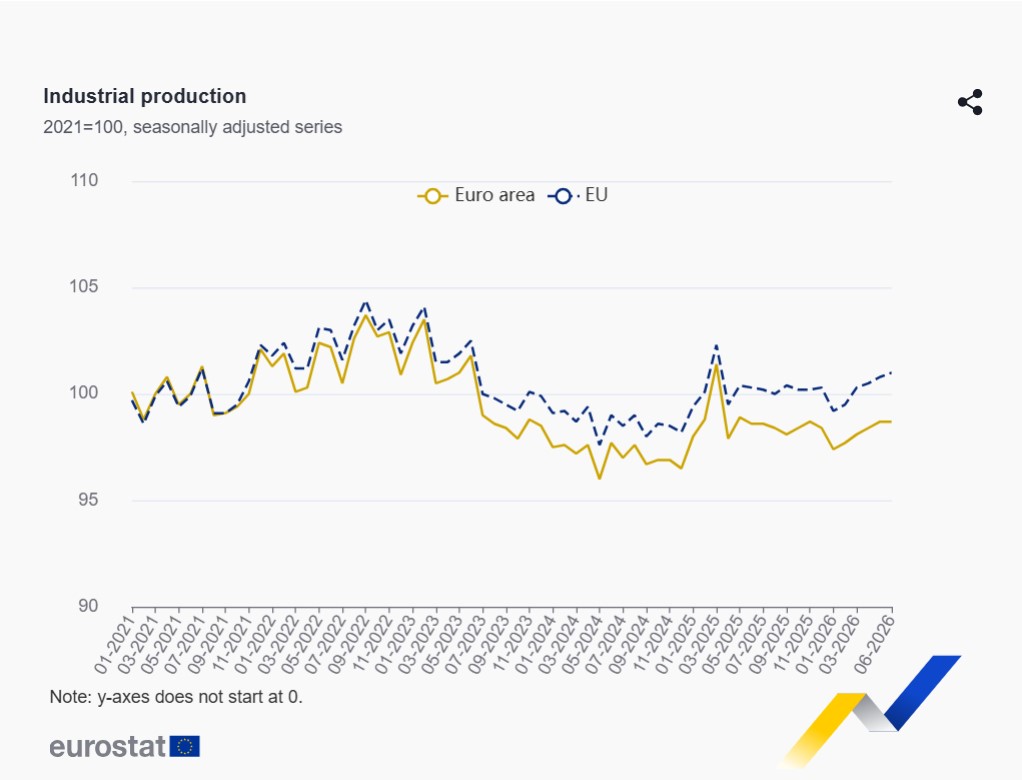
Meanwhile, industrial production increased by 0.2% in the EU in June compared with May, while remaining stable in the Euro area. Compared with June last year, industrial production increased by 0.6% in the EU and by just 0.1% in the Euro area.
Malta’s industrial production remains struggling. Industrial production in Malta fell by 0.6% in June compared with the previous month after having already fallen by 5.0% in May. Compared with June 2025, Malta’s industrial production was down by 1.5%.
Malta’s industrial production has been struggling. Production increased by 4.5% in January before declining by 2.0% in both February and March. It then increased sharply by 5.5% in April, only to fall by 5.0% in May and by another 0.6% in June.
The latest decline puts Malta below the EU average, where industrial production continued to register modest growth. The strongest monthly increases in June were recorded in Denmark at 5.4%, Croatia at 5.2%, and Lithuania and Finland at 2.1%. The largest declines were registered in Luxembourg at 10.7%, Portugal at 3.9% and Estonia at 2.2%.
On an annual basis, Lithuania recorded the strongest industrial growth at 7.7%, followed by Denmark at 6.1% and Poland at 4.9%. Malta’s 1.5% decline placed it among the EU countries where industrial output contracted compared with the previous year.


Newsroom

Leave a Reply