



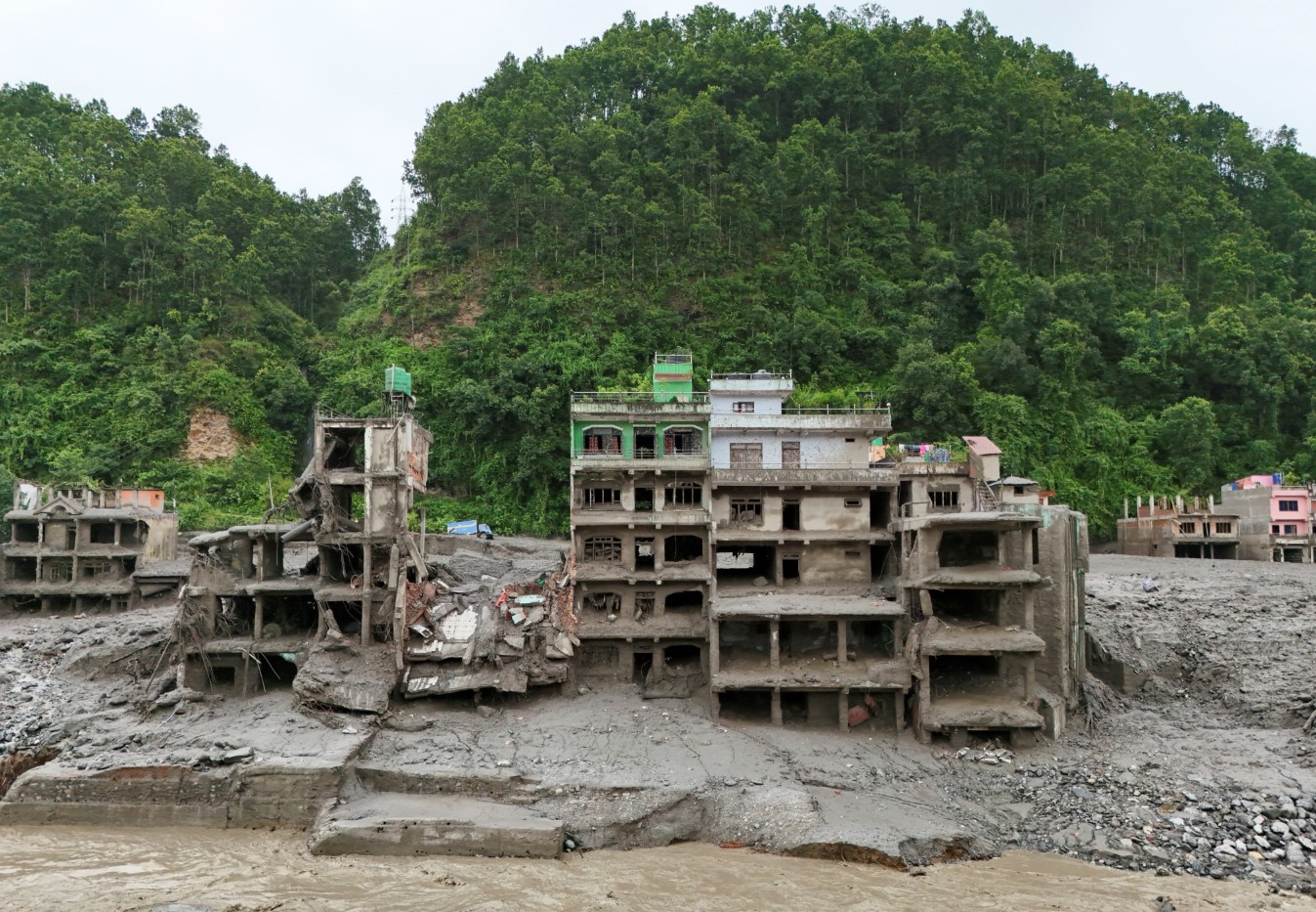
Up to 1,500 people are still missing after a section of a Himalayan glacier collapsed yesterday, August 26, triggering catastrophic flash floods along the Nepal-Tibet border. At least 270 people have been confirmed dead, with the death toll expected to rise as rescue operations continue.
Satellite imagery indicates that the lower section of a glacier broke away at an altitude of around 5,200 metres, falling approximately 1,200 metres into the valley below together with rock and sediment. The resulting ice-rock avalanche triggered a massive surge through the Lhende River and subsequently the Bhote Koshi and Trishuli river systems.
The mountainous Rasuwa district, near Nepal’s border with Tibet, has been among the areas worst affected, together with downstream parts of Nuwakot. Roads, bridges, settlements and hydropower infrastructure have been swept away, while thousands of residents have been cut off.
The region is popular with international tourists, trekkers and pilgrims travelling through the Himalayas and towards Kailash Mansarovar in Tibet.
According to the Nepal Tourism Board’s latest figures, 644 tourists and travellers remain out of contact in Nepal alone, including 517 foreign nationals and 127 Nepalis. The missing foreigners include 178 Indians, 65 Americans, 53 Ukrainians, 51 Malaysians, 35 Australians, 33 Britons, four French nationals and two Italians, along with nationals from numerous other countries.
Italian authorities had earlier reported that two Italians known to have been caught up in the disaster were safe, although Nepal’s subsequent tourism figures listed two Italian nationals among those still out of contact.
Across both Nepal and Tibet, at least 700 foreign nationals are believed to be missing, with Chinese authorities reporting another 558 people missing in Tibet’s Gyirong county, including 260 foreigners.
No Maltese nationals have so far appeared in the publicly released lists of missing foreign tourists.
More than 5,000 Nepalese army and police personnel have been deployed in the rescue operation, while helicopters are searching inaccessible valleys and dropping emergency supplies to communities cut off by destroyed roads and bridges.
The US Geological Survey initially registered what appeared to be an earthquake in the region, but later concluded that the seismic signal had actually been generated by the collapse of the glacier, rock and ice itself. Scientists are still investigating what caused the collapse.
Footage of the floods and of the glacier collapsing below.

Newsroom


Leave a Reply